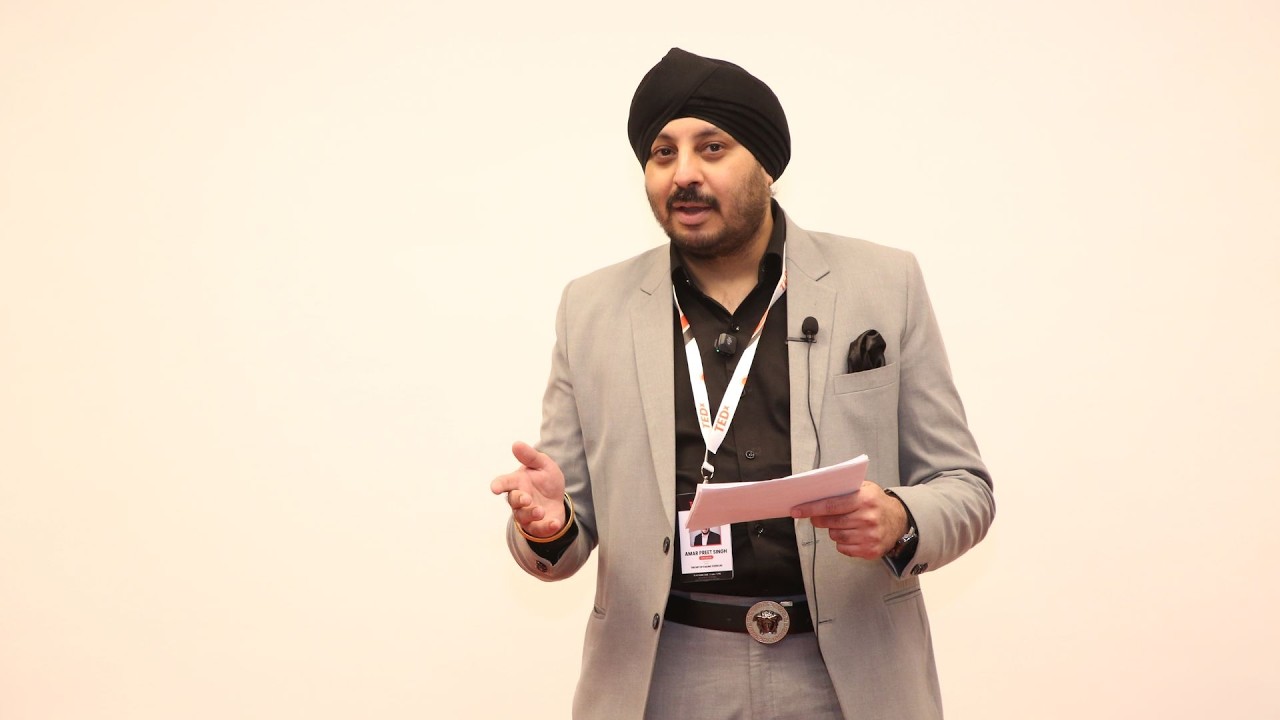
Classrooms Without Borders : Choosing a Future, Not Just a Destination | Amar Preet Singh | TEDxIPEC
Title history
- Classrooms Without Borders : Choosing a Future, Not Just a Destination | Amar Preet Singh | TEDxIPEC — observed on 20261027-0205 UTC (YouTube)
Keywords
Summary
168 words
Critical Evaluation
Value of the Information & Strength of the Argument
The talk’s value lies in its inspirational narrative, demonstrating how setbacks can be overcome through persistence and self-belief. Singh’s storytelling is engaging and emotionally resonant, but the argumentation relies entirely on anecdotal evidence without broader statistical support or comparative analysis. He presents his experiences as universally applicable lessons, which may oversimplify complex career challenges. The three takeaways are generic self-help themes, lacking novel insights. The absence of specific strategies or evidence to back his claims weakens the argumentative rigor. However, as a testimony of resilience, it holds motivational value, particularly for young audiences facing similar struggles.
Scientific Rigor, Source Quality, Title Accuracy
Singh provides no external sources or citations, relying solely on personal testimony. The only link in the description is the generic TEDx page, which does not substantiate any specific claims. His credibility stems from his professional experience, but he offers no documented evidence of his achievements or the success statistics of his consultancy. The title suggests a focus on ‘classrooms without borders,’ but the content rarely addresses global education policies or systemic changes; it is a personal story loosely tied to international education. The mismatch between the title’s broad theme and the narrow personal narrative reduces the content’s scientific or analytical rigor. No comments were available for public reception analysis.
221 words
Title / Content Match
The title suggests a focus on global education opportunities, but the speech primarily recounts personal struggles and resilience, touching on education only as a background element. The connection is loose, though the 'classrooms without borders' metaphor loosely aligns with his international experiences.
Quality & Reliability
5/10
The talk is a personal narrative with anecdotal evidence, lacking verifiable data or citations. While emotionally compelling, it offers no systematic research or external validation.
Key Moments
Markers derived by PSI from the transcript: the creator did not define chapters.
- Opening question: 'How many of you have ever felt that you're not good enough?'
- Shares scoring 77% in class 12 despite being a mediocre student.
- Describes hotel management career and its harsh realities.
- In London, faces 48 job rejections before getting an unpaid job.
- Receives salary check after 3 months and eventually becomes duty manager.
- Manufacturing business fails with a loss of 90 lakh rupees.
- Struggles during COVID, incident with education fair loss.
- Now his consultancy helps 500+ students annually and meets New Zealand PM.
- Concludes with three takeaways: be a student, never give up, learn from failures.
Cited Sources
- TEDx Official Page — Mentioned in the description as the platform for the talk.
Contribution & Novelties
The talk’s original contribution is a first-person account of overcoming multiple career and business failures in international education contexts. It offers a narrative of resilience rather than new academic content. The speaker’s practical experience as an education consultant provides anecdotal insights into the challenges of studying abroad and career transitions.
Pour aller plus loin :
- Fixation on goals — Relevant to the speaker’s emphasis on persistence and strategic planning.
- Growth mindset — Connects to the idea of learning from failures and embracing challenges.
- Entrepreneurial resilience — Discusses how individuals and businesses recover from setbacks, echoing his business failures.
98 words
Radar Profile
The radar profile shows very low technical depth and moderate information quantity, with moderate quality and low reliability. The scores reflect a personal testimony that is engaging but lacks scientific backing, making it suitable for general inspiration rather than educational reference.