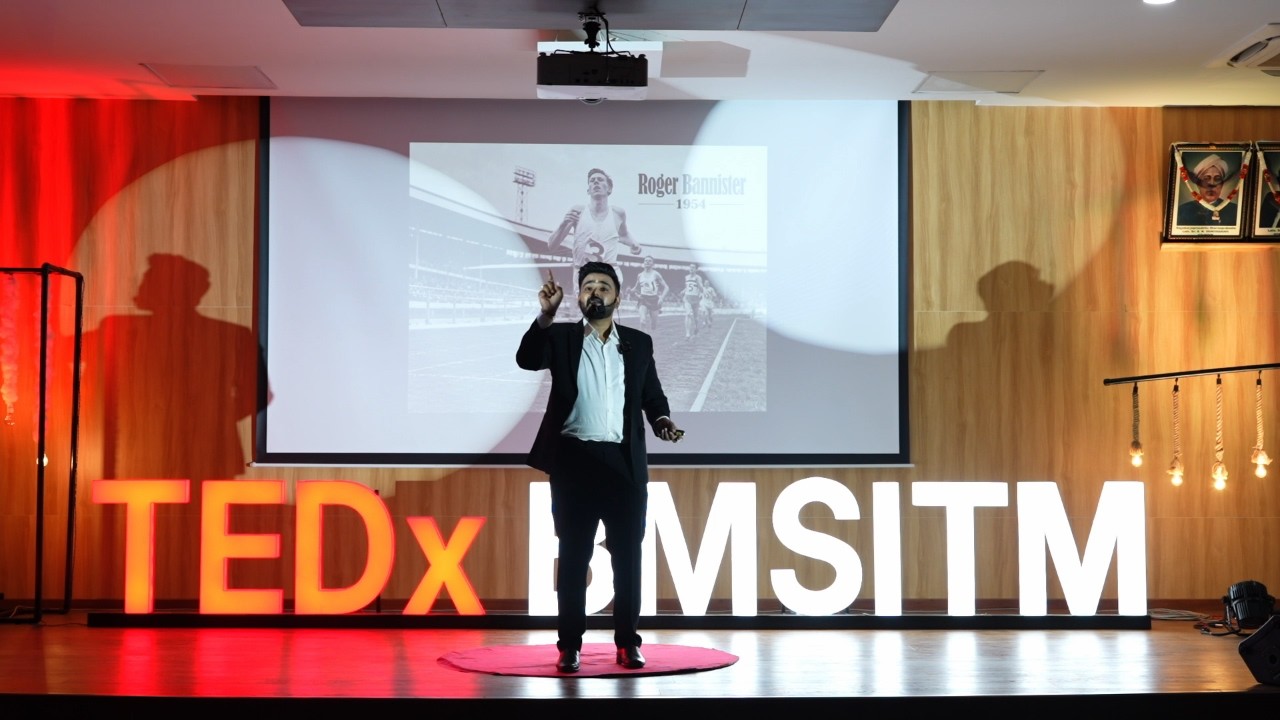
Positive Mindset : From Impossible to Possible | Dr. Rahul Devraj | TEDxBMSITM
Title history
- Positive Mindset : From Impossible to Possible | Dr. Rahul Devraj | TEDxBMSITM (PSI archive)
- Positive Mindset : From Impossible to Possible | Dr. Rahul Devraj | TEDxBMSITM — observed on 20261104-2219 UTC (YouTube)
Keywords
Summary
206 words
Critical Evaluation
Value of the Information & Strength of the Argument
The value of the information lies primarily in its motivational and inspirational nature rather than in scientific precision. The speaker uses concrete, real-life examples to illustrate psychological barriers and the power of shifting one’s perspective. The argumentation is persuasive, built on emotional narratives and historical precedents, aiming to convince the audience that self-belief and curiosity are key to achievement. However, the evidence is anecdotal, and the logical connection between the examples and the overarching message is clear but simplistic, lacking deeper analysis or counterarguments.
Scientific Rigor, Source Quality, Title Accuracy
The scientific rigor is moderate. Several historical facts are accurate, such as Roger Bannister’s four-minute mile and George Dantzig’s mathematical problems, but no specific sources are cited within the talk. The mention of the Nobel Prize for optogenetics is factually correct (awarded in 2021), but the speaker incorrectly states 2026. The title well matches the content, emphasizing the transition from impossibility to possibility through mindset. Overall, the talk prioritizes storytelling over academic rigor, but it is referenced through the TEDx platform, which lends a veneer of credibility.
186 words
Title / Content Match
The title accurately reflects the core theme of the talk: cultivating a positive mindset to turn the impossible into possible.
Quality & Reliability
5/10
Content is a motivational talk with anecdotal evidence and personal experiences. While some facts (optogenetics, Roger Bannister, George Dantzig) are largely accurate, they lack precise references, and there is a factual error regarding the Nobel Prize date (2026 instead of 2021). The talk relies more on inspirational narrative than rigorous scientific exposition.
Key Moments
Markers derived by PSI from the transcript: the creator did not define chapters.
- Introduction: importance of mindset and the example of optogenetics discovery
- Details on channelrhodopsin and its application in restoring vision
- Story of Roger Bannister and breaking the four-minute mile barrier
- George Dantzig solving unsolvable math problems
- Personal story: childhood in a mud house, mother's kidney disease, becoming a doctor
- COVID experience and providing music therapy to patients
- Encouragement to serve society selflessly and the story of the philanthropist and the fan
- Example of Abdul Kalam and conclusion on self-pride and positive mindset
Cited Sources
- TEDx — Mentioned in the video description as the official TEDx site; the talk is part of the TEDx series.
Contribution & Novelties
The talk offers a personal and culturally grounded perspective on the power of mindset, mixing scientific anecdotes with a physician’s experience in rural India. It emphasizes selfless service and self-pride as key components of personal development, which is a fresh take compared to typical Western self-help narratives.
Pour aller plus loin :
- Growth Mindset — Carol Dweck’s concept of fixed vs. growth mindset, relevant to the talk’s core message.
- Optogenetics — The scientific technique discussed, providing factual background on the discovery.
- Roger Bannister — Biography and context on the four-minute mile record.
92 words
Radar Profile
The radar profile shows a moderate quantity of information but lower technical level and reliability, indicating a motivational rather than scientific content. The talk excels in communication and engagement but lacks rigor, making it suitable for inspiration rather than factual learning.