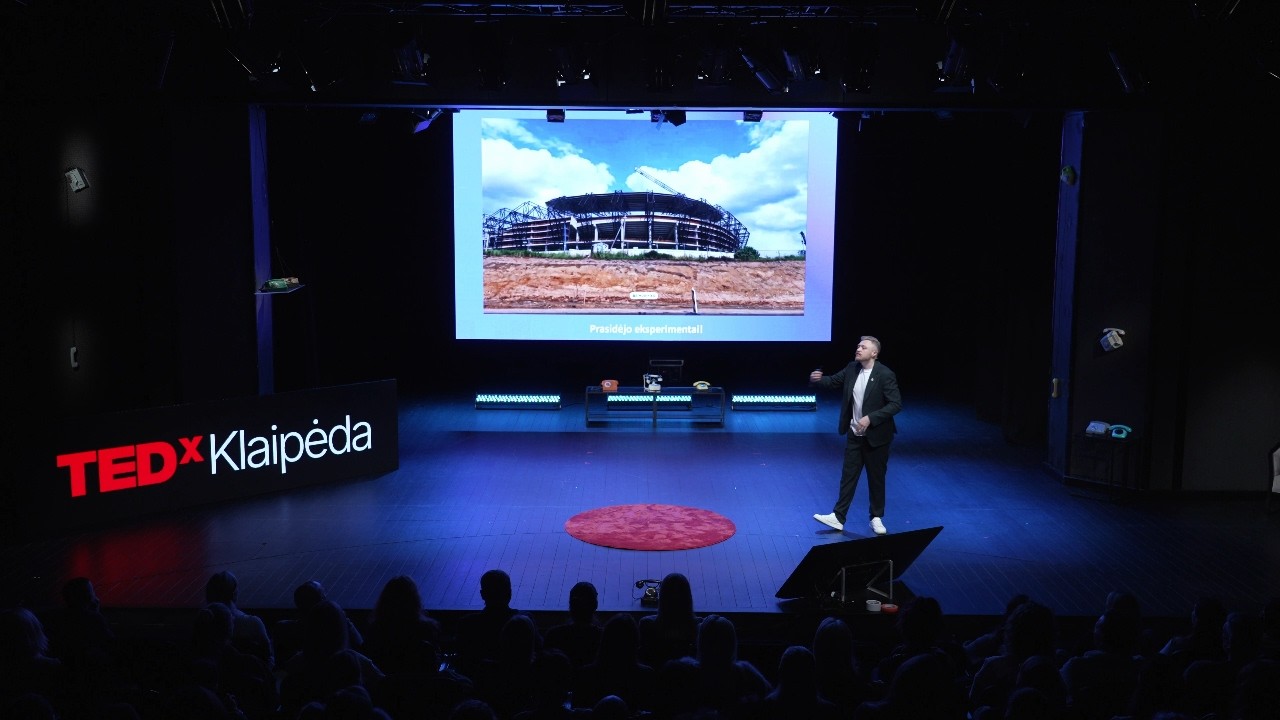
Kaip nemarinuoti idėjų? Dirbtinis intelektas: nuo minties iki rezultato | Tomas Sakro | TEDxKlaipėda
How not to marinate ideas? Artificial intelligence: from thought to result | Tomas Sakro | TEDxKlaipėda
Title history
- Kaip nemarinuoti idėjų? Dirbtinis intelektas: nuo minties iki rezultato | Tomas Sakro | TEDxKlaipėda — observed on 20261106-1629 UTC (YouTube)
Keywords
Summary
114 words
Critical Evaluation
Value of the Information & Strength of the Argument
The talk offers practical value in encouraging creative action through AI, backed by the speaker’s personal success stories and visual demonstrations. However, the argumentation relies heavily on subjective experience and anecdotal evidence, lacking systematic analysis or broader empirical support. While the enthusiasm is compelling, the reasoning is more inspirational than rigorous, making it a motivational narrative rather than a evidence-based scientific presentation.
Scientific Rigor, Source Quality, Title Accuracy
The talk cites no external research or data, and the only provided source is the general TEDx website link. The content is based on personal experiments and opinions, which limits its scientific rigor. The title accurately summarizes the talk’s theme, and there is no discrepancy between the title and the content. The lack of citations and dependence on personal testimony reduce the overall reliability for an audience seeking factual, well-sourced information.
148 words
Title / Content Match
The title accurately reflects the talk's core message about overcoming procrastination and using AI to bring ideas to life. It is catchy and directly aligned with the content presented.
Quality & Reliability
6/10
The talk relies on personal anecdotes and demonstrations rather than systematic evidence or external references. The speaker shares practical examples of using AI for creative projects without providing rigorous data or scientific citations, which limits its reliability as an authoritative source.
Key Moments
Markers derived by PSI from the transcript: the creator did not define chapters.
- Introduction about marinating ideas for 10 years.
- First experiences with AI image generation in 2022, sparking excitement.
- Creating first AI-generated avatar and receiving mixed reactions.
- Overcoming fear of publishing content online and testing audience reception.
- Live demonstration of face-swapping technology with Trump and Putin, highlighting deepfake potential.
- Imagining how people from the past would view our present, with humorous AI-generated visuals.
- Call to action: give ideas a chance, start doing, and embrace absurd concepts.
Cited Sources
- TEDx official site — Mentioned in description as the event organizer; serves as general reference for the talk.
Contribution & Novelties
The talk contributes a personal, motivational perspective on using generative AI to overcome procrastination and realize creative projects. It emphasizes the psychological barriers and the practical steps to start, with live examples of image and video generation. While not scientifically novel, it offers a relatable case study of AI as an enabler for creativity.
Pour aller plus loin :
- Generative artificial intelligence — Discusses the technology behind AI-generated content, relevant to the tools mentioned.
- Stable Diffusion — A specific model used for image generation, often used in creative projects.
- Deepfake — Relevant to the face-swapping demonstration, highlighting both creative and ethical implications.
- Creative process — Provides a framework for understanding ideation and execution, complementing the talk’s call to action.
119 words
Radar Profile
The radar profile shows moderate scores across dimensions, with the highest in qualitative information and validity, but lower in technical depth and reliability. This aligns with a motivational talk that prioritizes practical inspiration over technical rigor.