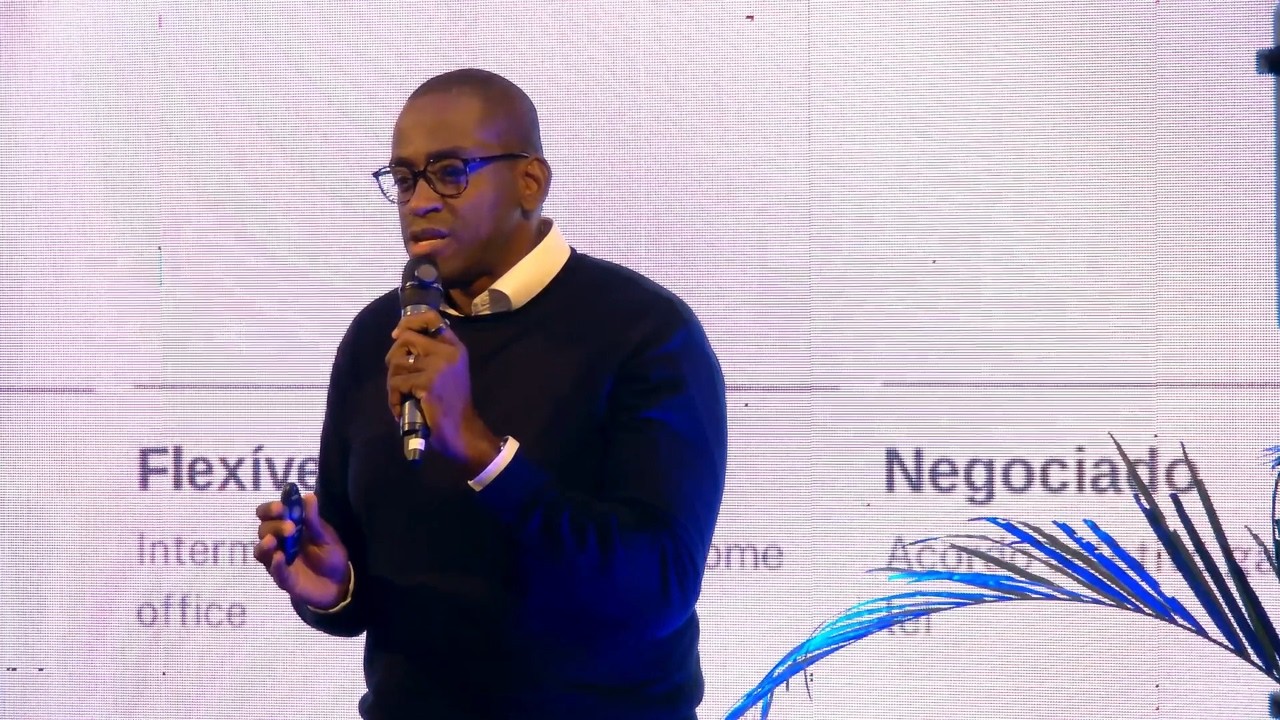
O Brasil está preparado para o futuro do trabalho? | Gilvan Bueno | TEDxPraça Getúlio Vargas
Is Brazil prepared for the future of work? | Gilvan Bueno | TEDxPraça Getúlio Vargas
Title history
- O Brasil está preparado para o futuro do trabalho? | Gilvan Bueno | TEDxPraça Getúlio Vargas — observed on 20261101-0403 UTC (YouTube)
Keywords
Summary
134 words
Critical Evaluation
Value of the Information & Strength of the Argument
The talk offers a provocative thesis that humanoid robots will transform labor faster than AI, supported by examples like BMW’s use of robots and Chinese production estimates. However, the argumentation is largely anecdotal and lacks robust evidence. The speaker makes broad claims (e.g., ‘analysts no longer have a function’) without empirical data, and his predictions are speculative. The argument is coherent and logically structured, but it relies on rhetorical questions and personal observations rather than rigorous analysis. The strength lies in its ability to provoke thought, not in scientific thoroughness.
Scientific Rigor, Source Quality, Title Accuracy
The talk lacks explicit citations during the speech, and the only reference in the description is the generic TEDx link. The speaker mentions companies like BMW, Agibot, and Waymo, but does not provide specific sources or data. The title is well-aligned with the content, accurately signaling the focus on Brazil’s preparedness. The talk is a personal opinion rather than a researched review, limiting its scientific rigor. However, it raises relevant questions about labor, automation, and demographics that merit further investigation.
185 words
Title / Content Match
The title accurately reflects the content: the speaker questions Brazil's readiness for the future of work, discussing AI, humanoid robots, and demographic shifts. The talk directly addresses the premise.
Quality & Reliability
6/10
The talk presents a personal and provocative perspective with some data points (e.g., humanoid robot cost, Chinese production estimates) but lacks rigorous citation and relies on anecdotal evidence and broad assertions. The argument is engaging but not deeply substantiated.
Key Moments
Markers derived by PSI from the transcript: the creator did not define chapters.
- Introduction: asks audience to look at their hands and questions whether manual labor will carry Brazil's future.
- Mentions BMW's use of humanoid robots in the US and the cost of $16,000 per robot.
- Discusses the 6x1 scale reform and how entrepreneurs may choose robots over workers with labor rights.
- Cites China's estimate of 50,000 humanoid robots today and 400,000 by 2030.
- Argues that repetitive jobs will disappear and that AI agents replace analysts.
- Highlights the loss of demographic bonus and aging population in Brazil, with 37% over 60 by 2070.
- Concludes that human relational skills will be the key differentiator and urges preparation.
Cited Sources
- TEDx Program — The talk was given at a TEDx event, as per the description. This is the only explicit link provided.
Contribution & Novelties
The talk offers a fresh perspective by prioritizing humanoid robots over general AI in the short-term impact on the labor market, particularly in Brazil. It connects demographic changes, labor laws, and technology adoption in a way that is accessible and thought-provoking. The emphasis on emotional connection as a future skill is a valuable contribution.
Pour aller plus loin :
- Humanoid robot — Provides a broader overview of humanoid robot development and applications.
- Demographic dividend — Explains the concept of demographic bonus and its implications for economic growth.
- Automation — Discusses how automation affects employment and the economy.
- Future of Work — Explores various aspects of how work is evolving with technology.
111 words
Radar Profile
The scores indicate a moderate performance across all dimensions, with a slight emphasis on information quantity and quality over technical depth. This reflects a talk that is engaging and informative but not deeply technical or highly rigorous in sourcing.