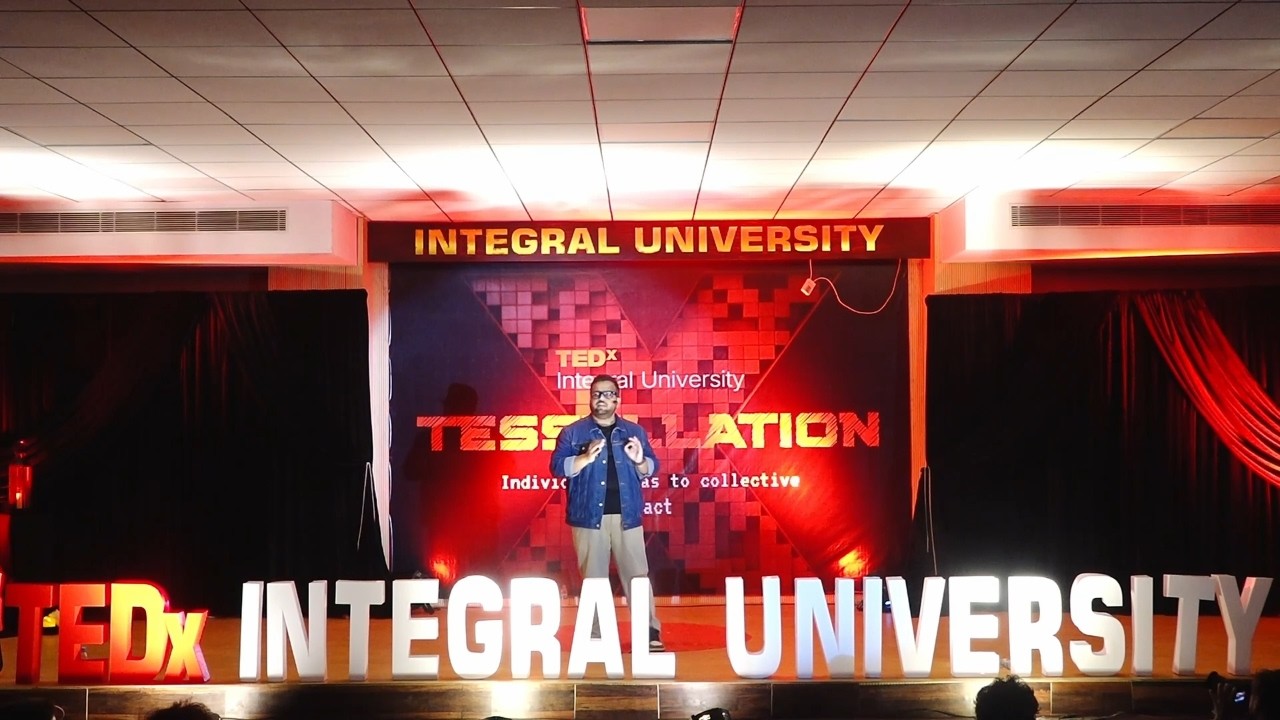
Framed by Heritage: Stepping Out of the Cubicle | Maroof Culmen | TEDxIntegral University
Title history
- Framed by Heritage: Stepping Out of the Cubicle | Maroof Culmen | TEDxIntegral University — observed on 20261027-0204 UTC (YouTube)
Keywords
Summary
231 words
Critical Evaluation
Value of the Information & Strength of the Argument
The value of the information lies in the authentic, first-person account of using digital media to spotlight intangible cultural heritage. The argument is built on personal narrative and concrete observations, such as the battery rickshaw discovery and the contrast between machine-made and handmade goods. While the reasoning is persuasive and emotionally resonant, it relies on anecdotal evidence rather than systematic data. The speaker presents a clear logical progression: from identifying a problem (overtourism and artisan marginalization) to crafting a solution (storytelling and empathy) and demonstrating impact through recognition and community response. The argument is cohesive and supported by specific examples, though it lacks external citations or statistical validity.
Scientific Rigor, Source Quality, Title Accuracy
The talk does not cite formal sources, relying instead on the speaker’s personal experience and observations. The only external link provided is the generic TEDx learning page, which does not directly substantiate the claims. The title is well-aligned with the content: it frames heritage as a lens and describes leaving the cubicle (corporate job) for a purpose-driven creative path. There are no obvious discrepancies between title and content. The absence of verifiable sources is a limitation, but the talk is an opinion piece, not a research presentation, so this is acceptable for the genre. Audience comments (if any) are not provided, preventing analysis of public reception.
229 words
Title / Content Match
The title accurately captures the content: Maroof shares his journey from a corporate design career to documenting Lucknow's heritage, framing heritage as a lens for personal and societal transformation.
Quality & Reliability
6/10
The talk is based on personal experience and anecdotes rather than peer-reviewed evidence, but it offers first-hand insights into cultural preservation and artisan crafts. The speaker's claims about overtourism and artisans' economic conditions are plausible but not rigorously verified.
Key Moments
Markers derived by PSI from the transcript: the creator did not define chapters.
- Introduction with the one-stitch metaphor and the question of how a simple thing can change perspective.
- Maroof recounts his background as a graphic designer and the decision during COVID to start an Instagram page focused on Lucknow's heritage.
- Analysis of overtourism and how search rankings favor popular spots, missing the city's true character; decision to share lesser-known stories.
- Discovery that eight out of ten battery rickshaw drivers were former zardozi artisans, linking traffic congestion to craft decline.
- Explanation of the chikankari process and how sharing it fosters empathy; emphasis on not treating the stories as a shopping directory.
- Conclusion: call to action for everyone to create content and use social media for societal betterment; metaphor of many stitches forming a bigger picture.
Cited Sources
- TEDx Program — General reference to the TEDx format and organization, provided in the video description.
Concurring Sources
- Chikankari — Corroborates the existence and significance of the chikankari craft mentioned in the talk.
- Zardozi — Supports the reference to zardozi embroidery and its economic relevance to artisans.
Contribution & Novelties
The talk offers a personal blueprint for cultural preservation through digital storytelling, emphasizing emotional connection over commercial promotion. The original contribution is the combination of ground-level documentation, a focus on overlooked artisans, and a practical guide for others to replicate. This is illustrated by the battery rickshaw finding, which links traffic patterns to craft evolution.
Pour aller plus loin :
- Geographical Indication (GI) tags — Relevant to the mention of chikankari and zardozi as GI-tagged products; explains the mechanism of protecting regional crafts.
- Intangible Cultural Heritage (UNESCO) — Provides a framework for understanding efforts to safeguard traditional crafts and practices like those discussed.
- Digital Storytelling — Contextualizes Maroof’s approach as a modern method for preserving and sharing cultural narratives.
119 words
Radar Profile
The scores show a moderate information quantity and quality, low technicality, and a mediocre global reliability, reflecting the talk's anecdotal and inspirational nature. The high qualitative aspects (engagement, relevance) are not captured in the numerical scores, but the profile indicates a non-technical, person-driven presentation suitable for a general audience.