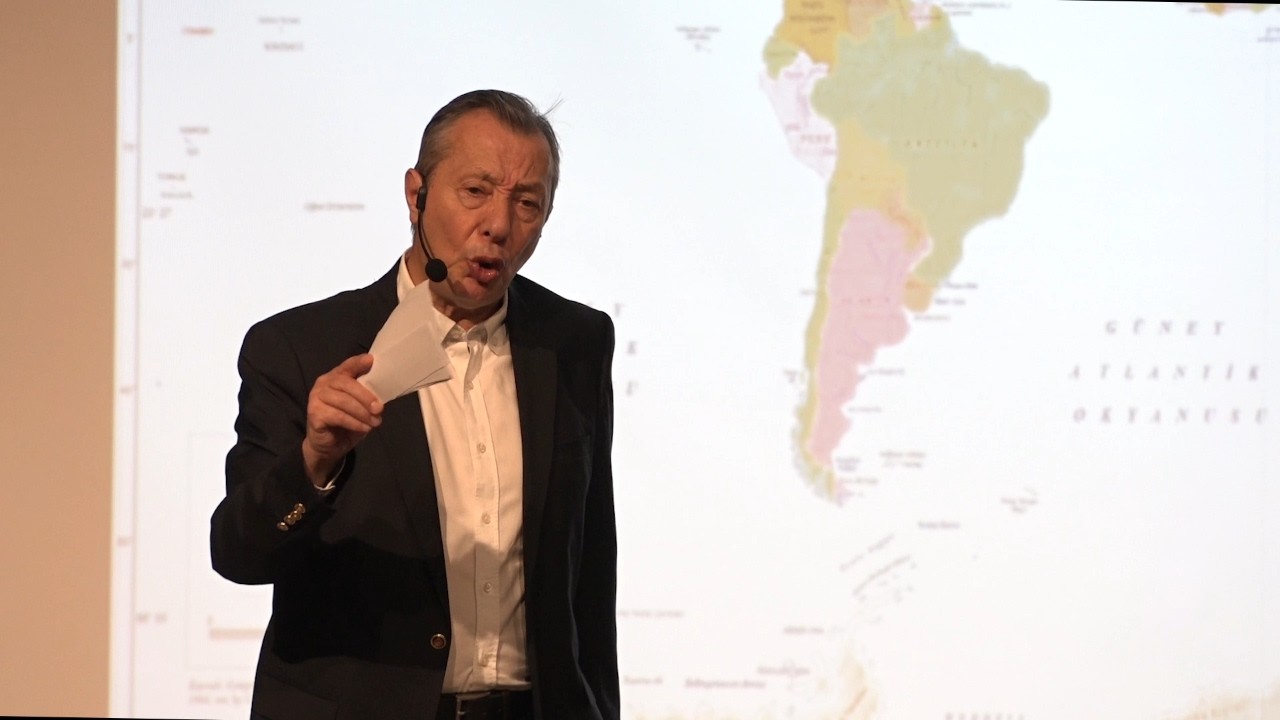
Ait Olamamak... | Ali Rıza Çolak | TEDxSırrı Yırcalı Anatolian HS
Not Belonging... | Ali Rıza Çolak | TEDxSırrı Yırcalı Anatolian HS
Title history
- Ait Olamamak... | Ali Rıza Çolak | TEDxSırrı Yırcalı Anatolian HS — observed on 20261027-0204 UTC (YouTube)
Keywords
Summary
177 words
Critical Evaluation
Value of the Information & Strength of the Argument
The talk’s value lies in its authentic, first-hand account of a career in diplomacy, offering unique insights into the psychological challenge of perpetual foreignness. The argumentation is based on personal narrative rather than systematic evidence, but it is coherent and emotionally resonant. The speaker provides concrete examples that illustrate his points, though some claims (e.g., the number of languages or religions) are presented with confidence but without citation. The overall thesis that cultural belonging is difficult to achieve abroad is well-supported by his testimony.
Scientific Rigor, Source Quality, Title Accuracy
The talk does not rely on external sources, which is typical for personal TEDx stories. The only source mentioned is TED itself in the description, which is not a reference to the content. The speaker’s authority stems from his professional background, which lends credibility to his personal experiences. The title ‘Not Belonging…’ aptly captures the core message, aligning well with the content. No comments were provided, so public feedback cannot be assessed.
171 words
Title / Content Match
The title 'Not Belonging...' accurately reflects the central theme of never fully belonging while serving abroad.
Quality & Reliability
7/10
Anecdotal but grounded in 40 years of diplomatic experience; speaker is a retired ambassador with credible credentials. No scientific claims, but reliable for personal insights.
Key Moments
Markers derived by PSI from the transcript: the creator did not define chapters.
- Introduction: speaker introduces himself and his early decision to become a diplomat.
- Describes the demands of diplomacy and the large number of Turkish embassies.
- Discusses the importance of protecting Turkey's interests and the trust placed in ambassadors.
- Personal story about his first posting in Norway and the struggle for salary.
- Anecdote from China about being mistaken for a local and an encounter with PM Turgut Özal.
- Reflects on the difficulty of ever feeling at home abroad, emphasizing cultural roots.
- Encourages youth to stay energetic and current, and shares his video game testing hobby.
- Final advice: appreciate Turkey and believe in the new generation's potential.
Cited Sources
- TEDx Talks — Referenced in the video description as the organizing entity for independent TEDx events.
Concurring Sources
- TEDx Talks — The platform itself, which hosts independent TEDx events, confirms the format and context of the talk.
Contribution & Novelties
The talk provides a personal, inside look at the life of a Turkish diplomat, focusing on the emotional and psychological aspects of expatriation rather than policy or technicalities. It offers a nuanced view of cultural identity, arguing that true belonging is nearly impossible even with language and cultural immersion. The speaker’s insights on staying young through engagement with modern activities like video game testing is original, as is his emphasis on the importance of representing one’s country with pride.
Pour aller plus loin :
- Diplomacy — Background on the practice of international relations and diplomatic missions.
- Cultural identity — Exploration of how individuals relate to cultures and the concept of belonging.
- Expatriate — Discussion on the experiences of people living outside their native country.
- Turkish Ministry of Foreign Affairs — Detailed information about the institution where the speaker worked for decades.
141 words
Radar Profile
The radar profile shows high scores in quality of information and reliability, but low technical level, reflecting the personal narrative nature. Quantity is moderate, indicating a focused but not exhaustive treatment. Overall, this is a trustworthy humanistic talk rather than a technical analysis.