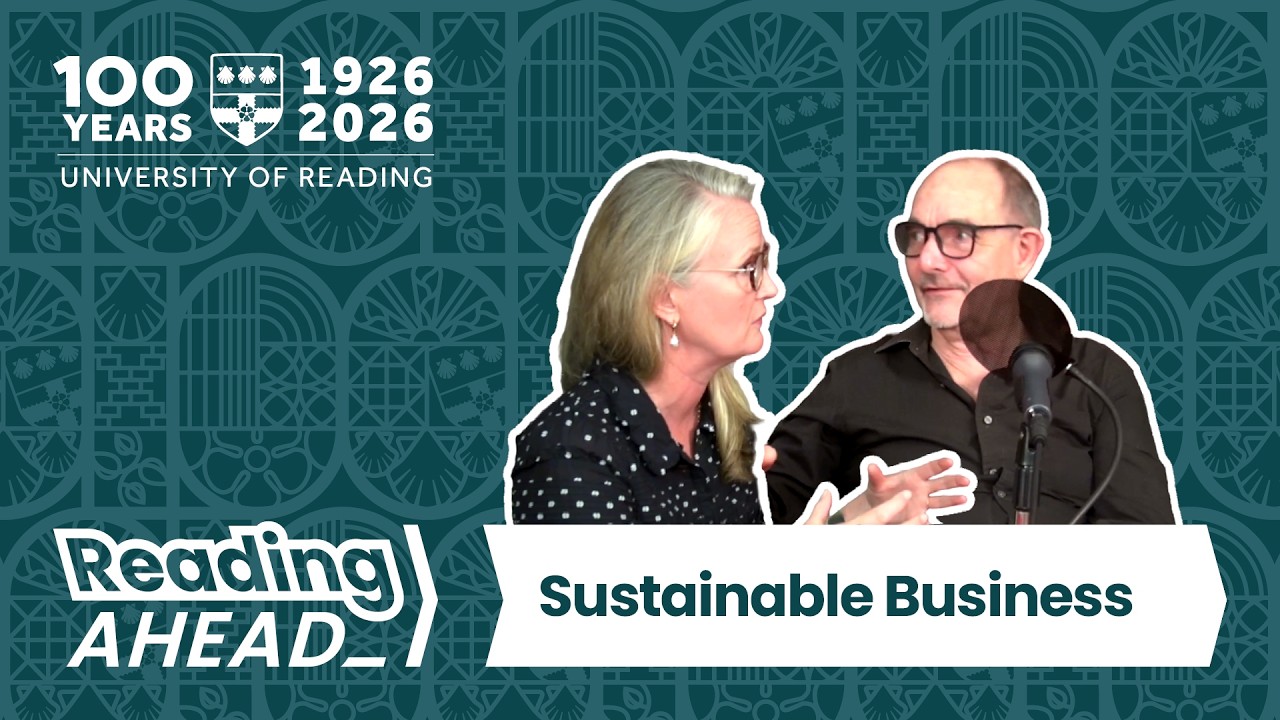
Reading Ahead S1E3: Sustainable Business
Keywords
Summary
184 words
Critical Evaluation
Value of the Information & Strength of the Argument
The value of the information lies in the diverse, experienced perspectives on sustainable business, offering practical insights from finance, education, and entrepreneurship. The argumentation is solid, built on logical reasoning and real-world examples, but it remains largely anecdotal and opinion-driven rather than empirically grounded. The speakers build on each other’s points well, presenting a coherent vision of purpose-driven business, yet they do not provide quantitative evidence or cite specific research, leaving some claims open to scrutiny.
Scientific Rigor, Source Quality, Title Accuracy
The scientific rigor is moderate: while the speakers are credible, the discussion draws heavily on personal experience and illustrative company examples (Patagonia, Virgin, Berkshire Hathaway, CEDA) without formal citations or data. The title perfectly matches the content, which systematically addresses sustainable business practices, obstacles, and potential solutions. No external written sources are provided beyond social media links, and no research papers are referenced, so the episode is better suited for introductory or consciousness-raising purposes than for rigorous academic study.
170 words
Title / Content Match
The title accurately reflects the episode's exploration of sustainable business practices, including purpose, ethics, and the role of finance.
Quality & Reliability
8/10
The discussion features recognized experts with extensive professional experience in business, sustainability, and finance. The reasoning is coherent and well-presented, though it relies on personal anecdotes and case examples rather than empirical data or peer-reviewed sources.
Key Moments
Markers derived by PSI from the transcript: the creator did not define chapters.
- Introduction of guests Amy Clarke and Jon Foster-Pedley, and their backgrounds in sustainability and business education.
- Amy Clarke describes her journey from environmental consultancy to founding Tribe Impact Capital, emphasizing the disconnect between people and their money.
- Jon Foster-Pedley shares his career path and the mission of Henley Business School Africa, highlighting the importance of building people to build businesses that build Africa.
- Discussion on the purpose of business: profit as a lubricant, not the goal; the need for service and stakeholder focus.
- Amy Clarke explains the flaws of financial short-termism and the rise of B Corps, calling for a broader stakeholder approach.
Contribution & Novelties
The episode contributes a thoughtful, conversational synthesis of sustainable business principles, emphasizing the integration of purpose and profit, and the need to reconnect finance with well-being. It offers fresh perspectives from Africa and the UK, highlighting education and leadership as catalysts for change. The original input lies in the guests’ personal insights and the call for a paradigm shift in business education.
Pour aller plus loin :
- B Corporation (certification) — Discusses the certification model that locks in mission-driven governance, relevant to Amy Clarke’s role as co-chair of B Corp UK.
- Impact investing — Explores investments made with the intention to generate positive social and environmental impact alongside financial returns, core to Tribe Impact Capital’s approach.
- Dunbar’s number — The cognitive limit on meaningful relationships, cited as a design principle in companies like Gore, supporting the idea that smaller teams foster collaboration and trust.
144 words
Radar Profile
The radar profile shows a balanced presentation with strong qualitative insights, moderate quantitative depth, and high reliability due to expert credibility. The scores suggest a discussion that is informative but less technical, with ample room for more rigorous evidence.