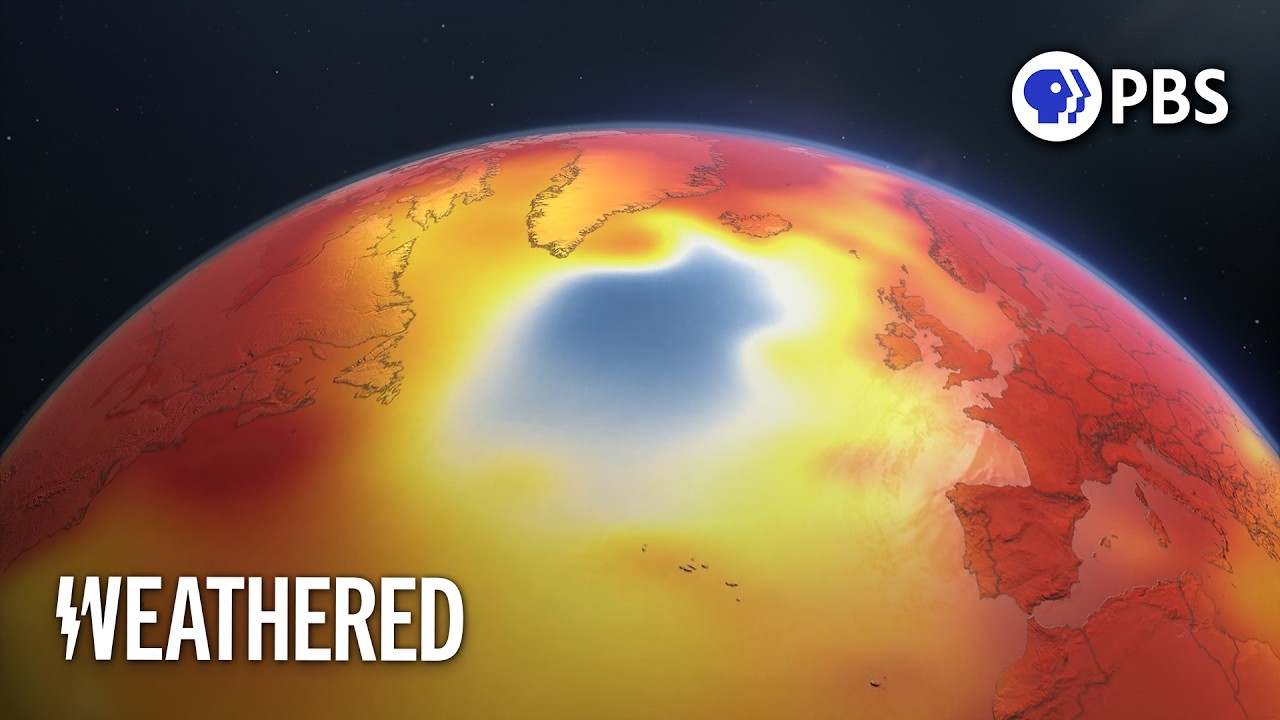
This Cold Spot is a BIG Problem... And it's Getting Bigger
Title history
- This Cold Spot is a BIG Problem... And it's Getting Bigger — observed on 20261105-2136 UTC (YouTube)
Keywords
Summary
179 words
Critical Evaluation
Value of the Information & Strength of the Argument
The video provides substantial value by translating complex oceanographic research into an accessible narrative without oversimplifying. It clearly distinguishes between direct observations (RAPID array since 2004), indirect evidence (the cold blob), and model-based projections, allowing viewers to understand the weight of each line of evidence. The argumentation is structured around a central thesis: the AMOC’s tipping point is controlled by the rate of warming, not absolute temperature. The reasoning is logical and supported by concrete examples and expert interviews, though the presentation could have benefited from more rigorous step-by-step ordering, as noted by some commenters. The inclusion of both alarming and hopeful aspects (the possibility of stability under slower warming) creates a balanced, non-dogmatic perspective.
Scientific Rigor, Source Quality, Title Accuracy
The scientific rigor is high, with direct references to peer-reviewed research and acknowledged uncertainties. The video cites a 2025 study (likely by van Westen et al.) and the global tipping report, though it does not provide direct URLs to these papers—an omission that could undermine verifiability. The title accurately captures the core message but is somewhat sensationalized; it is justified by the content’s emphasis on the growing urgency. The use of expert testimony and clear explanations of model dynamics contributes to the credibility. However, the lack of formal citations (e.g., on-screen references or linked papers) in the video description (aside from promotional links) is a minor weakness.
237 words
Title / Content Match
The title accurately reflects the content, which focuses on the alarming cold spot as a symptom of a potentially collapsing AMOC, with the explicit message that the problem is growing in urgency.
Quality & Reliability
8/10
The video presents recent research on the AMOC tipping point, citing named scientists and referencing a 2025 study and the global tipping report. The explanations are consistent with established climate science, though the model-based claims are not yet fully consensus. The BBC-style production is professional and generally accurate.
Key Moments
Markers derived by PSI from the transcript: the creator did not define chapters.
- Introduction of the cold spot (North Atlantic warming hole) and its ominous significance.
- Explanation of the AMOC as a massive heat conveyor belt, with description of warm northward surface flow and cold southward deep return.
- Discussion of the cold blob as a fingerprint of AMOC weakening; consequences for Europe including drastic temperature drops and global impacts like monsoon shifts and sea-level rise.
- Introduction to direct and indirect evidence for AMOC weakening, including RAPID array observations and the role of climate models.
- Discussion of traditional temperature-based tipping points and the new idea that the rate of warming is the critical factor, not absolute temperature.
- Explanation of rate-induced tipping: rapid surface warming creates density gradients that halt deep water formation, leading to collapse.
- Good news: slower warming could allow the AMOC to adjust and remain stable; emphasis on present-day responsibility to slow warming.
- Conclusion: call to action and promotion of audience survey.
Cited Sources
- PBS Donate Terra — General support link for PBS Terra channel, referenced in description.
- Weathered Merch — Merchandise link mentioned in description, not scientific source.
- PBS Audience Survey 2026 — Survey promoted at the end of the video for audience feedback.
Contribution & Novelties
The video’s original contribution lies in highlighting the paradigm shift in understanding AMOC tipping: from a fixed temperature threshold to a rate-dependent mechanism. This is a novel perspective from recent research (van Westen et al., 2025) that has not yet permeated mainstream media. The explanation of the cold blob as a fingerprint and the synthesis of evidence from multiple sources provide a comprehensive overview, though the video does not present new data itself. It effectively translates complex model results into an intelligible narrative for a general audience.
Pour aller plus loin :
- Atlantic meridional overturning circulation — Essential background on the AMOC system and its role in climate.
- Tipping points in the climate system — Overview of various climate tipping elements, including the AMOC, and the concept of thresholds.
- RAPID array — Information about the monitoring array used to observe the AMOC since 2004, as mentioned in the video.
149 words
Radar Profile
The radar profile shows high scores in information quantity and quality, with moderate technical depth and high reliability. The video excels in delivering substantial, accurate information in an engaging format, while the technical level is accessible to a broad audience, and the scientific rigor is solid with expert involvement. The lowest relative score is technical level, reflecting the intentionally accessible presentation, but this does not detract from the overall value.
💬 Sur les 30 commentaires analysés, le ton est globalement positif avec quelques critiques constructives, principalement concernant le montage et la structure du récit, tandis que de nombreux téléspectateurs expriment leur appréciation pour le contenu éducatif et la clarté des explications.