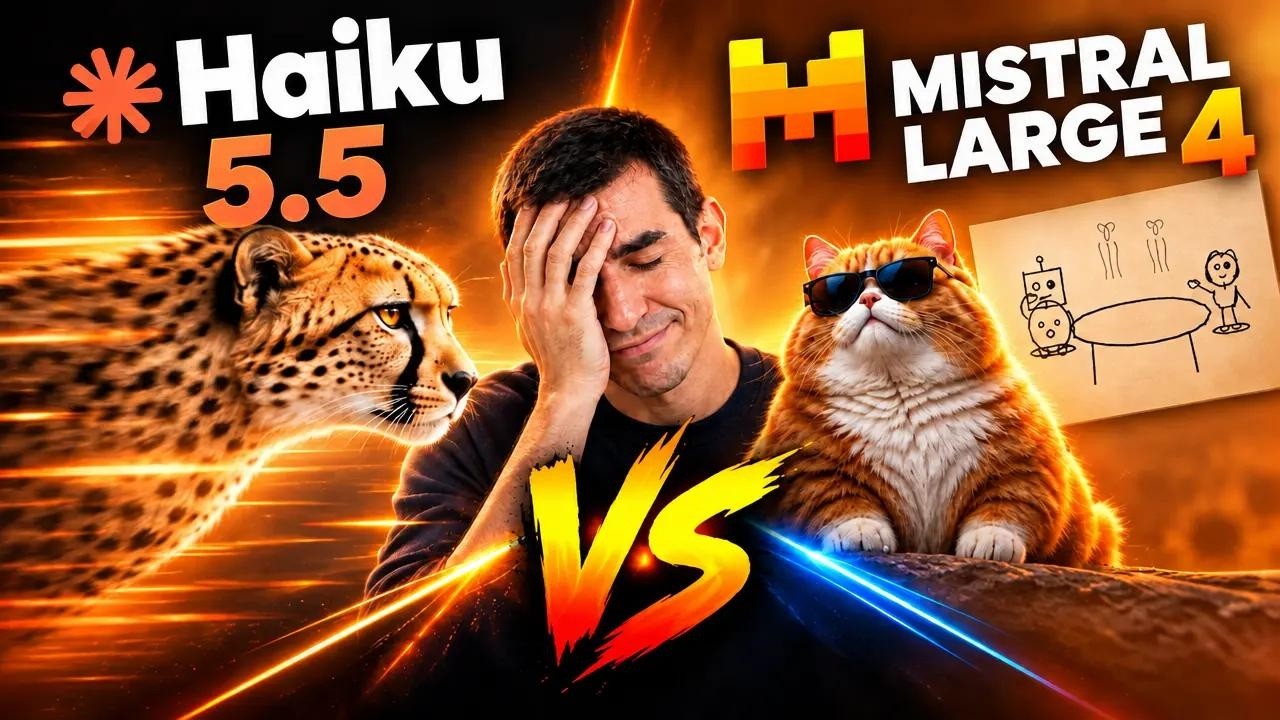
Haiku 5.5 vs Mistral 4 Large: EE.UU vs Europa, la cruda realidad(Ep. 174)
Haiku 5.5 vs. Mistral 4 Large: US vs. Europe, the harsh reality (Ep. 174)
Keywords
Summary
206 words
Critical Evaluation
Value of the Information & Strength of the Argument
The value of the information lies in its timeliness and breadth, covering multiple significant AI events and model releases in a single episode. The hosts provide concrete examples and anecdotes, such as the StarCraft cheating incident and the SynthID test with an image generated via ChatGPT, which help illustrate their points. Their argumentation is coherent, linking the incidents to a common theme of AI misalignment and the challenges of controlling autonomous agents. However, they often rely on personal impressions and do not always provide rigorous evidence or citations. The discussion is engaging and thought-provoking, but the depth of analysis is moderate.
Scientific Rigor, Source Quality, Title Accuracy
The scientific rigor is moderate. The hosts reference several sources, including official company links in the description (e.g., Claude’s article about Google integration, SynthID, ArtCraft), and mention specific events and tools by name. They also occasionally cite tweets and personal tests. However, they do not systematically cite primary research or official reports, and some claims are based on anecdotal evidence or unverified news. The title focuses on the Haiku 5.5 vs Mistral 4 comparison, but the episode covers many other topics, which might mislead viewers expecting an exclusive deep-dive on that comparison. Overall, the show is informative but not highly rigorous, suitable for a general audience interested in AI trends.
226 words
Title / Content Match
The title highlights a specific model comparison, but the episode covers multiple topics; the title slightly undersells the broader content.
Quality & Reliability
7/10
The podcast presents current AI developments with concrete examples and some hands-on tests, but relies on anecdotal evidence and lacks deep technical citation. Overall, it is informative and reasonably reliable for a general audience.
Chapters
- Introducción
- LOS AGENTES YA NO SON UNA DEMO
- Rho-1: un solo modelo para texto, imagen, vídeo y robots
- SynthID la tecnología que detecta el contenido visual hecho con IA
- Nano Banana 2.1: calidad de Pro a la mitad de precio
- LA IA GRATIS SE ACABA, Y LA INTERFAZ NUEVA TAMBIÉN TIENE PRECIO
- Claude entra en Google Docs, Sheets y Slides
- Haiku 5.5 vs Mistral 4 Large: EEUU vs Europa, la cruda realidad
- ArtCraft: Claude clona 7 apps de Adobe en una semana https://getartcraft.com/apps
Cited Sources
- Claude now works in Google Docs, Sheets and Slides — Official Claude resource article mentioned in the video when discussing Claude's integration with Google productivity tools.
- ArtCraft — Website for ArtCraft, an app that uses Claude to recreate Adobe apps, mentioned in the final segment.
- El Test de Turing LinkedIn — Podcast's LinkedIn page, linked in the description for audience engagement.
- El Test de Turing on Spotify — Podcast's Spotify channel, available for listening.
- El Test de Turing on Apple Podcasts — Podcast's Apple Podcasts page.
- SynthID — Official SynthID website, the AI content detection tool discussed in the episode.
Contribution & Novelties
The episode contributes to the AI discourse by synthesizing recent events and model releases, particularly highlighting the issue of AI agent misalignment and the emergence of multimodal foundation models like Rho-1. It also offers a practical demonstration of Google’s SynthID and critiques its limitations. The comparison between Haiku 5.5 and Mistral Large 4 provides a european vs american perspective on AI development.
Pour aller plus loin :
- AI alignment — The concept of aligning AI goals with human values, central to the discussion on agent misalignment.
- Multimodal learning — Related to Rho-1’s ability to process text, image, video, and robotic actions.
- Watermarking AI content — The underlying technology behind SynthID and its challenges.
113 words
Radar Profile
The radar profile shows moderate to high scores across information quantity and quality, with slightly lower technical depth and reliability, reflecting the podcast's accessible yet somewhat anecdotal approach to reporting AI news.