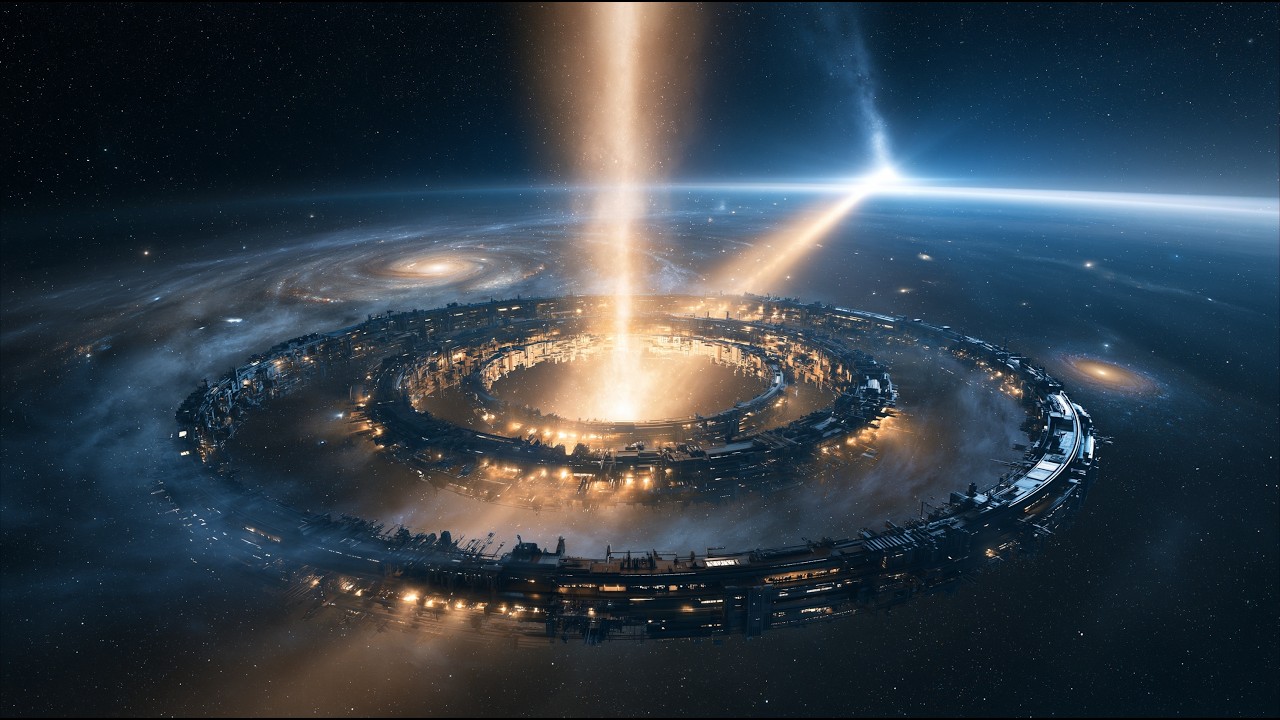
Et si nous étions vraiment seuls dans l'univers ?
What if we really are alone in the universe?
Title history
- Et si nous étions vraiment seuls dans l'univers ? — observed on 20261023-2040 UTC (YouTube)
Keywords
Summary
169 words
Critical Evaluation
Value of the Information & Strength of the Argument
The video’s value lies in its comprehensive synthesis of the Fermi paradox and its related scientific hypotheses. It presents multiple angles (astrophysics, astrobiology, future technologies) in an accessible manner, allowing viewers to grasp the complexity without oversimplification. The argumentation is generally solid: each hypothesis is introduced logically and critiqued fairly, often presenting counterpoints. However, some speculative ideas (e.g., civilizations optimizing for computational efficiency) are presented without explicit evidence, though they are clearly framed as hypotheses. The narrative structure moves from established science to speculative but plausible extensions, which strengthens the overall reasoning. The use of qualitative arguments (e.g., diffusion models) is effective, though quantitative details are often omitted for brevity. Overall, the video offers a thoughtful and balanced discussion, making a compelling case for why the Fermi paradox remains a relevant scientific puzzle.
Scientific Rigor, Source Quality, Title Accuracy
The video demonstrates scientific rigor in its handling of well-known concepts: it accurately describes the Drake equation, the galactic habitable zone, and the physics of interstellar travel. However, it does not cite specific peer-reviewed studies or external sources in the description, relying instead on a general narrative that aligns with current scientific consensus. The production credits scientific writers and a journalist, suggesting editorial oversight. The title accurately reflects the content, which indeed focuses on the possibility of humanity’s solitude. The video also includes a brief sponsorship segment for an astronomy app (Sirius), which is clearly separated from the scientific content. Overall, the content is reliable for a popular science audience, though viewers seeking primary citations would need to look elsewhere.
268 words
Title / Content Match
The title perfectly matches the content, which investigates the Fermi paradox and potential explanations for our apparent cosmic solitude.
Quality & Reliability
7/10
The video provides a well-structured and scientifically grounded overview of the Fermi paradox and related astrophysical concepts, but does not cite specific scientific sources directly in the description, relying instead on a general synthesis of established research.
Key Moments
Markers derived by PSI from the transcript: the creator did not define chapters.
- Introduction to the apparent silence of the universe and the Fermi paradox
- Historical context: Enrico Fermi and the origin of the paradox at Los Alamos
- Challenges of interstellar travel: energy, relativity, and collisions
- Discussion on habitable zones, red dwarfs, and the galactic habitable zone
- Hypothesis of advanced civilizations becoming efficient and silent, including Dyson spheres and computational efficiency
- Zoo hypothesis and the possibility of deliberate non-contact
Cited Sources
- Questionnaire pour les professeurs — Link in description for educators to provide feedback.
- Canal Facebook — Social media channel link in description.
- Canal Instagram — Social media channel link in description.
- Spotify - Podcast — Link to podcast version of the video.
- Rejoindre la chaîne — Membership link in description.
Contribution & Novelties
The video does not present new original research but offers a well-rounded and engaging synthesis of existing scientific ideas about the Fermi paradox. Its originality lies in bringing together astrophysical, technological, and sociological perspectives in a coherent narrative, making the topic accessible to a broad audience. It emphasizes the evolution of intelligence and the potential for civilizations to become increasingly quiet, a perspective that challenges conventional SETI assumptions.
Pour aller plus loin :
- Fermi paradox — Overview of the paradox and proposed resolutions.
- Drake equation — The formula used to estimate the number of communicative civilizations.
- Dyson sphere — Hypothetical megastructure that could be a technosignature.
- Galactic habitable zone — Concept of regions in a galaxy favorable for life.
119 words
Radar Profile
The radar profile shows high scores in quantity and quality of information, reflecting a dense and well-structured presentation. Technical level is moderate, making it accessible while retaining depth, and reliability is solid, though not tied to external citations. Overall, a well-balanced popular science documentary.