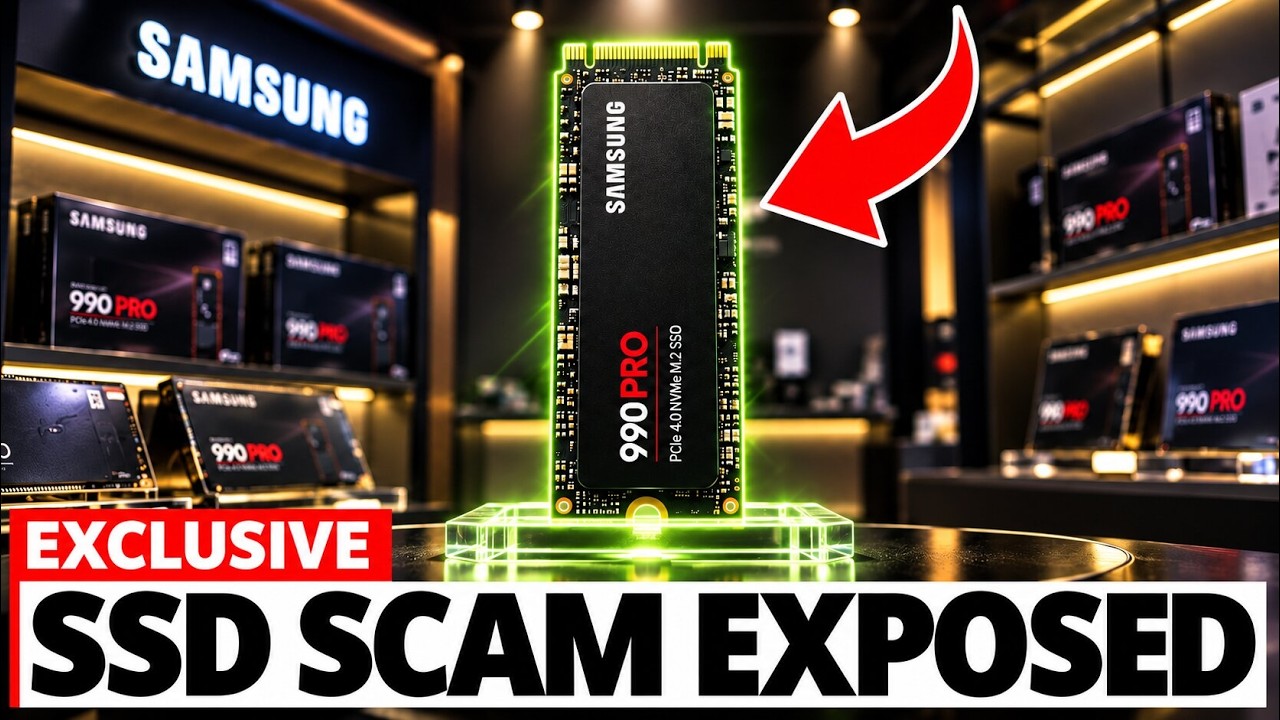
8 SSD Brands To NEVER Buy (And 3 That Are Actually WORTH It)
Title history
- 8 SSD Brands To NEVER Buy (And 3 That Are Actually WORTH It) — observed on 20261031-2308 UTC (YouTube)
Keywords
Summary
149 words
Critical Evaluation
Value of the Information & Strength of the Argument
The video provides considerable value by aggregating scattered reports from reputable tech outlets into a single, actionable consumer guide. It offers specific examples with brand names, model numbers, and measurable performance drops, making the arguments concrete. The technical explanations of flash types, cache, and DRAM-less SSDs are clear and directly tied to the issues discussed, strengthening the credibility of the recommendations. The argumentation is generally persuasive, though the ranking itself is opinionated and depends on the author’s weighting of reliability versus price. The inclusion of the 2026 flash shortage context adds depth, showing why these issues matter financially. Overall, the video succeeds in informing and equipping viewers to make more educated purchasing decisions.
Scientific Rigor, Source Quality, Title Accuracy
The video demonstrates rigor by citing multiple independent sources: Tom’s Hardware, TechPowerUp, ComputerBase, The Verge, The Register, Review Geek, Next Impact, Storage Review, Puget Systems, and TrendForce. These sources are reputable and the specific incidents referenced (e.g., Tom’s Hardware retest of Crucial P2, SanDisk class-action lawsuit) are verifiable. The video also distinguishes between correlation and causation, as seen in the caveat about a Windows update falsely blamed for drive failures. The title is an accurate summary of the content; the word ‘NEVER’ is sensational but the ranking is clearly presented. No significant methodological flaws were found, although some claims rely on anecdotal user reports. The public comments were not analyzed, as none were provided.
242 words
Title / Content Match
The title accurately reveals the content: a ranking of 8 brands to avoid and 3 to recommend. It is sensationalist but faithful.
Quality & Reliability
7/10
The video synthesizes multiple credible sources (Tom's Hardware, The Verge, TechPowerUp, etc.) with specific data and teardown evidence, but some claims rely on individual user reports and the ranking is subjective.
Key Moments
Markers derived by PSI from the transcript: the creator did not define chapters.
- Introduction: fake Samsung 990 Pro, context of 2026 flash shortage.
- #8: No-name 16TB portable drives revealed to contain microSD cards.
- #7: PNY CS900 substitutes QLC flash for TLC without notice.
- #6: Silicon Power P34A80 switches to slower controllers across batches.
- #5: Adata XPG SX8200 Pro swaps controller, reducing speed by up to 20%.
- #4: Kingston NV1/NV2 use variable components; about 50 known NV2 versions.
- #3: Crucial P2 switches to QLC, Micron exits consumer market.
- #2: Western Digital budget drives have NAND swap and DRAM-less 24H2 crashes.
- #1: SanDisk Extreme Portable data loss and class-action lawsuit.
- Top 3 worth-it drives: WD SN850X, Samsung 9100 Pro, SK Hynix P51; conclusion with buying tips.
Cited Sources
- Tom's Hardware — Reviews and teardowns cited for PNY, Silicon Power, Adata, Crucial, and WD issues.
- The Verge — Reported on SanDisk Extreme data loss and replacement drive failure.
- The Register — Covered the SanDisk lawsuit and lawyer's comments.
- TechPowerUp — Review of Kingston NV1.
- ComputerBase — Analysis of Kingston NV2 variable components.
- Review Geek — Teardown of fake 16TB portable drive.
- Next Impact — Investigation of PNY CS900 flash type.
- Storage Review — Testing of SK Hynix P51.
- Puget Systems — Observed high failure rates on Samsung 980 Pro.
- TrendForce — Market data on flash price increases.
Concurring Sources
- Tom's Hardware — Multiple reports corroborate component swaps in various SSDs.
- The Verge — Confirmed SanDisk Extreme failures and replacement drive issues.
Contribution & Novelties
The video’s original contribution is to consolidate scattered technical reports and legal actions into a single consumer-oriented ranking, providing a clear framework for evaluating SSD trustworthiness. It goes beyond simple benchmarks by emphasizing manufacturer transparency and component sourcing. The practical advice (check for DRAM, choose TLC, buy from authorized retailers) is actionable and backed by examples.
Pour aller plus loin :
- Flash memory — Overview of flash memory technology and cost factors.
- Solid-state drive — General architecture and reliability considerations.
- Multi-level cell — Explanation of TLC and QLC NAND types.
- Data recovery — The importance and cost of recovering lost data.
101 words
Radar Profile
The radar profile shows strong scores in technical depth (8) and information quantity (8), with slightly lower but still solid scores for information quality (7) and global reliability (7). This indicates a technically rich video with substantial content, but with some dependence on subjective interpretation and anecdotal evidence, preventing a perfect reliability score.