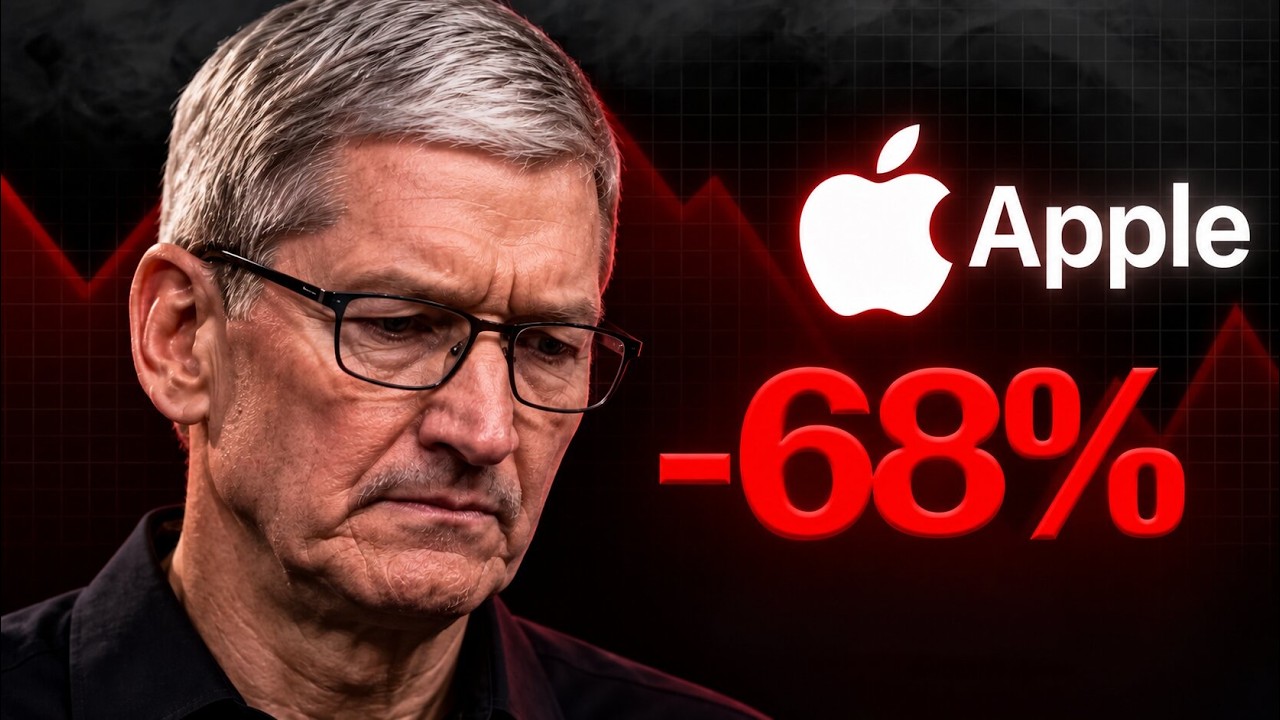
Why Apple is Suddenly Losing to Huawei
Title history
- Why Apple is Suddenly Losing to Huawei — observed on 20261031-2314 UTC (YouTube)
Keywords
Summary
186 words
Critical Evaluation
Value of the Information & Strength of the Argument
The video provides substantial value by synthesizing a wide range of quantitative data from reputable research firms into a coherent narrative. It offers a nuanced view, acknowledging Apple’s financial success while explaining the strategic erosion in market position. The argumentation is solid: it builds from specific data points, uses multiple sources to cross-verify claims, and presents both sides of the story, including counterpoints such as Apple’s continued dominance in best-selling models and Huawei’s slower revenue growth. The explanation of the ’losing while winning’ paradox is well-argued, using the concept of market share versus revenue, and the analysis of ecosystem control is persuasive. The video also contextualizes the situation within broader trends like Chinese government policies and supply chain dynamics, strengthening the overall argument.
Scientific Rigor, Source Quality, Title Accuracy
The video cites numerous respected research firms—IDC, Counterpoint, Omdia, and CNBC—and uses specific figures to support its claims. However, it does not provide direct links to these sources, and some performance claims (e.g., Kirin chip density, IP ratings) rely on Huawei’s own announcements. The title is slightly misleading, as it implies a more dramatic decline than the video actually demonstrates; the content clarifies that Apple is losing market share and strategic position, not profitability. The video also includes a balanced discussion of potential flaws in Huawei’s story, such as its reliance on domestic testing and the risk of future price increases. Overall, the rigor is high for a news analysis, though it might benefit from more explicit source references and clearer distinction between independent data and corporate claims.
266 words
Title / Content Match
The title suggests Apple is losing outright, but the video clarifies that Apple is still profitable and winning on specific models, just losing market share and strategic position. The title is somewhat provocative but aligns with the overall theme.
Quality & Reliability
8/10
The video relies on market data from IDC, Counterpoint, and Omdia, and presents both sides of the argument. However, some claims rest on Huawei's own testing and projections, and the video's narrative is balanced rather than purely objective.
Key Moments
Markers derived by PSI from the transcript: the creator did not define chapters.
- Introduction: Huawei's Mate XT2 launch and Apple's upcoming folding iPhone.
- Market data: Huawei vs Apple sales in Q1 2026, with Huawei leading in shipments.
- Apple's record revenue in China despite losing market share.
- Background on US sanctions against Huawei and their initial impact.
- Huawei's comeback with Mate 60 and the surge of patriotic buying.
- HarmonyOS development and adoption milestones, reaching 80 million devices.
- Memory chip price surge and its polarizing effect on the market.
- Chinese government subsidy program and its impact on pricing strategies.
- Apple Intelligence delays and local partnerships with Alibaba and Baidu.
- Comparison of iPhone 18 Pro and Huawei Mate X-T2 foldable, with price and feature differences.
- Counterarguments: Apple's strong sales figures and Huawei's own growth slowdown.
- Leadership changes: John Ternus becomes CEO, Huawei's He Tingbo unveils logic folding.
- Conclusion: Huawei controls the stack, Apple is the guest in China.
Cited Sources
- IDC China Smartphone Market Data — Cited for shipment numbers and market share figures for Q1 and Q2 2026.
- Counterpoint Research — Used for weekly sales trackers, market share estimates, and analyst quotes on Apple and Huawei performance.
- Omdia — Provided data on market share, polarization, and forecasts for China's smartphone market.
- CNBC — Referenced for information on sanction impact on Huawei's consumer business.
- Canalys — Mentioned for analysis of Apple's drop in China rankings.
Concurring Sources
- IDC — Data showing Huawei's market share growth and Apple's unit sales figures align with the video's main thesis.
- Counterpoint Research — Analyst quotes and weekly sales trackers confirm Huawei's leading position and Apple's declining share.
- Omdia — Reports on market polarization and Huawei's resilience with domestic supply chains support the argument.
Dissenting Sources
- Smart Analytics Global — Analysts expect the Huawei Mate X-T2's sales impact to remain limited, arguing that Apple's ecosystem loyalty will protect its foldable buyers.
- Wall Street consensus — Apple's June quarter China revenue came in below estimates, but some analysts still see Apple's ecosystem as a strong moat.
Contribution & Novelties
The video’s original contribution lies in its synthesis of multiple data points and narratives to present a nuanced picture of the Apple-Huawei competition in China. It highlights the paradox of Apple’s record revenue while losing market share, and explains the strategic implications of Huawei’s full-stack control. The analysis is current and well-structured, offering a balanced view that avoids simple narratives.
Pour aller plus loin :
- HarmonyOS — The operating system developed by Huawei, central to the ecosystem discussion.
- Huawei — Overview of the company’s history and challenges, including US sanctions.
- Apple Inc. — Context on Apple’s global business and strategies.
- China smartphone market — General background on the industry dynamics.
110 words
Radar Profile
The profile shows high quantity and quality of information, moderate technical depth, and high reliability, reflecting a well-researched news analysis that balances multiple perspectives.