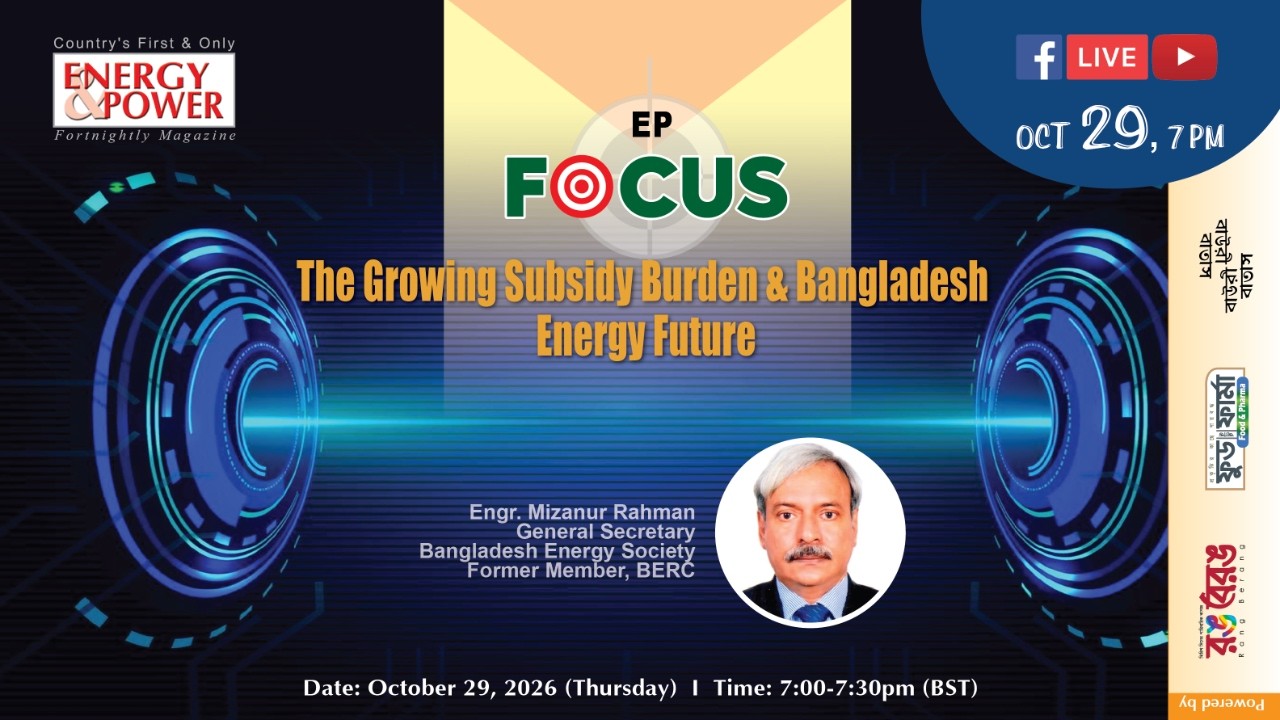
EP FOCUS: The Growing Subsidy Burden & Bangladesh Energy Future
Title history
- EP FOCUS: The Growing Subsidy Burden & Bangladesh Energy Future — observed on 20261101-0409 UTC (YouTube)
Keywords
Summary
180 words
Critical Evaluation
Value of the Information & Strength of the Argument
The video provides valuable insights from an experienced insider, especially regarding the practical limitations of solar expansion, the flaws in the current net metering scheme, and the strategic necessity of managing fuel resources across seasons. The argumentation is logical and grounded in real-world examples like Sri Lanka and Australia. However, the discussion is largely qualitative; few concrete figures or cited studies are provided, and some points are repeated. The guest proposes actionable measures, such as implementing two meters and dynamic tariffs, but stops short of deep technical or economic analysis. The overall value lies in the expert perspective and candid policy recommendations rather than rigorous quantitative evaluation.
Scientific Rigor, Source Quality, Title Accuracy
The interview features a credible expert with regulatory experience, but no explicit sources, reports, or data are cited during the talk. The discussion references international examples and price mechanisms (e.g., Henry Hub, Brent) without providing verifiable references. The title accurately matches the content, which focuses on subsidy burden and future energy scenarios. There is a technical glitch early in the interview that disrupts flow, but the content remains coherent. The lack of sources and the reliance on general knowledge limit the scientific rigor, although the expert’s experience lends credibility. No comments were provided for analysis.
217 words
Title / Content Match
The title accurately reflects the main theme of the discussion on subsidy burden and energy future for Bangladesh.
Quality & Reliability
7/10
The video features a recognized energy expert and former BERC member, providing informed analysis of Bangladesh's energy crisis. However, the interview suffers from audio/connectivity issues and some assertions lack precise data. The discussion is valuable but not deeply sourced, relying on general knowledge and personal expertise.
Key Moments
Markers derived by PSI from the transcript: the creator did not define chapters.
- Introduction and context: energy crisis due to geopolitical conflicts, subsidy cost $4.12 billion in 8 months.
- Discussion on LNG spot market dependency and price volatility, suggesting diversification to US Henry Hub-linked contracts.
- Rahman critiques solar targets, stating short-term solar rush is unrealistic; recommends focusing on rural rooftops and better tariffs.
- Proposal for two meters and time-of-day tariffs to encourage battery storage; warns of grid stability risks similar to Sri Lanka.
- Discussion on domestic coal extraction (Phulbari) as a way to reduce import dependency and subsidy burden.
- Analysis of load-shedding causes: economic crisis and management inefficiencies; recommends optimizing fuel mix and ensuring coal supply.
- Critique of subsidy structures: calls for targeted subsidies to vulnerable groups, not blanket fuel subsidies.
- Recommendation to accept some load shedding during winter to save oil for summer peak; emphasizes maintenance of coal plants.
Contribution & Novelties
The video brings an insider perspective on the operational difficulties of energy transition in Bangladesh, particularly the mismatch between policy targets and ground realities. It proposes concrete modifications such as dual metering and time-of-use tariffs to make rooftop solar viable for residential consumers. The discussion also highlights the strategic use of winter to conserve oil for summer, an often-overlooked planning approach.
Pour aller plus loin :
- Energy subsidies — Provides background on subsidy types and global scale.
- Henry Hub — Natural gas price benchmark referenced in the talk.
- Net metering — Explains the billing mechanism critically evaluated for rooftop solar.
- Load shedding — Context for the planned outages discussed.
109 words
Radar Profile
The radar profile shows moderate scores across all dimensions, with slightly higher scores for information quantity and reliability, indicating a reasonably informative and trustworthy content. Technical depth and quality are slightly lower, reflecting the conversational nature and lack of quantitative support.