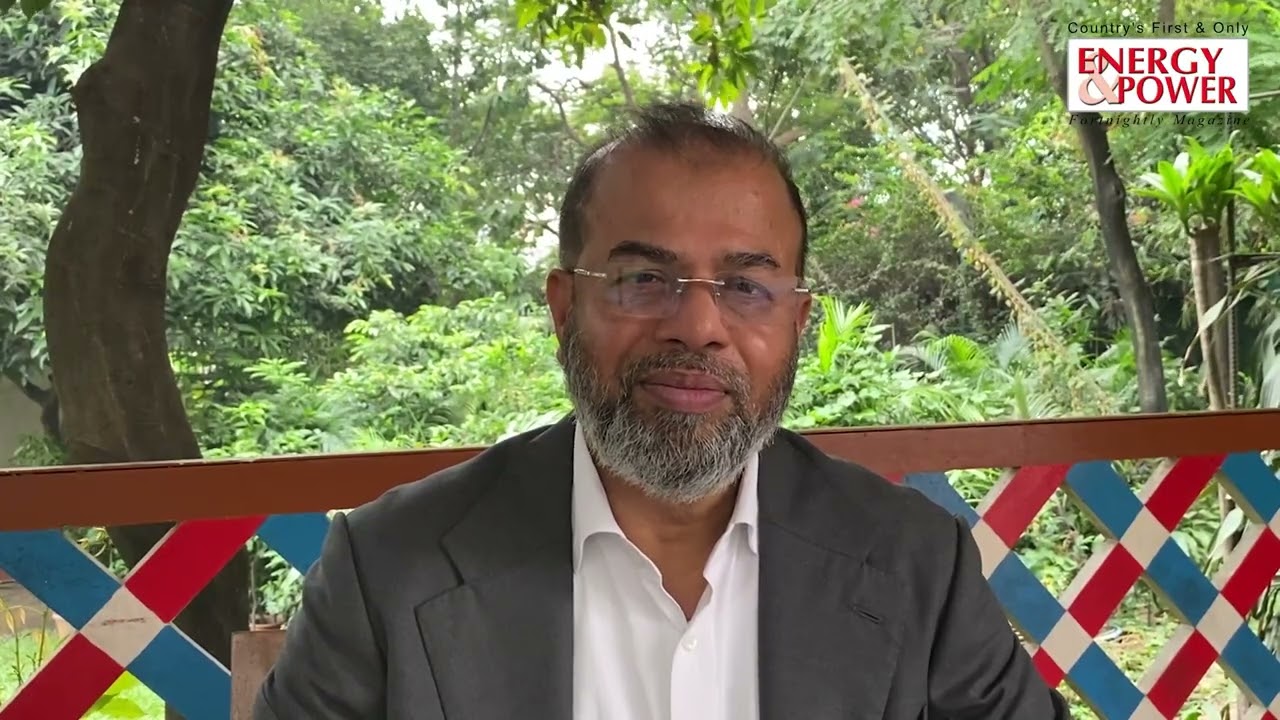
1.5°c goal will not be easy to achieve | Shaikh Faridul Islam | ENERGY & POWER
Title history
- 1.5°c goal will not be easy to achieve | Shaikh Faridul Islam | ENERGY & POWER — observed on 20261102-0921 UTC (YouTube)
Keywords
Summary
152 words
Critical Evaluation
Value of the Information & Strength of the Argument
The value lies in presenting the perspective of a policymaker from a vulnerable developing country, highlighting real-world challenges in climate finance and burden-sharing. The argumentation relies heavily on political advocacy and national self-justification rather than rigorous scientific analysis. The minister cites concrete national initiatives (tree planting, solar energy) but avoids addressing potential criticisms or technical hurdles. His reasoning about pressuring developed nations is plausible but lacks strategic detail or evidence of effectiveness. The interview provides insight into the Global South’s negotiating stance but does not offer novel solutions or deep analytical depth.
Scientific Rigor, Source Quality, Title Accuracy
The video is essentially a political interview, not a scientific presentation. The only explicit source mentioned is the UNEP Emissions Gap Report, which is referenced briefly without specific figures. The minister’s statements are not backed by peer-reviewed studies or official documents. The title accurately advertises the discussion about the 1.5°C goal, so the title-content alignment is good. No external sources are cited in the description, and no verification of claims is provided. The overall scientific rigor is low, but the content is relevant to climate policy discourse.
194 words
Title / Content Match
The title accurately reflects the core topic discussed (challenges of achieving the 1.5°C target) and the interviewee's name, matching the content.
Quality & Reliability
6/10
The video is an interview with a government minister presenting policy positions and national efforts, but arguments are mostly qualitative and advocacy-oriented, lacking independent verification or detailed data. The scientific basis is referenced indirectly (e.g., UNEP Emissions Gap Report) but not deeply explored.
Key Moments
Markers derived by PSI from the transcript: the creator did not define chapters.
- Introduction and first question about funding responsibilities
- Minister emphasizes polluter-pays principle and lack of US interest
- Discussion on Bangladesh's preparation and expert paper book
- Minister highlights Bangladesh's nature-based solutions and tree planting
- Mention of solar energy import tax cuts and renewable incentives
- Discussion on brick kilns and air pollution reduction
- Question about UNEP Emission Gap Report and 2.8°C projection
- Minister admits difficulty hitting 1.5°C target and calls for global pressure
- Discussion on Bangladesh's $116 billion NDC investment plan and funding gap
- Call for youth involvement and global solidarity, mention of Nepal disaster
Contribution & Novelties
The interview provides a direct insight into the official position of the current Bangladeshi government on climate negotiations, highlighting the role of the Global South and the difficulties in securing finance. It underscores the mismatch between national action and international inaction. The novelty lies more in the political framing than in new scientific data.
Pour aller plus loin :
- United Nations Environment Programme Emissions Gap Report — Frequently referenced in climate policy discussions, this report quantifies the gap between current emission trajectories and Paris Agreement targets.
- Loss and Damage mechanism established at COP27 — Official UNFCCC page on the Loss and Damage Fund, a key topic in the interview.
- Bangladesh’s NDC (Nationally Determined Contribution) — The UNFCCC registry for NDCs, where Bangladesh’s updated contributions can be found, though specific details may be accessed via the country’s ministry pages.
- Concept of “Climate Justice” (without URL) — The interview reflects strong climate justice arguments, a concept extensively discussed in academic and activist circles.
161 words
Radar Profile
The radar shows moderate scores on information quantity and reliability, but low technical depth. This profile indicates a policy-oriented content with political advocacy rather than scientific rigor, ranking as a useful but not highly authoritative source.