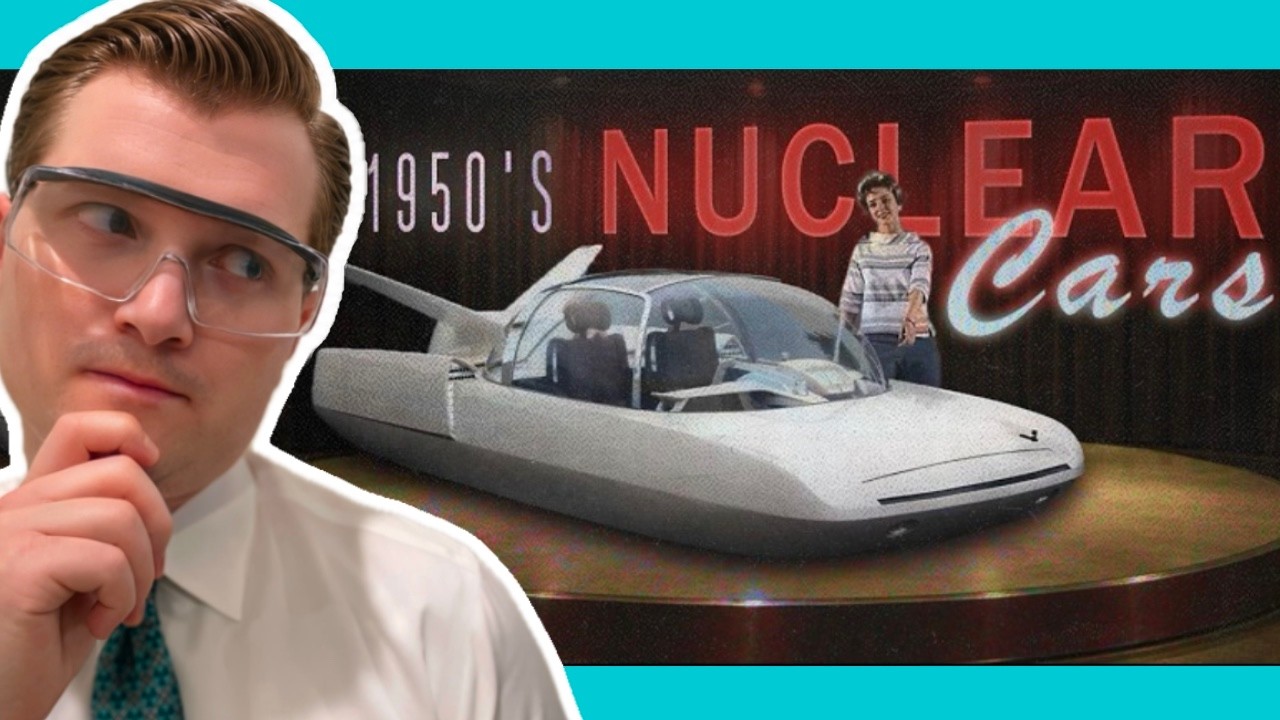
Why We Don't Have Nuclear Cars - Nuclear Engineer Reacts to Qxir
Title history
- Why We Don't Have Nuclear Cars - Nuclear Engineer Reacts to Qxir — observed on 20261103-1834 UTC (YouTube)
Keywords
Summary
165 words
Critical Evaluation
Value of the Information & Strength of the Argument
The value lies in the engineer’s systematic dismantling of nuclear car concepts using fundamental engineering principles. He correctly points out that energy density alone is misleading and that the mass and complexity of the complete power system negate the benefits. His argumentation is methodical: he introduces key distinctions (energy vs. power, reactor vs. bomb), then applies them to each historical design, showing why each fails. He also notes that successful futuristic predictions (like digital dashboards) don’t validate other speculative features. The reasoning is solid, avoiding sensationalism and sticking to technical reality.
Scientific Rigor, Source Quality, Title Accuracy
The engineer’s expertise is evident, and he references well-established facts (e.g., RTGs, nuclear submarines, reactor safety standards). The title accurately describes the content. However, the video does not cite specific technical sources other than the original Qxir video; the authority comes from the presenter’s professional background. The analysis aligns with known technical history and principles, showing strong rigor even without explicit citations.
168 words
Title / Content Match
The title accurately reflects the content: a nuclear engineer reacting to a video about nuclear cars, explaining why they were never realized.
Quality & Reliability
9/10
The content is delivered by a nuclear engineer, providing technically accurate explanations of nuclear principles, engineering constraints, and system design. The analysis is well-reasoned, references real concepts (RTGs, probabilistic risk assessment, reactor safety), and avoids oversimplification. The creator's expertise lends high credibility.
Key Moments
Markers derived by PSI from the transcript: the creator did not define chapters.
- Introduction to the atomic age and how 1950s futurism envisioned nuclear-powered everything.
- Explanation of energy density vs. power density, and the many engineering systems required for a nuclear car.
- Analysis of the Chrysler TV8 tank; why it was canceled and the importance of canceling bad ideas.
- Discussion of Soviet nuclear train concepts and the absurdity of large infrastructure.
- Review of the Ford Nucleon concept car; the 5,000-mile range claim and the weight of shielding.
- Examination of the Ford Seattle-ite 21 and the point that one successful feature doesn't validate all.
- The Arbel Symétrique using radioactive decay heat, and the need for appropriate heat sources.
- The Studebaker Astral and the unrealistic multi-domain vehicle concept.
- The Simca Fulgur and the reason technology forecasts fail despite optimism.
- Final explanations: safety, security, and the complete power system requirements, concluding why nuclear cars are impractical.
Cited Sources
- Original Qxir video: Why We Don't Have Nuclear Cars — The video being reacted to, which the engineer analyzes point by point.
Concurring Sources
- Original Qxir video — The source material that frames the discussion; the engineer agrees with its historical accuracy but adds technical nuance.
Contribution & Novelties
This video adds value by providing a real-world engineering perspective on a popular historical topic. It breaks down why nuclear cars are unfeasible using a systems engineering approach, covering not just safety but also cost, weight, infrastructure, and security. The original Qxir video likely presents the concepts with a humorous tone; this reactor provides rigorous counterpoints.
Pour aller plus loin :
- Radioisotope thermoelectric generator (RTG) — Used for spacecraft and remote power; concept discussed in the video.
- Nuclear submarine — Example of successful nuclear-powered vehicles and why they are suitable.
- Probabilistic risk assessment — Method used to assess nuclear plant safety; mentioned in the video.
- Energy density vs power density — Key distinction explained by the engineer.
117 words
Radar Profile
The radar profile is high across all dimensions, with particularly strong scores in information quality and reliability, reflecting the presenter's expertise. The quantity score is slightly lower due to the focused scope, but overall a balanced and reliable analysis.