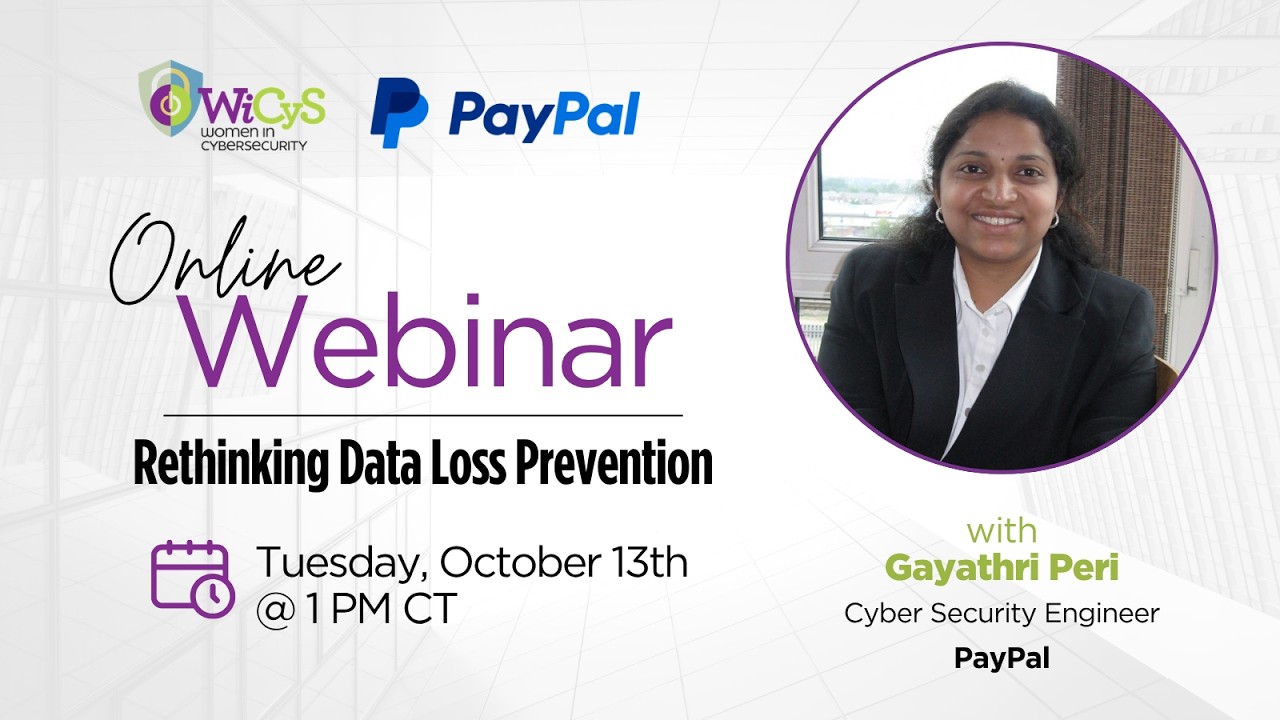
PayPal Webinar | Rethinking Data Loss Prevention
Keywords
Summary
215 words
Critical Evaluation
Value of the Information & Strength of the Argument
The value of the information lies in its pragmatic, end-to-end architectural vision for modernizing DLP in a large enterprise. The argumentation is coherent and well-structured, moving from a concrete failure scenario (a modified file slipping through traditional rules) to a systematic solution addressing gaps in policy management, detection, data hygiene, and endpoint visibility. The emphasis on treating policy as code and using continuous AI-driven gap discovery is innovative and actionable. However, the presentation lacks quantitative results or comparative analysis against other solutions, making it descriptive rather than evidence-based. The argument is convincing but relies heavily on the presenter’s authority and internal experience.
Scientific Rigor, Source Quality, Title Accuracy
The scientific rigor is moderate. Thetalk is based solely on the presenter’s professional experience and does not reference external studies, industry standards, or open-source frameworks. The absence of concrete metrics (e.g., reduction in incidents, false positive rates) weakens the reproducibility of the claims. The title is perfectly aligned with the content, promising ‘rethinking DLP’ and delivering a novel architectural perspective. No comments were provided to analyze audience reception.
185 words
Title / Content Match
The title accurately reflects the content: a presentation by PayPal on rethinking their data loss prevention strategy, with a focus on outcomes over tools.
Quality & Reliability
7/10
The webinar provides a detailed, internally consistent description of PayPal's DLP modernization approach, including specific technical mechanisms (policy as code, AI-driven gap discovery, continuous scanning). However, it relies solely on the presenter's testimony without external validation, metrics, or independent references, limiting its verifiability.
Key Moments
Markers derived by PSI from the transcript: the creator did not define chapters.
- Introduction of the webinar and the scenario of a modified file evading DL rules.
- Overview of four pillars: DLP core, hunter, data-at-rest scanning, and endpoint AI agent.
- Detailed explanation of DLP Core: policy as code using Git, PRs, CI/CD, and rollback.
- Presentation of DLP Hunter: metadata-based exfiltration analysis with AI and human-in-the-loop rule creation.
- Discussion of data-at-rest scanning for SaaS apps, classification, and remediation strategies.
- Endpoint AI agent POC: contextual monitoring of file activity and exfiltration attempts.
- Q&A covering model hosting, encrypted channels, tokenization, insider threat handling, and analyst insights.
Contribution & Novelties
The webinar’s original contribution is the integration of multiple modern security practices into a unified DLP framework, emphasizing continuous feedback loops and treating policy as versioned code. It highlights the shift from content-based to metadata-based detection, which is a significant departure from traditional DLP approaches. The presentation also underscores the importance of human-in-the-loop AI for both detection and remediation, a nuanced counterpoint to full automation.
Pour aller plus loin :
- Data loss prevention (Wikipedia) — Core definition and evolution of DLP technologies.
- Policy as code (Wikipedia) — The concept of managing security policies via version-controlled code, central to DLP Core.
- Insider threat (Wikipedia) — The threat model addressed by endpoint monitoring and behavioral analysis.
- Artificial intelligence for cybersecurity (Wikipedia) — Overview of AI applications in detecting anomalies and exfiltration.
129 words
Radar Profile
The radar profile shows balanced scores around 7 for information quantity, quality, and technical level, but a slightly lower reliability (6). This indicates a technically rich presentation with credible internal practices, yet lacking external validation typical of corporate webinars.