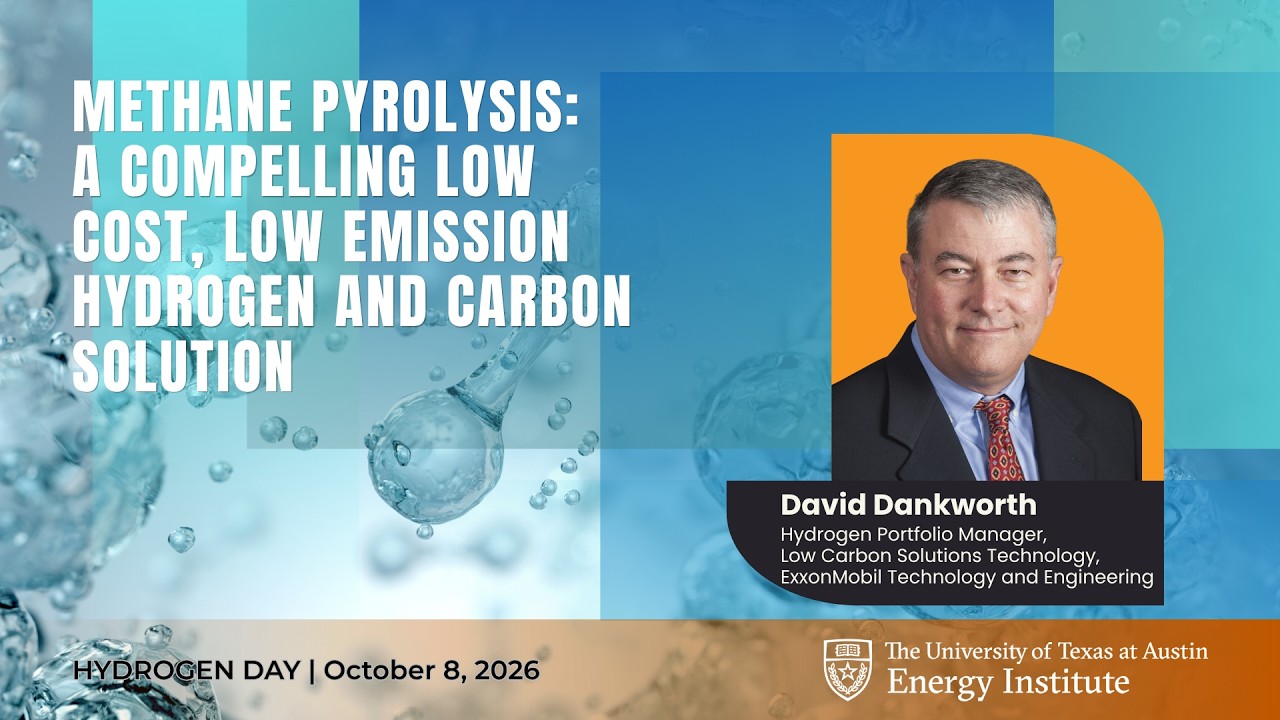
Methane Pyrolysis: A Compelling Low Cost, Low Emission Hydrogen and Carbon Solution
Title history
- Methane Pyrolysis: A Compelling Low Cost, Low Emission Hydrogen and Carbon Solution (PSI archive)
- Methane Pyrolysis: A Compelling Low Cost, Low Emission Hydrogen and Carbon Solution — observed on 20261027-2227 UTC (YouTube)
Keywords
Summary
161 words
Critical Evaluation
Value of the Information & Strength of the Argument
The value of the information is high for stakeholders in hydrogen production: it provides a concrete industrial perspective on a relatively underfunded pathway, including cost comparisons, process details, and commercial timelines. The argumentation is coherent and grounded in ExxonMobil’s recent experience with blue hydrogen, showing why methane pyrolysis could fill a market gap. The speaker acknowledges technical difficulties and scale-up risks, which enhances credibility. However, the talk relies on single-source expertise and lacks peer-reviewed references or independent verification, so the argumentation is persuasive but not conclusively proven.
Scientific Rigor, Source Quality, Title Accuracy
The scientific rigor is moderate: while the presenter cites internal experience and a partnership with BASF, there are no formal citations or external sources. The content is based on industrial know-how and patents from the 1950s and 1960s, but specific references are not provided. The title is accurate and well-matched to the content, as the talk actually covers cost and emissions advantages. The lack of public sources reduces the reproducibility of claims, though the technical complexity is handled with appropriate caution.
183 words
Title / Content Match
Title accurately reflects the content: the talk focuses on methane pyrolysis as a low-cost, low-emission hydrogen and carbon production method.
Quality & Reliability
8/10
Presentation by an industry expert with technical depth and practical insights, but lacks external validation.
Key Moments
Markers derived by PSI from the transcript: the creator did not define chapters.
- Introduction and context on hydrogen production economics
- Discussion of Baytown blue hydrogen project cancellation and lessons learned
- Methane pyrolysis concept: reaction conditions and advantages
- Moving bed reactor design and BASF partnership details
- Scale-up timeline, government policies, and collaboration strategy
- Q&A on product value, carbon structure, power demand, and process comparisons
Cited Sources
- ExxonMobil internal archives (1950s moving bed patents) — Historical patents and pilot plant data on methane pyrolysis referenced by the speaker
- BASF joint development agreement — Partnership to scale moving bed methane pyrolysis technology
Contribution & Novelties
The talk offers an industry insider’s view on methane pyrolysis, emphasizing its potential to become policy-independent due to the valuable carbon co-product. The original contribution is the description of a large-scale demonstration plan and the technical details of the moving bed reactor that achieves high thermal efficiency. This adds a practical perspective to often academic discussions of hydrogen pathways.
Pour aller plus loin :
- Hydrogen production — Overview of production methods including pyrolysis.
- Carbon black — Contrasts with the dense carbon pellets produced by this process.
- Steam reforming — Comparison with conventional blue hydrogen.
- Turquoise hydrogen — Background on the label used colloquially for methane pyrolysis.
106 words
Radar Profile
The profile shows a balanced distribution across quantity, quality, and technical depth, with a slightly lower reliability score due to the lack of external references. The high technical level reflects the specialized audience of industry experts.