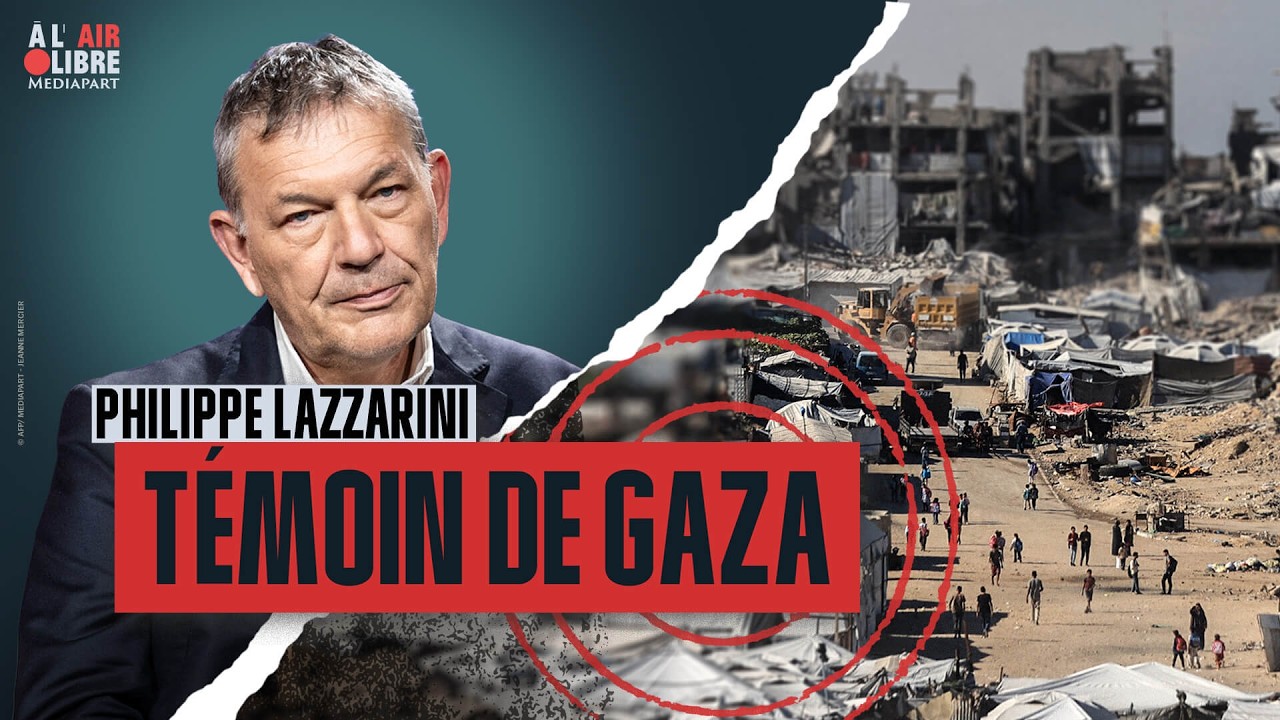
« L’objectif d’Israël est de détruire l’agence de l’ONU pour les réfugiés palestiniens »
Israel's goal is to destroy the UN agency for Palestinian refugees
Keywords
Summary
208 words
Critical Evaluation
Value of the Information & Strength of the Argument
The interview offers exceptional first-hand value: Lazzarini speaks from the heart of the decision-making process, having led UNRWA during its most severe crisis. He provides concrete figures (number of employees, funding shortfalls, percentages of territory) and distinguishes between different strands of Israeli policy — the dogmatic political faction versus the pragmatic military establishment — which adds nuance absent from much public debate. His argumentation is structurally coherent: he establishes the pre-October 7 context, explains the shift in Israeli posture, documents the funding crisis, and then examines the allegations and subsequent investigations. He does not dodge the serious charges against the 19 employees, instead detailing the procedural steps taken and identifying the investigative limitations imposed by the conflict. The critique of Western hypocrisy is well-supported with specific examples (US suspension combined with private encouragement to Europeans).
Scientific Rigor, Source Quality, Title Accuracy
The scientific rigor is grounded in institutional documents and processes: the Colonna report, the UN internal investigation, and the annual transmission of staff lists to Israeli authorities are all verifiable procedures. Lazzarini consistently distinguishes between what is proven, what is alleged, and what remains unsubstantiated — notably acknowledging that some charges could not be fully investigated due to lack of access. The primary limitation is the inherent partiality of a protagonist defending his own legacy and his agency’s survival; no opposing Israeli official is present to offer counter-arguments. “sources_citees” lists the book ‘Témoin de Gaza’ and Mediapart’s funding links from the description. The title faithfully corresponds to the content, as the claim that Israel seeks to destroy UNRWA constitutes the interview’s central thread. No comments were available for analysis.
279 words
Title / Content Match
The title accurately reflects the central thesis defended by the guest throughout the interview.
Quality & Reliability
7/10
First-hand testimony from a key institutional actor, well-argued and nuanced, but inherently partisan given the guest's central role in the events described.
Key Moments
Markers derived by PSI from the transcript: the creator did not define chapters.
- Introduction of Philippe Lazzarini and his book 'Témoin de Gaza'
- Assessment of the ceasefire: situation remains dire, children still dying daily
- UNRWA faces $100 million deficit; role of the agency described as irreplaceable
- Why Israel targeted UNRWA before October 7: from 'necessary evil' to 'unnecessary evil'
- Silence of the international community and the absence of calls to respect international law
- Rescue of UNRWA archives by staff member Adnan Abu Al-Naaj at personal peril
- Allegations against 12 employees; Lazzarini receives information from Israeli official Amir Weitzbrod
- Israeli campaign to discredit UNRWA: public accusations, tunnels, advertising in New York
- Funding suspensions by 16 countries; hypocrisy of Western diplomacy
- Colonna report conclusions: UNRWA neutrality systems stronger than comparable agencies
- UN investigation into 19 employees: one cleared, nine without sufficient evidence, nine could not be corroborated
- Discussion on cooperation with Israeli authorities and the impossibility of independent verification
Cited Sources
- Témoin de Gaza : ce qui ne s'efface pas (éditions Favre) — Book by Philippe Lazzarini, discussed throughout the interview
- Mediapart subscription page — Funding appeal mentioned in the video description
- Mediapart donation page — Alternative funding link in the video description
- Mediapart newsletter sign-up — Newsletter subscription link in the video description
Concurring Sources
- Colonna report (independent review) — Assessed UNRWA's neutrality systems as stronger than comparable agencies, supporting Lazzarini's defense of the agency
- UN OIOS investigation — Concluded that one of the 19 accused employees was fully cleared and that insufficient evidence existed for nine others, partially corroborating Lazzarini's account
Dissenting Sources
- Israeli government allegations against UNRWA employees — Israel accused 12 then 19 UNRWA employees of participating in the October 7 attacks; the UN investigation could not fully verify these allegations, and Lazzarini disputes their factual basis
Contribution & Novelties
The interview provides an insider account of a humanitarian institution under systematic attack, complementing existing reporting with first-hand operational detail. It brings nuance to the public narrative by distinguishing between various Israeli positions and detailing the internal workings of UNRWA’s response to allegations.
Pour aller plus loin :
- UNRWA (Wikipedia) — Comprehensive overview of the agency’s history, mandate and operations; essential background to contextualize the interview.
- Philippe Lazzarini (Wikipedia) — Biographical page useful to verify the guest’s career and claims.
- 7 October Hamas-led attack on Israel (Wikipedia) — Context for understanding the sequence of events that triggered the crisis described in the interview.
- Colonna report (no reliable URL available) — Independent review led by Catherine Colonna assessing UNRWA’s neutrality; central to the discussion but no stable public URL confirmed.
129 words
Radar Profile
The profile shows a well-balanced interview with high scores in information quantity and quality, reflecting the guest's unique institutional vantage point. The lower technical level score accurately reflects the discussion's orientation toward geopolitics and humanitarian policy rather than technical analysis.