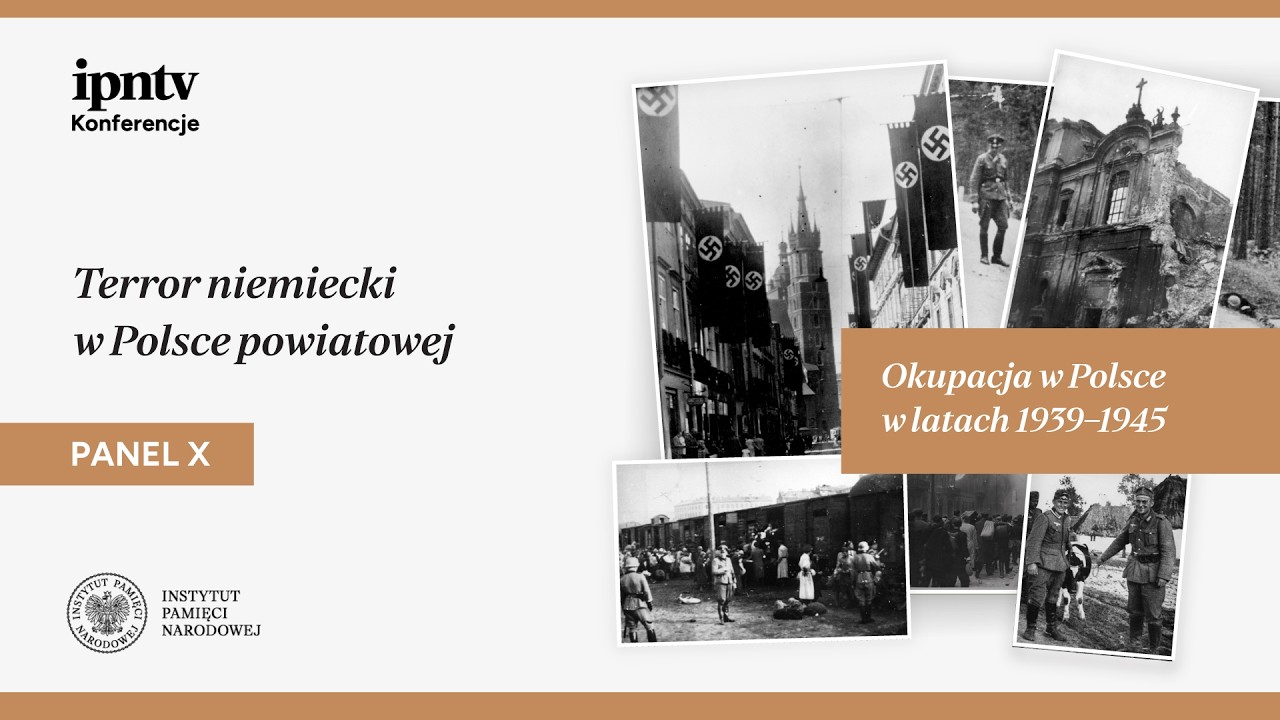
Terror niemiecki w Polsce powiatowej [PANEL X]
OccupationP10
Title history
- Terror niemiecki w Polsce powiatowej [PANEL X] — observed on 20261027-2120 UTC (YouTube)
Keywords
Summary
136 words
Critical Evaluation
Value of the Information & Strength of the Argument
The value of the information lies in its detailed, evidence-based account of Nazi terror in specific rural territories, bringing to light lesser-known locations and individual stories. The argumentation is solid, grounded in archival sources (e.g., IPN records, court documents), witness testimonies, and field investigations. Each speaker presents specific numbers, dates, and personal cases, demonstrating a rigorous methodology. The panel effectively argues that these rural districts were sites of severe atrocities with thousands of victims, often overshadowed by better-known urban centers.
Scientific Rigor, Source Quality, Title Accuracy
Scientific rigor is high: the IPN is a state institution with access to unique archives. Speakers cite specific documents, testimonies, and prior publications (e.g., Antoni Artymiak’s 1947 work on Jędrzejów victims). The title fully corresponds to the content—every talk addresses German terror in a specific powiat. The absence of additional descriptive links beyond the conference playlist is a minor limitation, but the oral content is well-referenced. No public comments were provided for analysis.
168 words
Title / Content Match
The title accurately reflects the content: a series of scholarly presentations on German terror in specific rural districts (powiaty) of occupied Poland.
Quality & Reliability
9/10
The panel is organized by the Institute of National Remembrance (IPN), a reputable Polish state research institution. Presentations are based on archival documents, witness testimonies, and meticulous field research, ensuring high factual reliability.
Key Moments
Markers derived by PSI from the transcript: the creator did not define chapters.
- Introduction and program overview by moderator Dr. Damian Sitkiewicz
- Karolina Trzeskowska-Kubasik: Execution sites in Jędrzejów district (1939-1945)
- Tomasz Bereza: 'Not only Anna Kasarnia' - execution sites in Jarosław district
- Piotr Kapusta: Forced laborers from Czernichów commune
- Rafał Drabik: German camp system in Biłgoraj district
- Discussion session
Cited Sources
- Conference playlist — The full conference playlist containing this panel and other sessions.
Contribution & Novelties
The panel brings novel empirical data on rural areas of occupied Poland, systematically documenting execution sites, camp systems, and forced labor flows. It corrects the urban bias in Holocaust and occupation research by providing granular details on specific districts. The presentations also highlight the need for continued archival work and victim identification.
Pour aller plus loin :
- Aktion AB — Relevant as the early mass arrest action mentioned in the Jarosław presentation.
- General Government — Background on the administrative structure where the terror occurred.
- Forced labour under German rule during World War II — Context for the forced labor system discussed.
- Institute of National Remembrance — The organizing institution; further archival resources.
112 words
Radar Profile
The profile is balanced, with high scores in information quantity, quality, and reliability, and a slightly lower but still strong technical level, indicating rigorous yet accessible scholarly content.