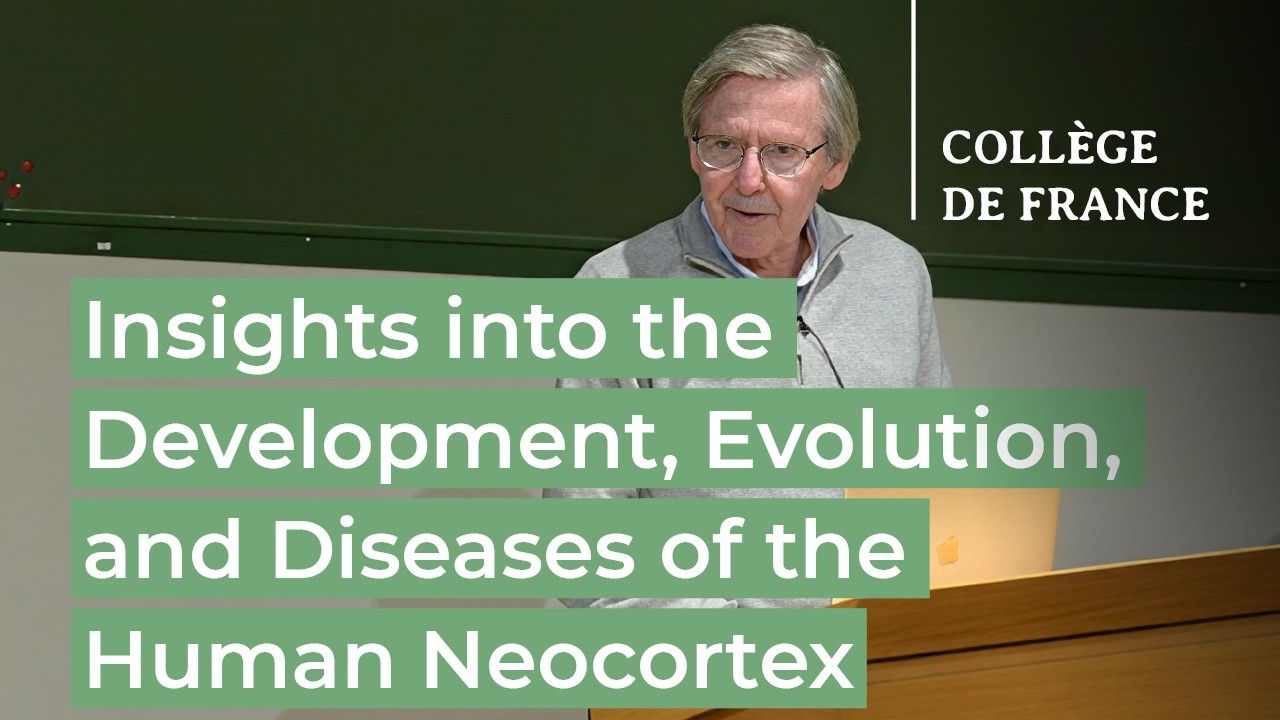
Genomic Insights into Cortical Expansion and Language Function - 2026-27 (3)
Keywords
Summary
153 words
Critical Evaluation
Value of the Information & Strength of the Argument
The presentation offers high value by uncovering a novel structural organization in the human ganglionic eminence not seen in mice, with potential implications for understanding interneuron diversity and disease. The argumentation is solid, based on cutting-edge techniques (multi-omics, spatial profiling, live imaging, electron microscopy) and careful reasoning. The evidence is cumulative: from identifying nests to proposing a molecular mechanism with PCDH19 and SOX11, supported by cross-species comparisons. While the data are unpublished, the methodology is transparent and the conclusions are presented as hypotheses rather than definitive, acknowledging limitations (e.g., organoid use for functional validation). The talk convincingly bridges gene expression to fine morphology, making a compelling case for primate-specific niche structures.
Scientific Rigor, Source Quality, Title Accuracy
The scientific rigor is high; the lecturer is a prominent researcher, and the work involves state-of-the-art methods with detailed control experiments. Sources are not explicitly cited in the talk, but the description provides links to the Collège de France lecture series and related resources, which serve as context. The title, which mentions ‘cortical expansion and language function’, only partially aligns with the content: the talk focuses on interneurons and ganglionic eminence development, with implicit connections to language-associated circuits but no direct measurement of language function. The mismatch is moderate but does not diminish the lecture’s intrinsic quality. No comments were provided, so no public reception analysis could be conducted.
235 words
Title / Content Match
Title is somewhat broad; the talk focuses on interneuron origin and niche structures, indirectly linking to language-associated cortex.
Quality & Reliability
8/10
Research lecture by a leading neuroscientist presenting unpublished data on ganglionic eminence development. The approach is rigorous, with multiple techniques (single-cell RNA-seq, spatial transcriptomics, live imaging, EM), but the findings are not yet peer-reviewed.
Key Moments
Markers derived by PSI from the transcript: the creator did not define chapters.
- Introduction to ganglionic eminences and interneuron origin
- Discovery of doublecortin-enriched nests (dens) in human MGE
- Characterization of dens structure via serial EM and live imaging
- Proposal of PCDH19/SOX11 molecular model for dens formation
- Cross-species comparison and evolutionary implications
- Mapping neurodevelopmental disease risks to specific cell types and conclusions
Cited Sources
- Collège de France - Conférencier invité : Insights into the Development, Evolution, and Diseases of the Human Neocortex — Official agenda page for this lecture series, providing context and materials.
- Chaire Paléoanthropologie - Jean-Jacques Hublin — Chaire of the professor hosting the series, linked in description.
- Chaire Processus morphogénétiques - Alain Prochiantz — Chaire of the professor who invited Kriegstein, linked in description.
External References
Contribution & Novelties
This talk presents unpublished findings on the unique structural organization of the human ganglionic eminence, specifically the discovery of ‘dens’—doublecortin-enriched nests of neuroblasts surrounded by radial glia. It proposes a novel molecular mechanism (PCDH19 and SOX11) for their formation and provides evidence for primate-specific evolution. The research also links disease-relevant risk genes to particular GE cell types, offering new insights into neurodevelopmental disorders.
Pour aller plus loin :
- Protocadherin 19 (Wikipedia) — A member of the protocadherin family implicated in epilepsy and neurodevelopment, relevant to the PCDH19 role discussed.
- Ganglionic eminence (Wikipedia) — Overview of these transient structures that generate cortical interneurons, providing background to the talk.
- Somatostatin interneurons (Wikipedia) — These GABAergic neurons are a key focus, and their role in cortical circuits is discussed in the lecture.
129 words
Radar Profile
The radar profile is strongly skewed toward information quantity, quality, and technical level, with a slightly lower but still good reliability score. This reflects a dense, technically advanced research lecture grounded in rigorous methods, though the unpublished nature caps the reliability score.