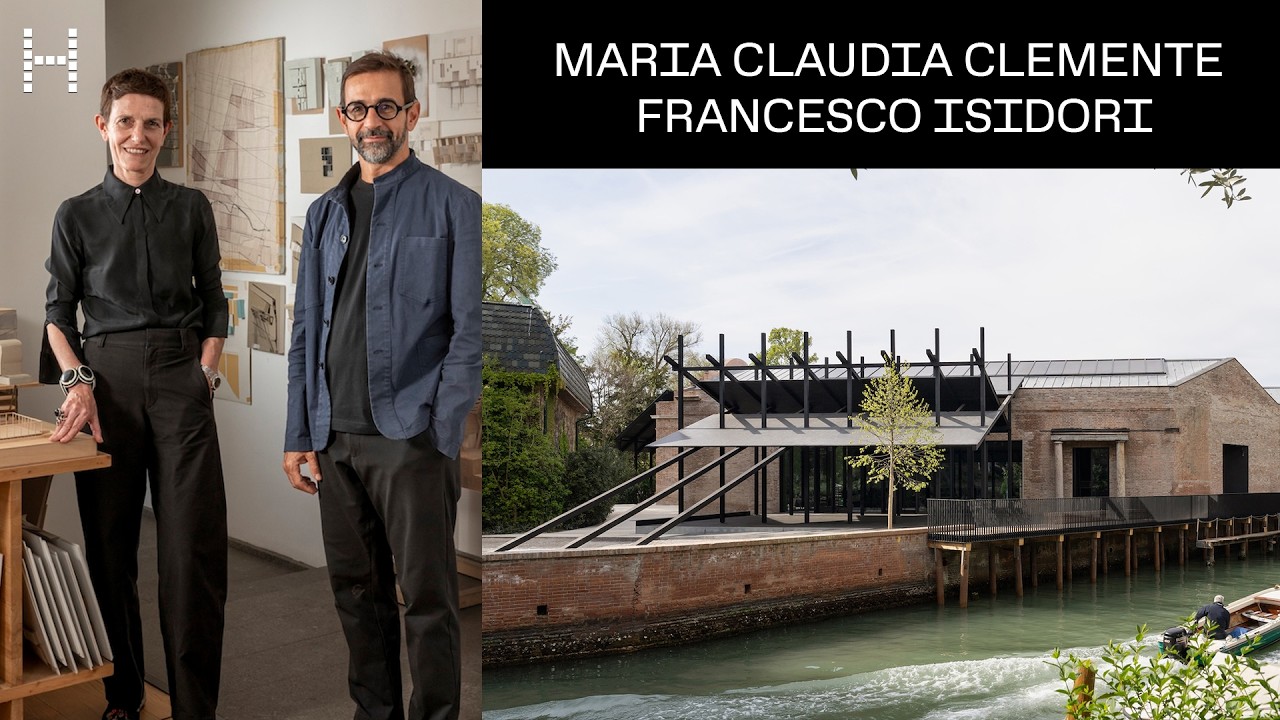
Kenzō Tange Lecture: Maria Claudia Clemente and Francesco Isidori, “The Architecture of Public S...
Title history
- Kenzō Tange Lecture: Maria Claudia Clemente and Francesco Isidori, “The Architecture of Public S... — observed on 20261103-0944 UTC (YouTube)
Keywords
Summary
175 words
Critical Evaluation
Value of the Information & Strength of the Argument
The lecture provides substantial value by offering a clear theoretical framework coupled with practical examples. The argumentation is solid, building from a critique of modernist urbanism to a proposed taxonomy of spatial elements that can invigorate public space. The speakers support their claims with references to classic texts and demonstrate their principles through built work, making the case both conceptually and empirically. However, the discussion is primarily from the architects’ own perspective and could benefit from acknowledging counterarguments or limitations of their approach. Overall, the value lies in its synthesis of theory and practice, though the argumentation at times relies on assertions rather than comprehensive evidence.
Scientific Rigor, Source Quality, Title Accuracy
The lecture demonstrates rigorous use of sources, citing foundational works like Aldo Rossi’s ‘The Architecture of the City’ and philosophical references to Veca and Bauman. The speakers’ own book ‘The Architecture of Public Space’ serves as a primary source, lending credibility to their classification system. The title accurately matches the content, as the entire lecture is dedicated to the theme of public space architecture. No contrary sources are mentioned, but the presentation is clearly framed as the architects’ own research and practice, which is acceptable for an expert opinion. The structure is logical, moving from problem statement to theoretical definition, then to taxonomy and case studies, ending with a Q&A session.
232 words
Title / Content Match
The title accurately reflects the content, which focuses on the architecture of public space through theory and case studies.
Quality & Reliability
8/10
The lecture is delivered by established architects with a published book on the topic, and the arguments are supported by reference to historical and philosophical sources (e.g., Aldo Rossi, Salvatore Veca, Zygmunt Bauman). The information is well-structured and consistent, though it primarily presents the architects' own perspective and projects, which limits the scope of independent verification.
Chapters
Cited Sources
- The Architecture of Public Space (Park Books, 2023) — The book by the speakers, which presents the research and taxonomy discussed in the lecture.
- The Architecture of the City — Aldo Rossi's influential book, referenced to support the link between architecture and city.
- UN Population Division data — Statistics on urban population growth cited at the beginning of the lecture.
Contribution & Novelties
This lecture offers a systematic taxonomy of architectural elements that define public space, bridging historical analysis with contemporary practice. The speakers’ projects demonstrate how these principles can be applied in modern contexts, providing a replicable framework for designers. The novelty lies in the categorization and the argument that architecture can actively shape public life through specific spatial gestures.
Pour aller plus loin :
- Urban public space — Provides a general overview of the concept, useful for understanding the broader discourse.
- Civitas — Relates to the political community concept referenced in the lecture.
- Aldo Rossi — Background on the influential architect whose ideas are central to the lecture’s framework.
108 words
Radar Profile
The radar profile shows high scores in quantity of information and quality, reflecting the dense and well-supported content. Technical level is moderate, accessible to a broad architectural audience. Reliability is strong due to the speakers' expertise and published work, though slightly lower than the other metrics due to the subjective nature of design arguments.