2026 10 08 Effective Family Conferences
Keywords
Summary
220 words
Critical Evaluation
Value of the Information & Strength of the Argument
The value of the information lies in its integration of well-established research with real-world clinical experience. The speaker cites specific studies, such as the Dunning-Kruger effect and research on empathy, and argues convincingly that skilful communication can be learned. She uses a concrete model (setting, perceptions, knowledge, emotions, strategy) that is derived from best practices. The argumentation is coherent and persuasive, resting on evidence from business, psychology, and healthcare literature. She acknowledges the difficulty of conducting double-blind studies on human interaction but points to phenomenological research and stories as ‘data with a soul,’ reinforcing the practical relevance. The emphasis on bias and cultural awareness adds depth, as does the advice about listening and safety. However, some claims, such as the statement about 40-45 seconds of emotional support, are mentioned without specific reference, though the speaker indicates they are cited elsewhere.
Scientific Rigor, Source Quality, Title Accuracy
The lecture demonstrates scientific rigour through its reliance on established models and peer-reviewed literature. The speaker references seminal studies (e.g., Dunning and Krueger, 1999) and mentions resources from Princeton and the APA, although specific citations are not shown on-screen. The structure is logical, moving from background to practical steps. The title is well-suited to the content, precisely covering the scope. The speaker is transparent about her credentials and personal biases, which enhances trustworthiness. While no direct URLs are provided, the content is consistent with widely accepted medical communication frameworks. The lack of visual references or citations in the video description reduces immediate verifiability, but the overall content is aligned with published guidelines. There is no obvious disconnect between title and content.
276 words
Title / Content Match
The title accurately reflects the lecture content, which focuses on how to conduct effective family conferences in medical settings.
Quality & Reliability
8/10
The lecture is grounded in established evidence-based practices, cites research (e.g., Dunning-Kruger effect, empathy studies), and offers practical guidance from an experienced palliative care clinician. The speaker clearly distinguishes between ideal and common practice, and openly discusses personal bias.
Key Moments
Markers derived by PSI from the transcript: the creator did not define chapters.
- Introduction to the lecture, speaker background, and objectives
- Discussion of the Dunning-Kruger effect and its relevance to family meeting skills
- Explanation of empathy as a trainable skill and evidence for its benefits
- Overview of stakeholders and multiple settings for family conferences
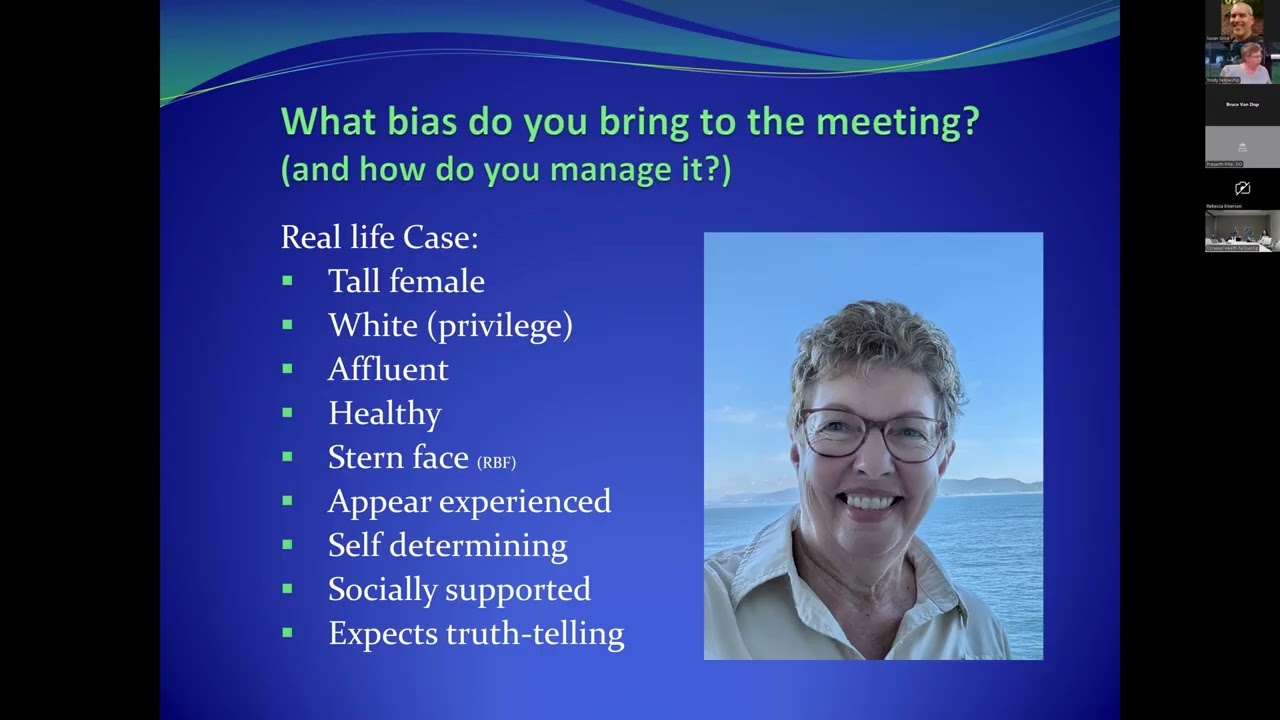
- Discussion of personal bias and its impact on meetings, with self-reflection
- Introduction of the established model for effective family meetings (SPIKES-like framework)
- Preparing for the meeting, including pre-meeting with providers and setting choices
- Techniques for opening the meeting, listening, and recognizing conflict escalation signs
Contribution & Novelties
This lecture contributes to the field by synthesizing a wide range of evidence-based practices into a practical guide for clinicians. It emphasizes that family conferences are not merely informational but require courage and skill, and it explicitly addresses personal bias and cultural competence, which are often underemphasized. The talk also provides actionable tips such as sitting, using simple language, and practicing active listening, which are directly applicable in clinical settings. It offers a valuable reminder that even small gestures of empathy can significantly improve patient outcomes.
Pour aller plus loin :
- Dunning–Kruger effect — Understanding how cognitive bias affects self-assessment.
- Empathy in healthcare — Research on empathy as a trainable skill.
- Shared decision-making — A collaborative approach relevant to family meetings.
- SPIKES protocol — A framework for delivering bad news.
130 words
Radar Profile
The radar profile shows high consistency across quantity, quality, and reliability, with a slightly lower technical level reflecting the practical nature of the content. The strong scores on information quality and reliability indicate a trustworthy, evidence-informed lecture, while the moderate technical level suggests it is accessible to a clinical audience.