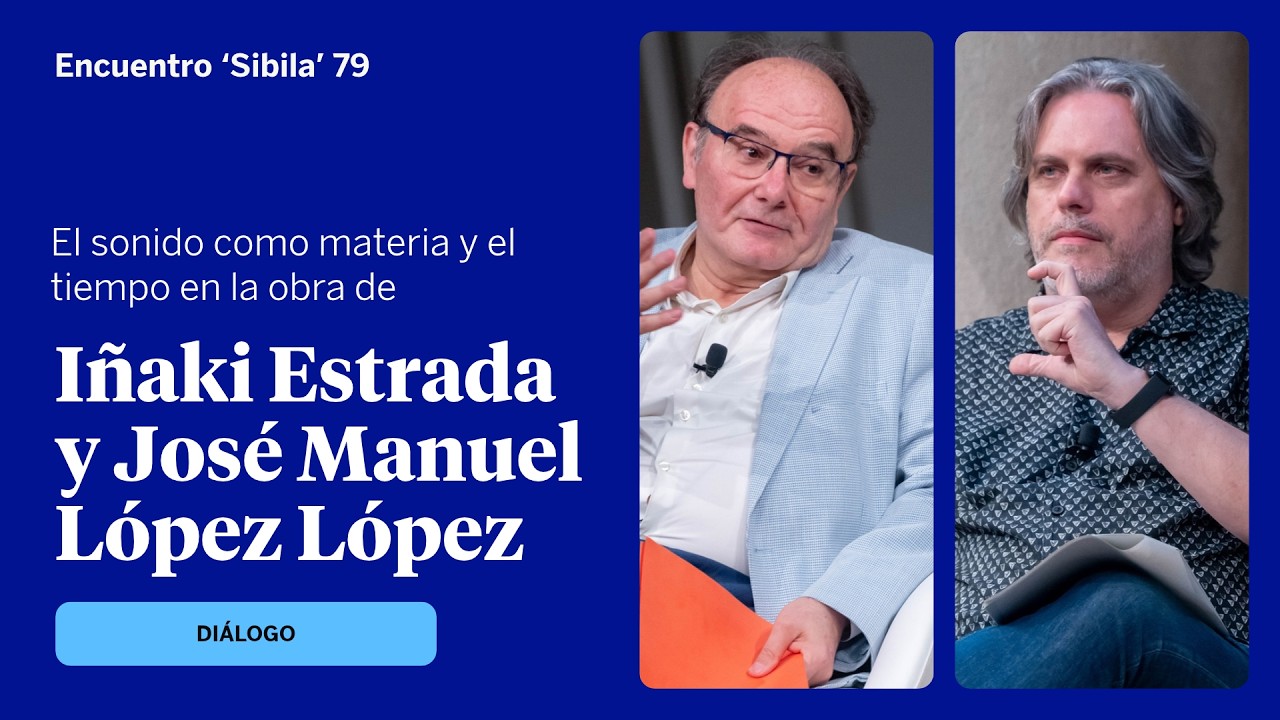
El sonido como materia y el tiempo en la obra de Iñaki Estrada y José Manuel López López
Sound as material and time in the work of Iñaki Estrada and José Manuel López López
Keywords
Summary
148 words
Critical Evaluation
Value of the Information & Strength of the Argument
The value of this dialogue lies in its authentic, firsthand perspective on contemporary composition, particularly the integration of technology and tradition. The composers argue convincingly that sound is a universal matter that transcends stylistic boundaries, and they illustrate this with concrete examples from their own works. Their explanations of spectral analysis, spatial distribution, and the construction of large-scale forms are coherent and grounded in practice. The argumentation is solid due to the speakers’ expertise, though it remains subjective and anecdotal. The inclusion of musical excerpts strengthens the points made, allowing listeners to directly perceive the discussed techniques. The dialogue also touches on philosophical aspects of time and material, enriching the discourse beyond mere technicality.
Scientific Rigor, Source Quality, Title Accuracy
The scientific rigor is moderate: the speakers refer to concepts from acoustics and music analysis but do not cite specific studies or external sources. The primary source is the linked article from Fundación BBVA, which provides context for the event. The title accurately captures the theme, and the content aligns well with it. No discrepancies were noted. The lack of formal citations and the informal conversational format reduce the rigor, but the expertise of the participants and the practical demonstrations add credibility.
211 words
Title / Content Match
The title accurately reflects the content, as the dialogue centers on sound as material and the treatment of time in the works of the two composers.
Quality & Reliability
8/10
High reliability: both composers are established figures in contemporary music, and the dialogue is based on firsthand creative experience. However, no external sources are cited and the discussion is anecdotal, limiting verifiability.
Key Moments
Markers derived by PSI from the transcript: the creator did not define chapters.
- Introduction and greetings by José Manuel López López
- Discussion on affinities between science and art, and the notion of sound as universal matter
- Explanation of spectral analysis and timbral mosaics, and how sounds are decomposed and redistributed
- Listening to an excerpt from 'Claroscuros'
- Discussion on time as a musical parameter, linking cosmic and quantum scales
- Discussion on narrative and macro/microstructure, focusing on 'Moby Dick' and the 'funnel' technique
- Listening to an excerpt from 'Moby Dick' with narrative and electronica
- Closing remarks and applause
Cited Sources
- Escritoras Karla Suárez y Marta Barrio, compositores Iñaki Estrada y José Manuel López López (Sibila 79) — Official announcement from Fundación BBVA about the event and the journal issue, providing background and additional details.
Contribution & Novelties
The video offers an original glimpse into the creative processes of two contemporary Spanish composers, emphasizing the convergence of traditional craftsmanship and modern digital tools. It introduces the concept of ’timbral mosaics’ and the use of spectral analysis as a compositional method, which may be unfamiliar to a wider audience. The dialogue also presents a philosophical reflection on time, connecting microscopic (quantum) and macroscopic (geological) scales through musical perception.
Pour aller plus loin :
- Spectral music — A movement in contemporary music that extensively uses spectral analysis, relevant to the discussed techniques.
- Sound spatialization — The distribution of sound in space, as discussed when Estrada describes placing instrumental parts across the auditorium.
- Moby-Dick — The source novel by Herman Melville, which forms the basis of Estrada’s work and the narrative structure discussed.
132 words
Radar Profile
The radar profile shows high scores in quality, technical level, and reliability, indicating a dense, trustworthy content from expert voices. The lower quantity-of-information score suggests the video is more about depth than breadth, focusing on specific examples rather than covering many topics. Overall, the profile reflects a focused, specialized discussion suited for an informed audience.