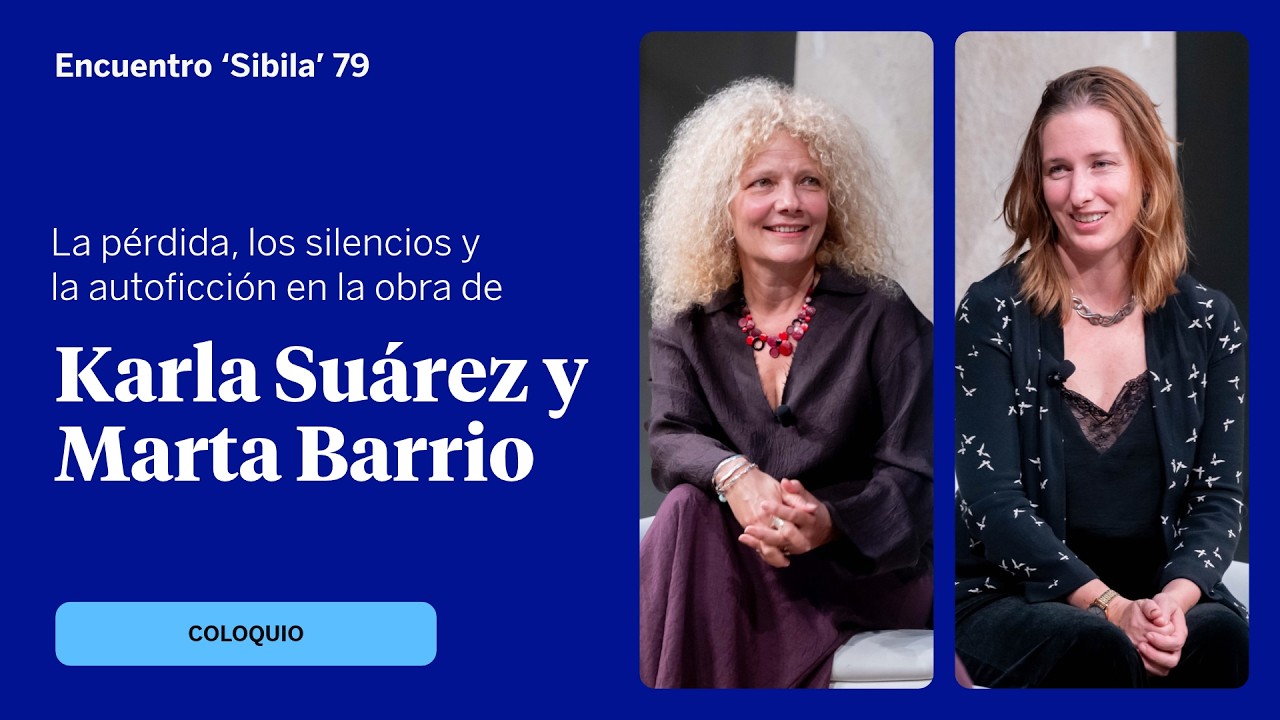
La pérdida, los silencios y la autoficción en la obra de Karla Suárez y Marta Barrio
The loss, the silences and the autofiction in the work of Karla Suárez and Marta Barrio
Keywords
Summary
161 words
Critical Evaluation
Value of the Information & Strength of the Argument
The value of this discussion lies in its authentic, first-hand perspectives from two practicing authors. They articulate their creative processes and thematic preoccupations with clarity and conviction. Their argumentation is based on personal experience and literary intuition rather than systematic analysis, but this is appropriate for an expert opinion format. They effectively illustrate how abstract themes like loss and guilt become concrete through narrative choices, offering insightful observations on the child’s gaze as a moral and emotional filter. The dialogue is well-structured, with each author building on the other’s ideas, creating a coherent exploration of shared concerns. The lack of external sources is compensated by the depth of introspection and the practical examples from their own fiction.
Scientific Rigor, Source Quality, Title Accuracy
The video is a literary discussion, not a scientific presentation, so conventional rigor is not expected. The authors rely on their personal experiences and occasionally reference other writers (e.g., Ana María Matute) but do not cite verifiable sources. The only linked source in the description is an article from the Fundación BBVA website about the event, which provides context but not substantiation of claims. The title accurately captures the main themes, but the content is more of a conversation than a systematic analysis. The video is suitable for an audience interested in literary craft and dos not pretend to offer empirical evidence. There are no comment data provided; thus, public reception cannot be assessed.
246 words
Title / Content Match
The title accurately reflects the core themes of the conversation: loss, silences, and autofiction are all discussed in relation to the authors' works.
Quality & Reliability
6/10
The discussion is an informal dialogue between two accomplished authors sharing personal insights on literary themes. It is authentic and thoughtful but lacks external verification or scientific method. The views are subjective and based on personal experiences, making it reliable as an expression of expert opinion rather than as a source of factual claims.
Key Moments
Markers derived by PSI from the transcript: the creator did not define chapters.
- Introduction of the colloquium and the theme of the child's perspective.
- Discussion on the use of child narrators and the influence of Ana María Matute.
- Exploration of silence, family secrets, and the child's role as an observer.
- Debate on guilt, especially societal and gendered expectations, and its role in fiction.
- Reflections on loss as a fundamental narrative motor and the importance of mythology.
Cited Sources
- Escritoras Karla Suárez y Marta Barrio, compositores Iñaki Estrada y José Manuel López López en Sibila 79 — Article from the Fundación BBVA website describing the event where this colloquium took place.
Contribution & Novelties
The video presents a candid exchange between two contemporary Hispanic authors, offering original reflections on how personal grief and secrets inform their creative work. It contributes to the understanding of autofiction as a practice that blends lived experience with imaginative reconstruction. The authors’ shared background of migration and Cuban perspectives adds a distinctive cultural layer to the discussion. The conversation does not present new empirical data but rather a synthesis of introspective knowledge about literary creation.
Pour aller plus loin :
- Autofiction — A literary genre blending autobiography and fiction, directly relevant to the authors’ discussion of writing from personal experiences.
- Elegy — A poetic form expressing lament for the dead, relevant to the theme of loss and grief explored in the conversation.
- Hero’s journey — A narrative archetype that both authors reference when discussing universal story patterns and their psychological appeal.
142 words
Radar Profile
The radar profile shows balanced scores across qualitative aspects, with lower values for technical level and reliability, reflecting the subjective and non-technical nature of the content. The high quality information score indicates valuable insights, while the moderate quantity suggests a focused but not exhaustive discussion.