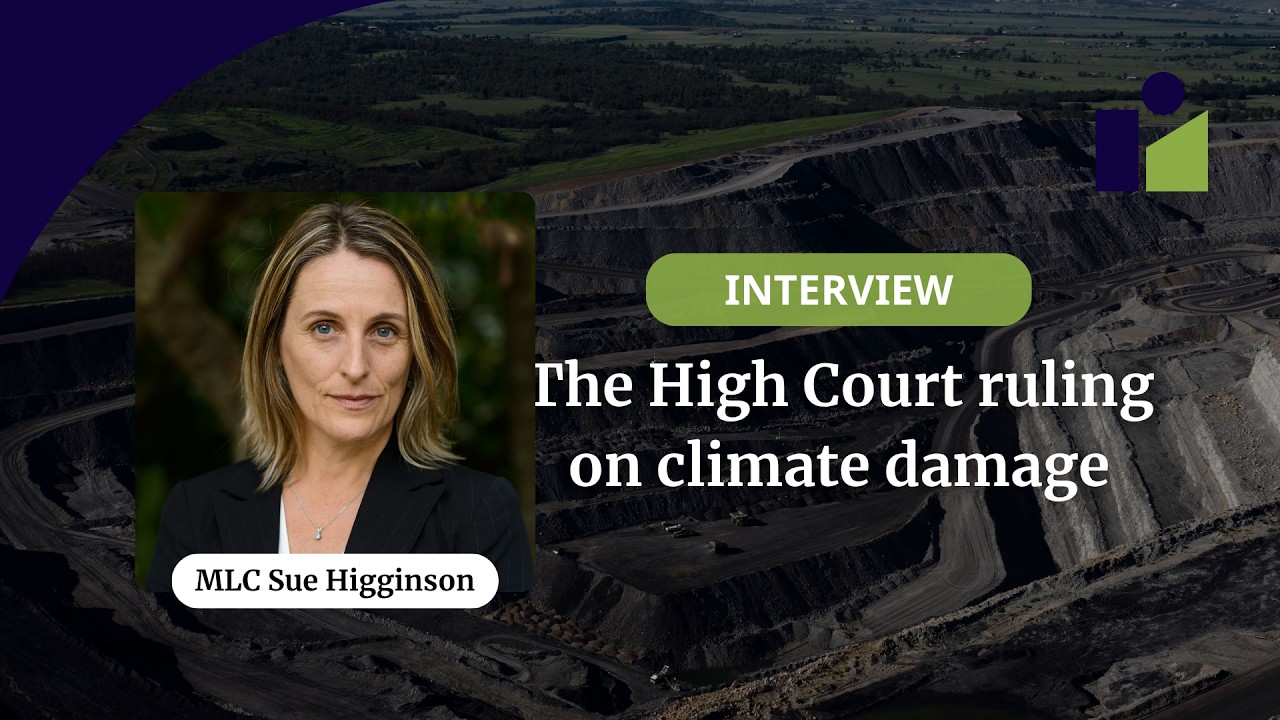
The High Court ruling on climate damage | Energy Insiders
Keywords
Summary
163 words
Critical Evaluation
Value of the Information & Strength of the Argument
The video’s value lies in its expert legal perspective from a former environmental litigator, providing clarity on a complex court ruling that media headlines often simplify. Higginson systematically unpacks the statutory requirements and the court’s reasoning, offering a nuanced explanation of why the ruling is not merely technical but transformative. Her argumentation is solidly grounded in legal precedent and the explicit text of the planning act, though it is openly advocacy oriented, as she advocates for stronger climate action. The hosts contribute contextual data and challenge assumptions, strengthening the overall discourse. The discussion is well-structured, addressing immediate implications, future challenges, and broader federal and political ramifications.
Scientific Rigor, Source Quality, Title Accuracy
The video does not cite external research papers or reports; instead, it relies on the guest’s professional expertise and the actual High Court decision, which lends it credibility. The hosts reference policies and legal cases, but no external links are provided beyond promotional content. The title accurately captures the episode’s core topic—the High Court ruling on climate damage—and no significant discrepancy exists between title and content. The discussion is informed and rigorous, though it would benefit from citation of specific legal paragraphs or additional sources for full verifiability.
209 words
Title / Content Match
The title accurately reflects the episode's focus on the High Court's ruling on climate damage, specifically its implications for coal mining and scope 3 emissions.
Quality & Reliability
8/10
The video features a legal expert discussing a recent High Court ruling with in-depth analysis. The discussion is grounded in the actual court decision and legal principles, but also includes advocacy statements, making it reliable yet opinionated.
Key Moments
Markers derived by PSI from the transcript: the creator did not define chapters.
- Introduction and discussion of EVs and long weekend.
- Introduction of guest Sue Higginson and start of interview.
- Explanation of High Court ruling and scope 3 emissions.
- Discussion of HVO coal mine case and IPC decision.
- Analysis of future legal challenges and implications.
- Discussion of federal implications like North West Shelf.
- Conversation about NSW energy transition and government policies.
- Final thoughts and wrap-up.
Cited Sources
- Renew Economy Newsletter Sign-up — Link in video description for newsletter subscription
- Bluesky Profile — Link in video description to social media
- LinkedIn Company Page — Link in video description to social media
Contribution & Novelties
The video provides a clear expert explanation of the High Court’s ruling and its practical implications. It highlights the legal shift from ignoring scope 3 emissions to requiring their assessment, which is a novel development. The discussion also connects the ruling to broader climate litigation trends and the energy transition.
Pour aller plus loin :
- Scope 3 emissions — Provides background on definition and accounting.
- Climate litigation — Overview of legal cases related to climate change.
- Climate attribution science — Explains how scientists link emissions to specific impacts.
88 words
Radar Profile
The radar profile indicates high quality and quantity of information with moderate technical depth, reflecting an expert interview rather than a technical tutorial. The low technical score is due to the legal jargon being explained for a general audience, but the content remains substantive.