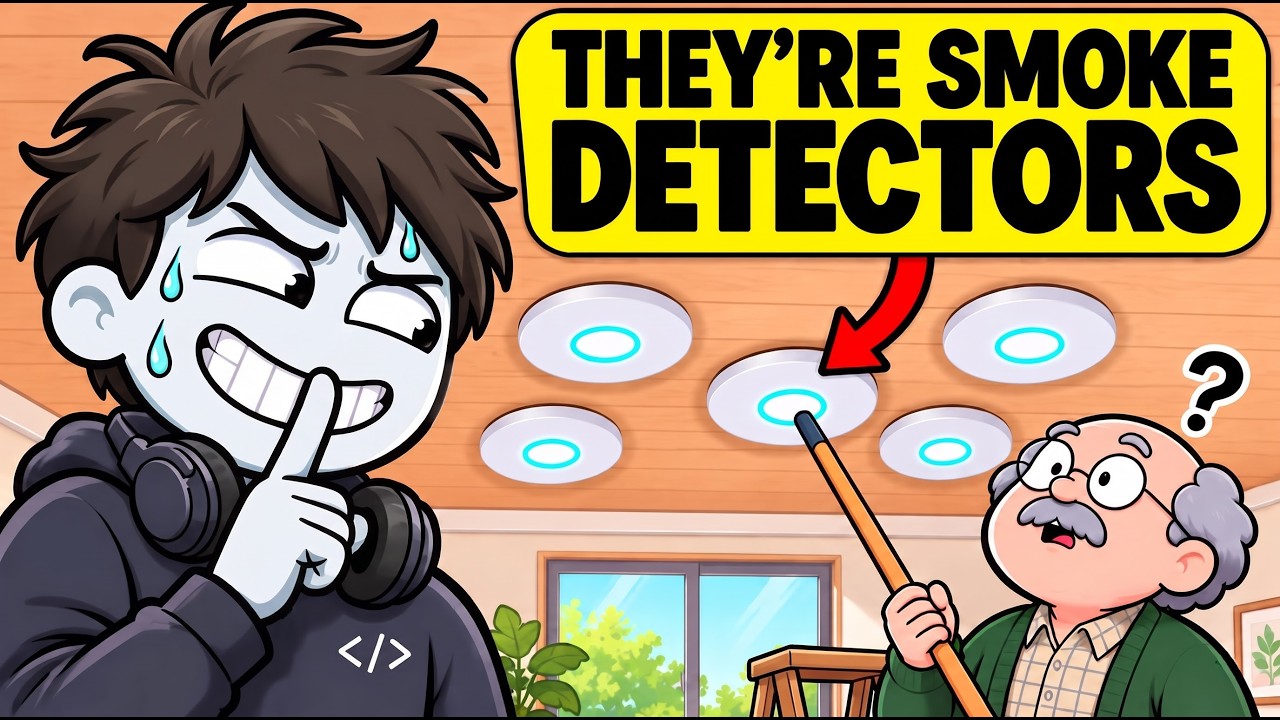
Why Some People Are Obsessed With UniFi? (One Access Point Is Never Enough)
Title history
- Why Some People Are Obsessed With UniFi? (One Access Point Is Never Enough) — observed on 20261103-1637 UTC (YouTube)
Keywords
Summary
179 words
Critical Evaluation
Value of the Information & Strength of the Argument
The video effectively uses a compelling narrative to explain the psychological drivers behind UniFi obsession, grounding each step in academic research. It successfully argues that visual feedback and progress tracking (labor illusion, endowed progress) and the desire for hidden competence (spotlight effect, prevention) motivate escalating purchases. The argumentation is coherent, connecting each tech upgrade to a specific psychological bias, and the use of real product names and prices adds credibility. However, the satirical tone and composite household may dilute the scientific rigor, as the narrative is dramatized for entertainment. Still, the core insights are well-supported and presented in an accessible manner.
Scientific Rigor, Source Quality, Title Accuracy
The video demonstrates strong rigor by citing peer-reviewed studies (e.g., Buell & Norton in Management Science, Gilovich et al. in JPSP, Nunes & Drèze in JCR, Joint Commission sentinel alert, Karlsson et al. in JRU) and official UniFi blog posts for technical claims. The sources are relevant and current, and the video distinguishes factual product information from psychological interpretation. The title accurately reflects the subject matter and is not misleading. The description includes a list of sources, and the video adheres to a disclaimer noting it is commentary and satire. Overall, the sourcing is robust for the genre, and the title-content alignment is strong.
220 words
Title / Content Match
The title accurately captures the video's theme: the psychological accumulation of UniFi access points. It is supported by the narrative and research references.
Quality & Reliability
8/10
The video is well-researched, referencing multiple academic papers (e.g., Buell & Norton's labor illusion, spotlight effect, endowed progress, alarm fatigue, ostrich effect) and official UniFi blog posts. Technical details about UniFi products and features appear accurate, but the satirical narrative and invented household may oversimplify some psychological phenomena. Overall, the content is reliable for its stated educational and entertainment purpose.
Chapters
Cited Sources
- UniFi Network 11 (Ubiquiti) — Official Ubiquiti blog post announcing UniFi Network 11, which includes AI device icons and topology time machine features referenced in the video.
- UniFi Network 10.6 and the High Availability Readiness Score (Ubiquiti) — Official blog post explaining the high availability readiness score feature, which the video discusses in the 'Score' segment.
- Gateway Shadow Mode (UniFi Academy) — UniFi Academy documentation on gateway shadow mode, a failover feature that the video mentions in the context of the Dream Machine Beast purchase.
- Long-range PoE switching (Ubiquiti) — Ubiquiti announcement of long-range PoE switching, cited when describing the outdoor access points and 800-meter reach.
- UniFi 5G Backup (Ubiquiti) — Official page for the UniFi 5G Backup device, which the narrator purchases to improve the high availability score.
- Memory surcharge list (NASCompares) — Article listing all 290 products affected by Ubiquiti's memory surcharge, referenced for pricing details in the video.
- AI device icons tested (LazyAdmin) — LazyAdmin's review of UniFi Network 11 changes, including the AI device icon feature tested in the video.
- Snake on Etherlighting (Korben) — Korben article about running the Snake game on Ubiquiti switch port lights, a playful detail mentioned in the video.
- Ubiquiti fiscal 2026 annual report (SEC) — SEC filing for Ubiquiti's fiscal 2026 report, cited for revenue figures: $3.3 billion, nearly half from the US.
External References
Contribution & Novelties
The video contributes a fresh perspective by linking specific psychological research to the consumer behavior of home networking enthusiasts, particularly the accumulation of UniFi gear. It illustrates how visual feedback and progress indicators in network management apps trigger the same mechanisms as slot machines or loyalty programs. The use of a fictional narrative makes the concepts relatable, and the inclusion of real product data grounds it in reality. For viewers, it offers self-reflection on why they might over-provision their home networks.
Pour aller plus loin :
- Spotlight effect — Explains the tendency to overestimate how much others notice our appearance, referenced in the video via Barry Manilow t-shirt study.
- Alarm fatigue — Describes the desensitization to alerts, a concept applied to hospital alarms and the narrator’s network notifications.
- Ostrich effect — A cognitive bias where people avoid negative information, paralleling the investor behavior studied by Karlsson et al. and the narrator’s constant checking of a green dashboard.
157 words
Radar Profile
The radar profile shows higher values for information quality and reliability, with moderate technical depth. This indicates a well-sourced, accessible piece that prioritizes psychological insights over deep technical detail, fitting its target audience of tech-savvy individuals interested in behavioral science.