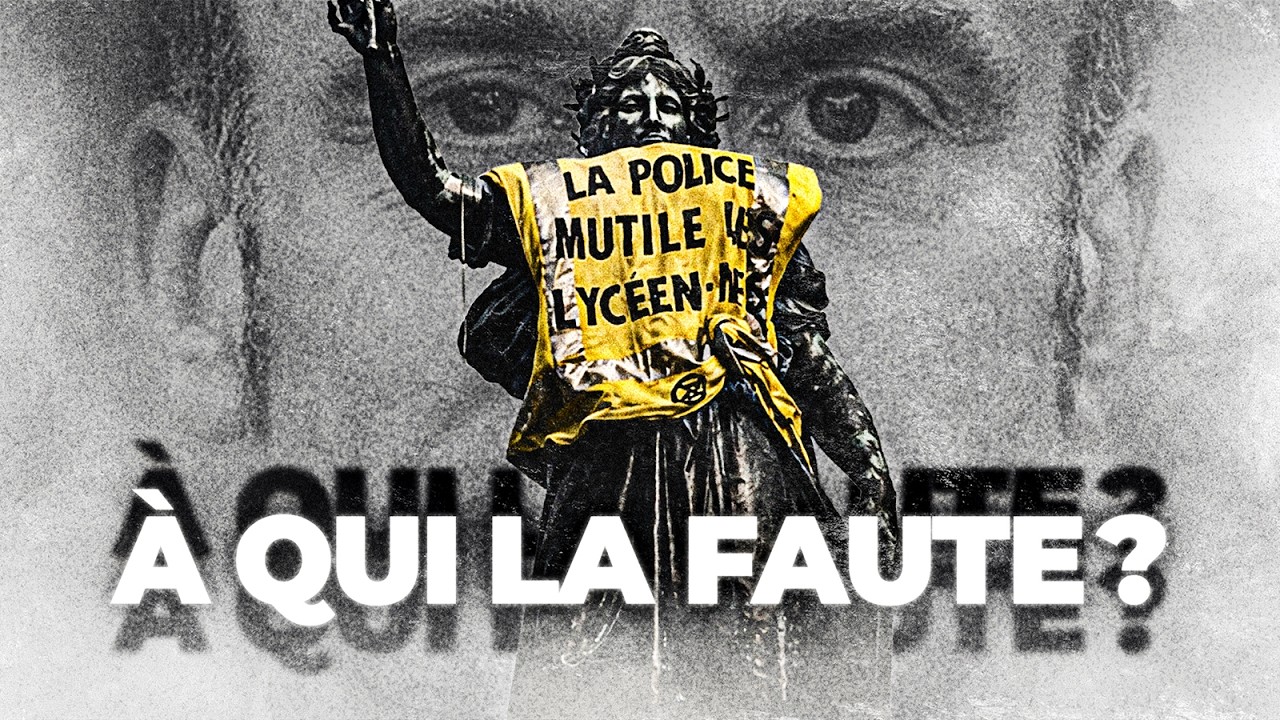
17 octobre : à qui la faute ?
October 17: whose fault is it?
Keywords
Summary
147 words
Critical Evaluation
Value of the Information & Strength of the Argument
The video provides valuable contextual data, such as participant numbers compared to previous protests, and includes expert analysis from Sébastien Roché, which strengthens the argumentation. The reasoning is structured and progressive, building from acknowledging isolated violence to attributing systemic failure to the government. However, the argumentation is one-sided, with clear political bias, and does not fully address counterarguments or alternative perspectives. The reliance on official statements and one expert, while relevant, could be broadened for more balanced coverage.
Scientific Rigor, Source Quality, Title Accuracy
The video cites official sources (prosecutor, interior minister, CNCDH statement) and an academic expert (Sébastien Roché), which contributes to its credibility. However, these sources are filtered through the author’s critical lens, and there is no systematic fact-checking or presentation of opposing views. The title is accurate and well-aligned with the content. The description provides no external scientific sources; the links are social media and promotional. No user comments were provided for analysis.
165 words
Title / Content Match
The title directly reflects the core question of attribution of responsibility for the events, which the video addresses in detail.
Quality & Reliability
7/10
The video offers a well-structured critical analysis of the October 17 protests, drawing on expert testimony (Sébastien Roché, CNRS) and official statements (public prosecutor, interior minister). However, it is an opinionated political commentary rather than a neutral scientific review, with a clear partisan stance.
Chapters
Cited Sources
- Profil Bluesky de Boidin — Lien vers le profil de Boidin, monteur de la vidéo (mentionné dans la description).
- Profil Bluesky de Clément Viktorovitch — Lien vers le profil de l'auteur sur Bluesky.
- Site du spectacle de Clément Viktorovitch — Lien vers la page de tournée du spectacle de l'auteur.
- Profil Threads de Clément Viktorovitch — Lien vers le profil Threads de l'auteur.
- Chaîne Twitch de Clément Viktorovitch — Lien vers la chaîne Twitch où le stream original est diffusé.
Concurring Sources
- Déclaration de la procureure de Paris — Citée dans la vidéo, indiquant que les interpellés ne revendiquent pas de positionnement politique.
- Interview de Sébastien Roché — Chercheur CNRS décrivant le maintien de l'ordre comme chaotique et non professionnel.
Dissenting Sources
- Déclarations de Laurent Nuñez — Le ministre de l'Intérieur a d'abord nié le sous-dimensionnement, puis a reconnu une 'asymétrie' le lendemain, contredisant sa position initiale.
Contribution & Novelties
The video offers a rigorous comparison of protest attendance figures and a critical assessment of government accountability, supported by an expert’s analysis. It contributes to the public debate by systematically dismantling the official narrative and reframing responsibility.
Pour aller plus loin :
- Sébastien Roché, research on policing — Expert cited in the video, relevant for understanding police science.
- Maintien de l’ordre en France — General overview of French public order management.
- Défenseur des droits — French independent authority that can investigate police violence cases.
84 words
Radar Profile
The radar profile shows a balanced but slightly heavy weighting toward information quantity and quality, with moderate technical depth. The reliability score is lower, reflecting the partisan nature of the commentary.