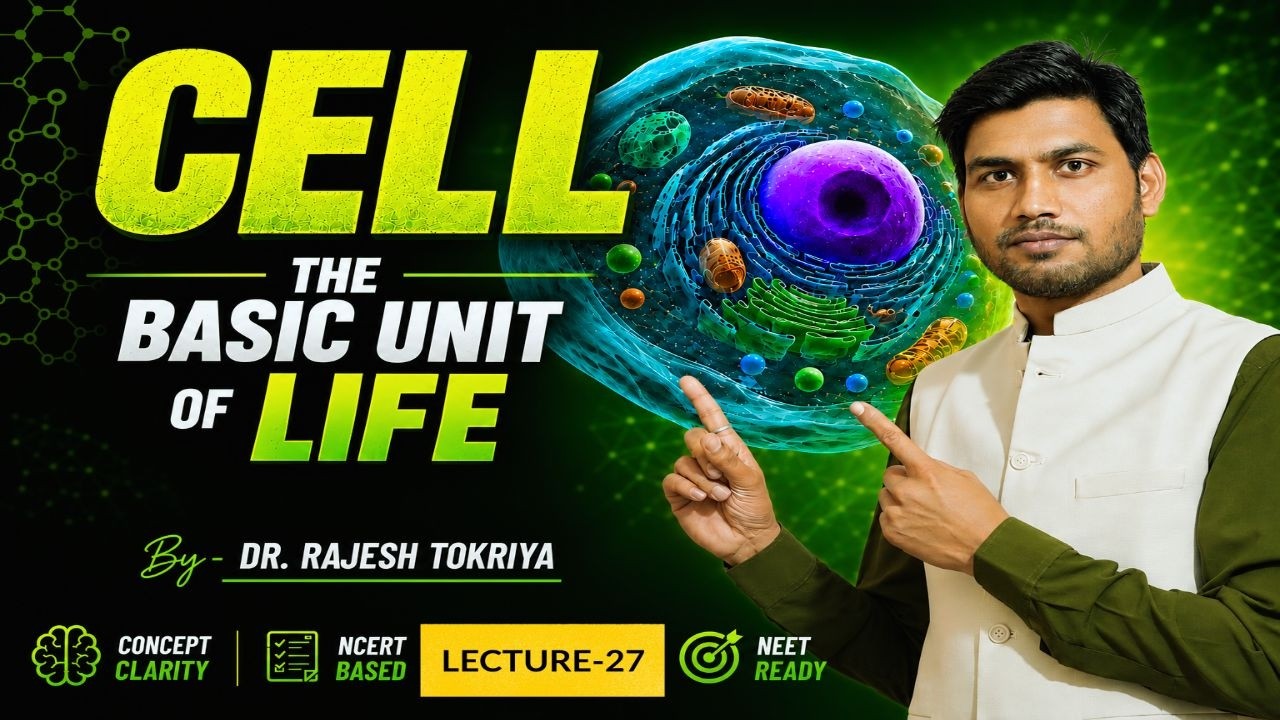
L-27 (Part-2) Mitochondria, Structure and Functions
Title history
- L-27 (Part-2) Mitochondria, Structure and Functions — observed on 20261101-0209 UTC (YouTube)
Keywords
Summary
166 words
Critical Evaluation
Value of the Information & Strength of the Argument
The value of the information lies in its straightforward explanation of complex biochemical processes. The lecturer uses diagrams and step-by-step reasoning to make the chemiosmotic hypothesis accessible. The argumentation is logical, building from the structural components to the functional mechanism, and consistently relates concepts to cellular respiration. However, the presentation is largely expository without critical analysis or comparison of alternative hypotheses, which limits the depth of scientific rigor.
Scientific Rigor, Source Quality, Title Accuracy
The scientific content is consistent with established biological knowledge. The video correctly attributes the chemiosmotic hypothesis to Peter Mitchell, though no external sources or citations are provided. The description mentions NCERT coverage, indicating alignment with standard Indian curriculum. The title is accurate, and the video fulfills its promise. No comments were available to assess public reception.
139 words
Title / Content Match
The title accurately reflects the content: a lecture on mitochondrial structure and functions, part of a series. The video delivers exactly what is promised.
Quality & Reliability
7/10
The content is scientifically accurate and clearly presented, covering the ultrastructure of mitochondria, chemiosmotic hypothesis, and major functions. The explanation aligns with standard textbook knowledge, but the depth is limited to introductory level and lacks references to primary literature.
Key Moments
Markers derived by PSI from the transcript: the creator did not define chapters.
- Introduction and recap of previous lecture on mitochondrial ultrastructure.
- Comparison of outer and inner membranes, intermembrane space, matrix, and cristae.
- Explanation of protein complexes and electron transport chain in inner membrane.
- Introduction to chemiosmotic hypothesis: proton pumping and gradient formation.
- Detailed description of ATP synthase (F0-F1) and proton flow for ATP production.
- Discussion of mitochondrial functions: cellular respiration, calcium storage, apoptosis, and beta-oxidation.
- Conclusion and preview of next lecture.
Cited Sources
- Peter Mitchell — Chemiosmotic hypothesis explained in the video
Contribution & Novelties
The video provides a pedagogical explanation of mitochondrial structure and function, emphasizing the chemiosmotic hypothesis. Its contribution lies in breaking down a complex mechanism into simplified steps, which is beneficial for students at an introductory level. However, it does not offer novel scientific insights or recent research findings.
Pour aller plus loin :
- Chemiosmosis — This Wikipedia article provides a detailed overview of the chemiosmotic theory, including its history and applications.
- Endosymbiotic theory — Explains the evolutionary origin of mitochondria, which is briefly mentioned in the video but deserves deeper investigation.
- ATP synthase — A comprehensive resource on the structure and rotary mechanism of ATP synthase, complementing the video’s explanation.
110 words
Radar Profile
The radar profile shows balanced scores, with slightly higher reliability. This reflects a solid, accurate educational lecture that covers essential concepts without venturing into advanced or speculative areas. The content is reliable and well-structured, but the information quantity and technical depth are moderate, typical for an introductory course video.