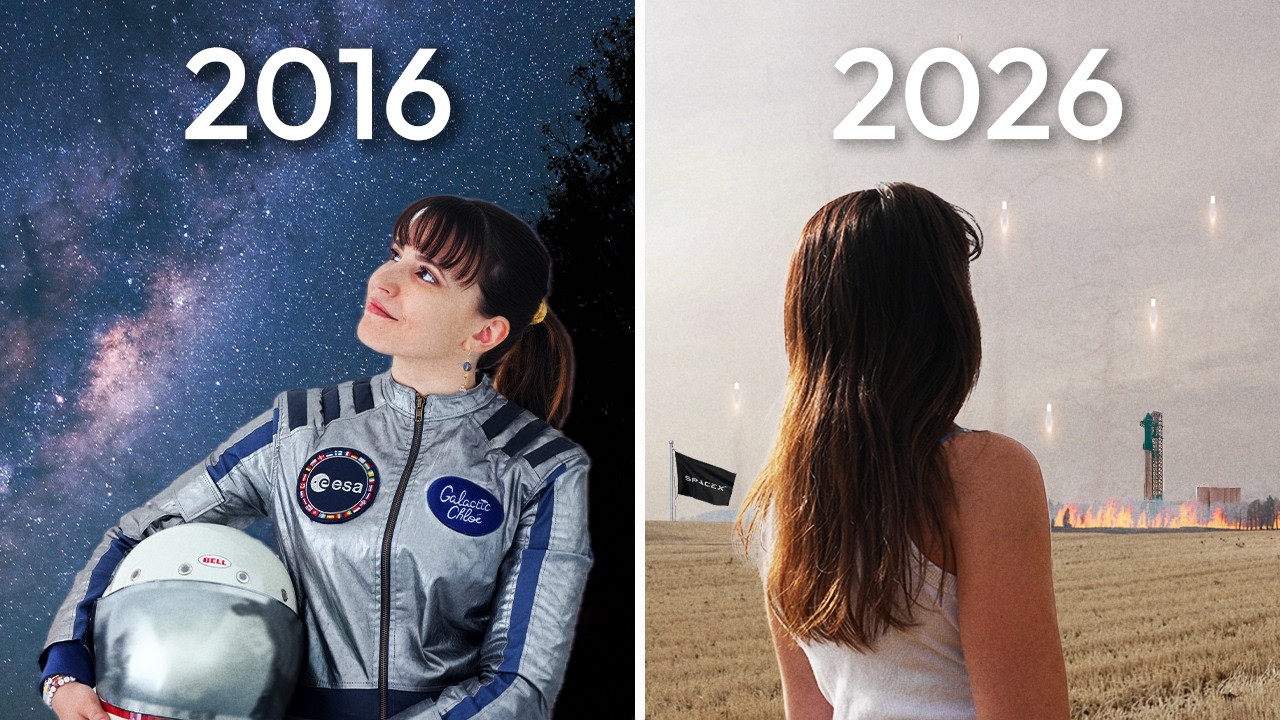
Je ne sais plus si j'aime mon métier | LE PROCÈS DE L'ESPACE (1/3)
I no longer know if I love my job | THE TRIAL OF SPACE (1/3)
Title history
- Je ne sais plus si j'aime mon métier | LE PROCÈS DE L'ESPACE (1/3) — observed on 20261031-2327 UTC (YouTube)
Keywords
Summary
153 words
Critical Evaluation
Value of the Information & Strength of the Argument
The documentary offers a valuable perspective by combining personal testimonies with expert analysis, making the issues accessible without oversimplifying. The argumentation is structured: it first establishes the idealistic vision, then contrasts it with the current reality, using historical facts and recent developments. The interviews with specialists add credibility and depth, while the author’s reflective questions invite the viewer to consider ethical dimensions. The treatment of ‘space sustainability’ is nuanced, acknowledging both the fascination and the challenges. However, the video leans heavily on emotional engagement, and some might argue that the causal links between space growth and environmental harm could be more thoroughly quantified.
Scientific Rigor, Source Quality, Title Accuracy
The scientific rigor is good, with references to real events (e.g., the Iridium-Cosmos collision, Envisat abandonment) and respected institutions (ESA, EPFL). The use of named experts and their professional affiliations strengthens credibility. The title adequately reflects the content, which indeed addresses the author’s crisis of confidence in the space profession. However, since the video is only the first part, some claims may be developed in later episodes, and a full assessment of source quality might require seeing those. The description provides links to the collaborative project (espace-commun.ch) and a playlist for the series, but no direct reference to specific scientific papers or reports. Based on the public comments, viewers appreciate the honest questioning and find the analysis resonant; many express similar concerns about the industry’s direction.
244 words
Title / Content Match
The title accurately reflects the introspective and critical nature of the video, though it frames it as a personal crisis; the content is broader, covering the industry's shift.
Quality & Reliability
8/10
The documentary combines historical narrative, expert interviews (Claude Nicollier, Paul Wohrer, Emmanuelle David) and the creator's personal experience. It provides a well-structured analysis of the space sector's evolution, with clear identification of geopolitical and sustainability issues. However, some quantitative claims lack explicit sourcing beyond the interviewees' statements.
Chapters
Cited Sources
- Espace Commun - collaborative project — Described as the project behind this investigation series, likely providing additional resources.
- Playlist of the mini-series (Le Procès de l'Espace) — Link to all episodes of the series as mentioned in the video description.
Concurring Sources
- ESA Space Debris Office — The video mentions ESA's perspective; this page provides official data on space debris.
Dissenting Sources
- SpaceX and Starlink's official communications often tout benefits (e.g., global connectivity) without fully addressing environmental drawbacks. — The video presents critical views on constellations; industry sources typically emphasize positive aspects.
Contribution & Novelties
The video brings a fresh perspective by integrating personal narrative with geopolitical and environmental analysis, highlighting the gap between the romantic vision of space and the current industrial reality. It contributes to public discourse on space sustainability, a topic often overshadowed by technical achievements.
Pour aller plus loin :
- Space debris - Wikipedia — Overview of the debris problem and mitigation efforts.
- Space sustainability - Wikipedia — Discusses the concept and international initiatives.
- NewSpace - Wikipedia — Context on the emergence of commercial space actors.
- Satellite constellation - Wikipedia — Explains mega-constellations like Starlink and their impacts.
- EPFL Space Center — Official page of the center, relevant to the collaboration (not explicitly linked in description but likely related).
118 words
Radar Profile
The profile shows high scores in information quantity/quality and fiabilité, with slightly lower methodical rigor. This reflects a well-researched documentary that excels in content richness but relies partially on expert testimony rather than fully cited data. The moderate technical level is appropriate for a general audience.
💬 très positif - Sur les 30 commentaires analysés, la grande majorité exprime un soutien enthousiaste, des remerciements pour la réflexion, et partage des expériences personnelles similaires, avec un seul commentaire critique sur l'orientation générale mais sans hostilité.