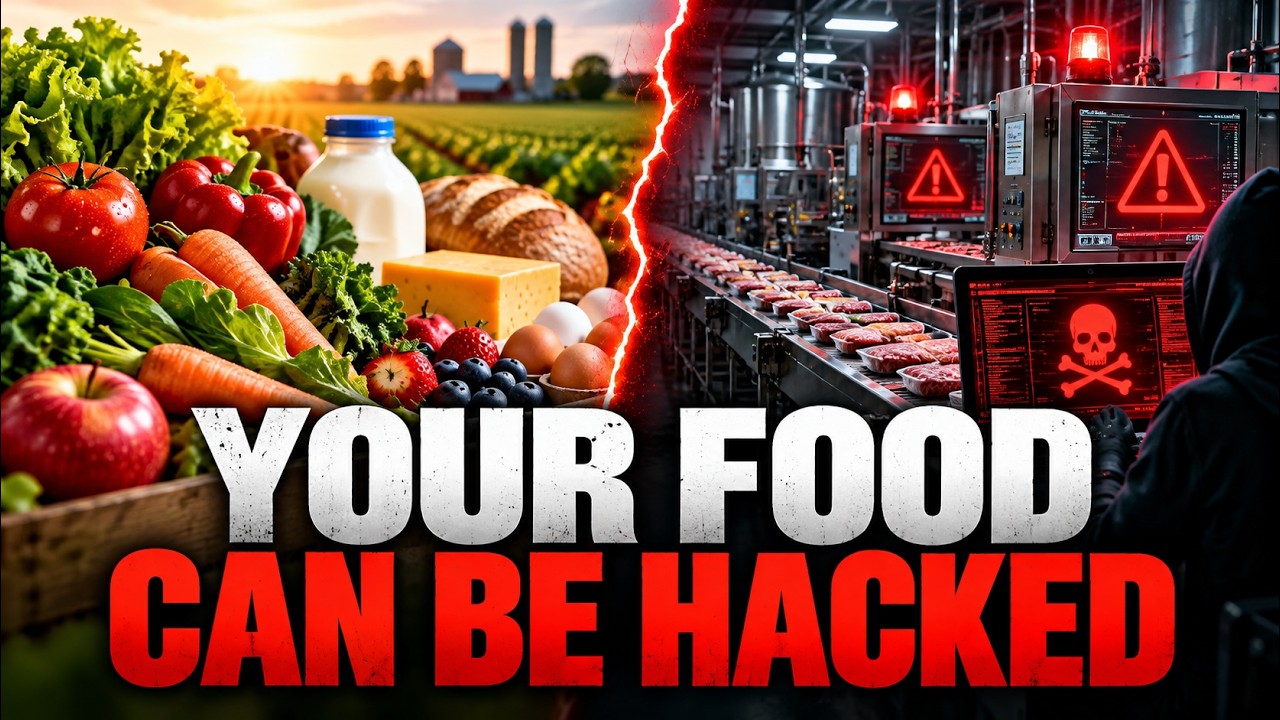
Is Your Dinner at Risk? The Hidden Cybersecurity Threat to Our Food
Keywords
Summary
178 words
Critical Evaluation
Value of the Information & Strength of the Argument
The video provides valuable insights from two experienced OT security professionals who bring practical, field-based perspectives. Their argumentation is coherent, emphasizing the interconnectedness of food infrastructure and the often-overlooked vulnerabilities. They effectively illustrate their points with concrete examples, such as the French supermarket attack and the chicken plant incident, making the risks tangible. The reasoning about manual process redundancy and insider threats is compelling and grounded in real-world experience. However, the discussion is qualitative and lacks quantitative data or formal analysis, and some claims remain speculative due to the early stage of investigations.
Scientific Rigor, Source Quality, Title Accuracy
The speakers demonstrate expertise, but the video is a conversational discussion rather than a rigorous research presentation. They repeatedly acknowledge the lack of confirmed details and avoid speculation on unverified aspects, which shows caution. The only external source mentioned is the creator’s website (mikeholcomb.com), which offers additional resources but is not a scientific reference. The title accurately reflects the content, which centers on cybersecurity threats to food supply and the hidden risks within OT systems. No comments were provided to analyze audience reception, so no trends can be reported.
197 words
Title / Content Match
The title accurately reflects the core theme of cybersecurity risks to the food supply chain, as discussed throughout the video.
Quality & Reliability
6/10
The discussion relies on expert opinion and anecdotal evidence rather than verifiable data, with appropriate caveats about ongoing investigations.
Chapters
Cited Sources
- Mike Holcomb - Free OT/ICS cybersecurity resources — The creator's website, mentioned in the description as a resource hub for OT/ICS cybersecurity content.
Contribution & Novelties
This video contributes to raising awareness about cybersecurity in the food and agriculture sector, a domain often neglected in broader OT security discussions. It bridges the gap between theoretical risks and practical incidents, using recent events to illustrate systemic vulnerabilities and the importance of human factors such as insider threats and manual verification. The speakers offer actionable advice, such as integrating cybersecurity checks into existing food safety routines, making the content relevant for practitioners.
Pour aller plus loin :
- Industrial control system — Provides background on the systems discussed.
- SCADA — Relevant to the operational technology environments mentioned.
- Critical infrastructure protection — Connects to the broader context of securing food supply as critical infrastructure.
114 words
Radar Profile
The radar profile indicates balanced scores with moderate information quantity and technical level, but slightly lower reliability, reflecting the conversational and often speculative nature of the discussion. The quality of information is above average due to expert insights.