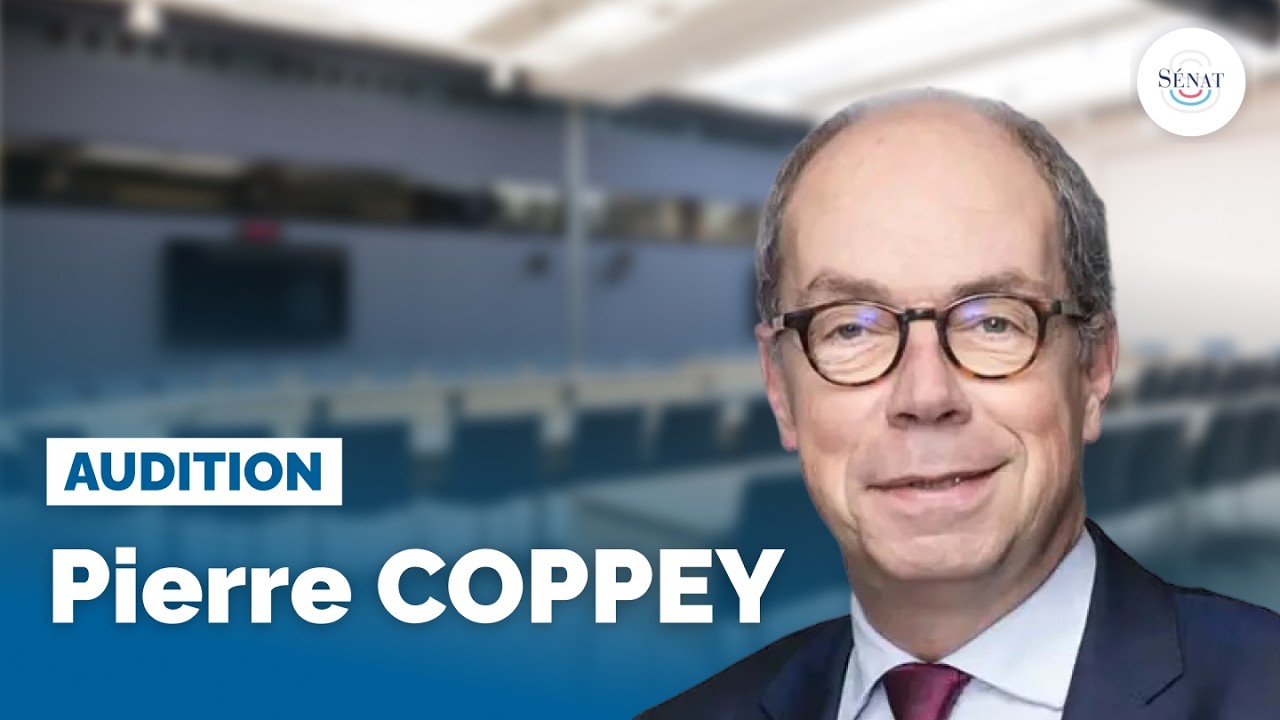
Contrôleur général des lieux de privation de liberté
Inspector General of Places of Deprivation of Liberty
Title history
- Contrôleur général des lieux de privation de liberté — observed on 20261106-0937 UTC (YouTube)
Keywords
Summary
214 words
Critical Evaluation
Value of the Information & Strength of the Argument
The video provides valuable insights into the civil servant nomination process and the functioning of an independent oversight authority. Coppey’s argumentation is coherent and well-structured, built on concrete statistics and personal experience. He effectively defends the necessity of the institution and his own suitability, balancing respect for legal boundaries with a strong moral stance. The senators’ questions challenge him on key issues, and his responses demonstrate pragmatism and a field-oriented philosophy, steeped in his associative background. While the discourse is compelling, it remains largely opinion-based and does not introduce novel empirical research; its strength lies in the articulation of established facts and contextual references.
Scientific Rigor, Source Quality, Title Accuracy
The video is a parliamentary record, ensuring authenticity of the exchanges. The candidate cites figures on prison population and occupancy rates, but these are not sourced within the video; they align with commonly reported statistics. He references Tocqueville and Robert Badinter, but no direct sources are provided. The title accurately reflects the content, as it is precisely an audition for that role. No comments are available for analysis, so public reception cannot be assessed.
193 words
Title / Content Match
The title accurately reflects the content: a parliamentary audition of the candidate for the position of General Controller of Places of Deprivation of Liberty.
Quality & Reliability
7/10
The hearing is a formal parliamentary process, providing authentic statements from a candidate and senators. However, the content is largely subjective and political, with factual claims that are not independently verified in the video.
Key Moments
Markers derived by PSI from the transcript: the creator did not define chapters.
- Introduction by the Senate president, explaining the nomination procedure under Article 13 of the Constitution.
- Pierre Coppey begins his opening statement, outlining his background and motivation for the position.
- Coppey details prison overcrowding statistics and highlights the indignity of current detention conditions.
- Senators start asking questions, focusing on priorities and independence of the future controller.
- Discussion on prison regulation mechanisms and the boundary between control and political positions.
- Debate on specific measures like QLCO and activities in detention, with Coppey's pragmatic viewpoint.
Contribution & Novelties
This video contributes a rare first-hand view of how a candidate for a major oversight role articulates his priorities and independence. It does not present original research but offers a comprehensive overview of the current issues in French detention facilities from a prospective official. The discussion on prison regulation and the distinction between legislative policy and oversight is particularly informative.
Pour aller plus loin :
- General Controller of Places of Deprivation of Liberty — Official role description and history.
- Prison overcrowding in France — Context on overcrowding issues globally and in France.
- Alexis de Tocqueville — Reference to his observations on prisons and democracy.
104 words
Radar Profile
The radar profile likely shows moderate to high scores on quantity and reliability, balanced by lower technical specificity. The video is strong on broad information and authenticity but does not dive into technical or scientific detail, reflecting its nature as a political hearing rather than an academic lecture.