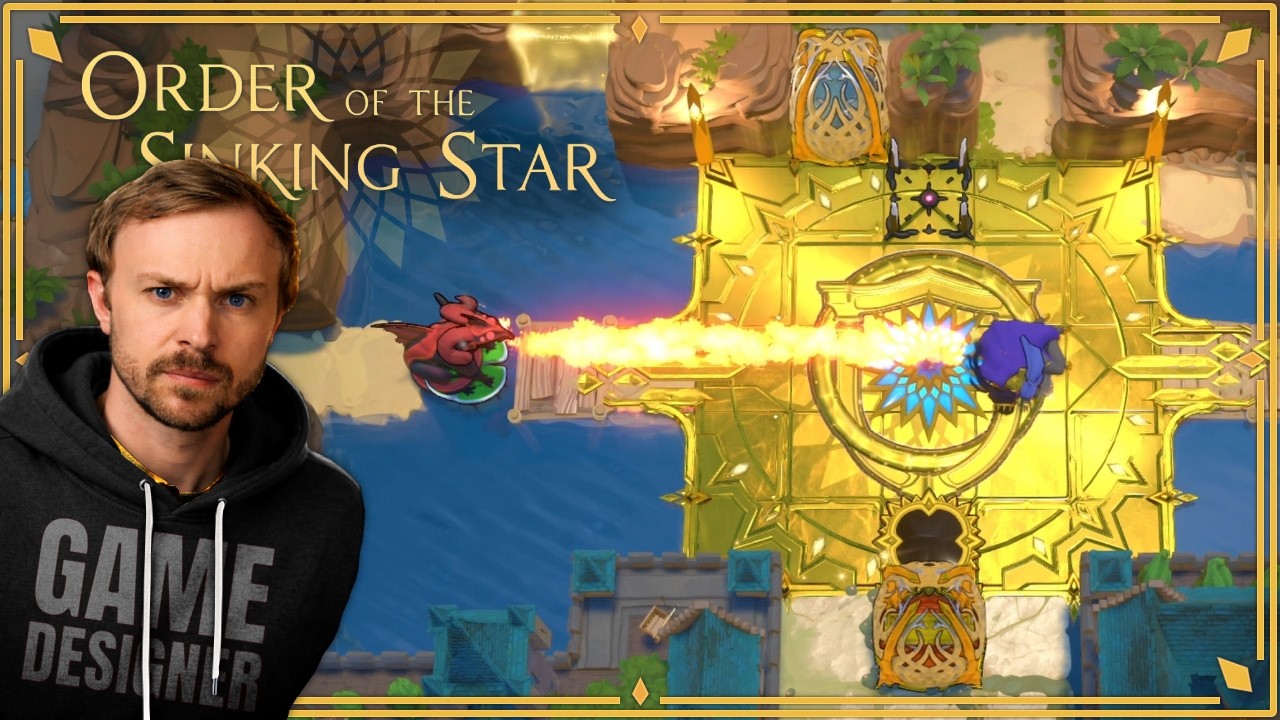
Heroes to the Rescue! | Order of the Sinking Star Design Study
Keywords
Summary
132 words
Critical Evaluation
Value of the Information & Strength of the Argument
The video offers substantial value through the lens of a professional game designer analyzing the game in real-time. Noël provides insightful observations about level structure, puzzle logic, and player psychology. His reasoning is transparent, as he verbalizes his thought process, hypotheses, and missteps. The argumentation is coherent and grounded in his experience, though it is necessarily subjective and based on a single playthrough. He frequently references mechanics and design choices, connecting them to broader principles of game design education and player guidance. The live commentary style adds authenticity, but the lack of external verification limits the conclusiveness of his claims.
Scientific Rigor, Source Quality, Title Accuracy
The rigor is moderate: the creator’s expertise adds credibility, but the analysis is informal and not peer-reviewed. The description provides links to the playlist and the game’s Steam page, which are relevant, but no formal academic sources are cited. The title accurately describes the content, and the video adheres to its promise of a design-focused playthrough. No comments were analyzed, so public reception could not be assessed. The video’s niche audience and low engagement reduce external validation, yet the internal consistency of the analysis is commendable.
201 words
Title / Content Match
Titre accurately reflects the level being played and the analytical focus on game design.
Quality & Reliability
7/10
Analysis is detailed and reflects genuine game design expertise, though it is subjective and based on a single playthrough. Minimal audience engagement limits validation.
Chapters
Cited Sources
- Order of the Sinking Star Blind Playthrough Playlist — Playlist containing this and other episodes of the design study series.
- Order of the Sinking Star Live Stream Playlist — Live stream version of the playthrough sessions.
- Order of the Sinking Star on Steam — Store page for the game being played.
Contribution & Novelties
The video contributes a unique real-time analysis of puzzle game design from a practitioner’s perspective, highlighting how players internalize rules and explore solutions. It demonstrates the value of blind playthroughs in understanding tutorial design.
Pour aller plus loin :
- Jonathan Blow — Game designer known for The Witness and Braid, relevant to the game’s creator and design philosophy.
- The Witness — Blow’s previous puzzle game, often referenced for its design lessons.
- Sokoban — A classic puzzle genre influencing block-pushing mechanics seen in this game.
84 words
Radar Profile
The radar profile shows high scores in information quantity and technical level, indicating a deeply analytical video. Medium quality and reliability suggest a subjective but informed perspective. The overall balance favors informative depth over external validation.