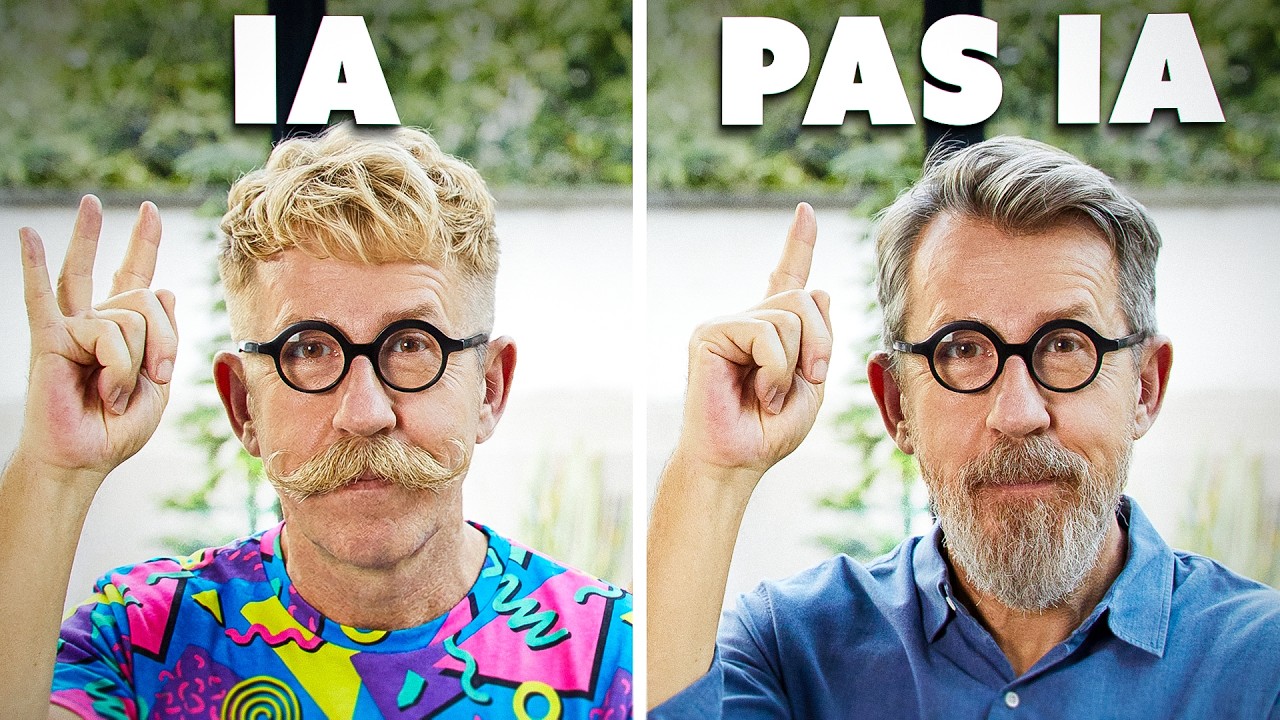
IA : comment ne pas se faire piéger ?
AI: How to avoid getting tricked?
Title history
- IA : comment ne pas se faire piéger ? — observed on 20261101-0928 UTC (YouTube)
Keywords
Summary
225 words
Critical Evaluation
Value of the Information & Strength of the Argument
The video provides valuable information on a timely topic, blending interviews with experts and examples to illustrate the dangers of AI-generated content. The argumentation is strong: it uses concrete case studies (Haaland, Michel Cymes, Élysée video) and demonstrates detection techniques step-by-step, supported by AFP’s methodology. However, it does not delve into the technical details of AI models, which might limit understanding for advanced viewers, but it serves its purpose of educating a general audience. The inclusion of a content creator (Raikonen) adds a practical perspective, and the clear rationale for fact-checking criteria strengthens the credibility.
Scientific Rigor, Source Quality, Title Accuracy
The scientific rigor is notable: the video relies on AFP’s professional fact-checking expertise and cites real work (e.g., the study by Reset Tech). The title accurately reflects the content, as it indeed explains how to avoid being tricked by AI. However, direct links to studies are not provided in the description, and some claims are presented without detailed evidence. The overall tone is journalistic rather than purely scientific, but the methods shown are grounded in professional practice.
187 words
Title / Content Match
The title accurately reflects the content, focusing on how AI-generated content can deceive and offering strategies to detect it.
Quality & Reliability
8/10
The video is a well-researched documentary featuring experts from AFP's fact-checking team, a content creator, and a well-known doctor, providing credible insights and practical detection methods. Claims are backed by identifiable examples and professional experience, though direct citations to studies are limited.
Key Moments
Markers derived by PSI from the transcript: the creator did not define chapters.
- Introduction with two influencers, asking who is real.
- Explanation of generative AI types: text, image, voice, video.
- Evolution of AI video quality with Will Smith eating spaghetti test.
- Discussion of slop content and its economic incentives.
- Political deepfakes and their threat to elections, including 2027 presidential candidates.
- AFP fact-checkers explain their criteria and analyze a fake video of the Élysée.
- Health misinformation, with 43% statistic and Michel Cymes segment.
- Analysis of Erling Haaland deepfake and methods to detect AI (glitches, ears, tools).
- Reveal of the real influencer and conclusion about critical thinking.
Cited Sources
- Raikkonen's Instagram — The content creator Raikkonen's page, where he shares AI-generated videos, referenced in the interview.
External References
Contribution & Novelties
The video brings a fresh perspective by combining journalism with hands-on demonstrations from AFP fact-checkers, making the detection of AI-generated content accessible to a wide audience. It highlights the economic and political motivations behind deepfakes, which is often overlooked. The inclusion of a content creator who uses AI for entertainment adds nuance, showing the dual use of the technology. The main novelty is its practical framework: ask who published it, check for other images, verify with reliable media, and use detection tools.
Pour aller plus loin :
- Deepfake - Wikipedia — A foundational article on the technology and its uses.
- Fact-checking - Wikipedia — Overview of the practice of verifying claims.
- InVID WeVerify — The plugin developed by AFP and partners for video verification, mentioned in the video.
- Generative artificial intelligence - Wikipedia — Covers the broader field of generative AI.
141 words
Radar Profile
The scores are balanced, with information quantity and quality high, reflecting a well-packed documentary. Technical level is moderate, suitable for a general audience, and reliability is strong due to expert involvement. The profile indicates a credible educational piece.