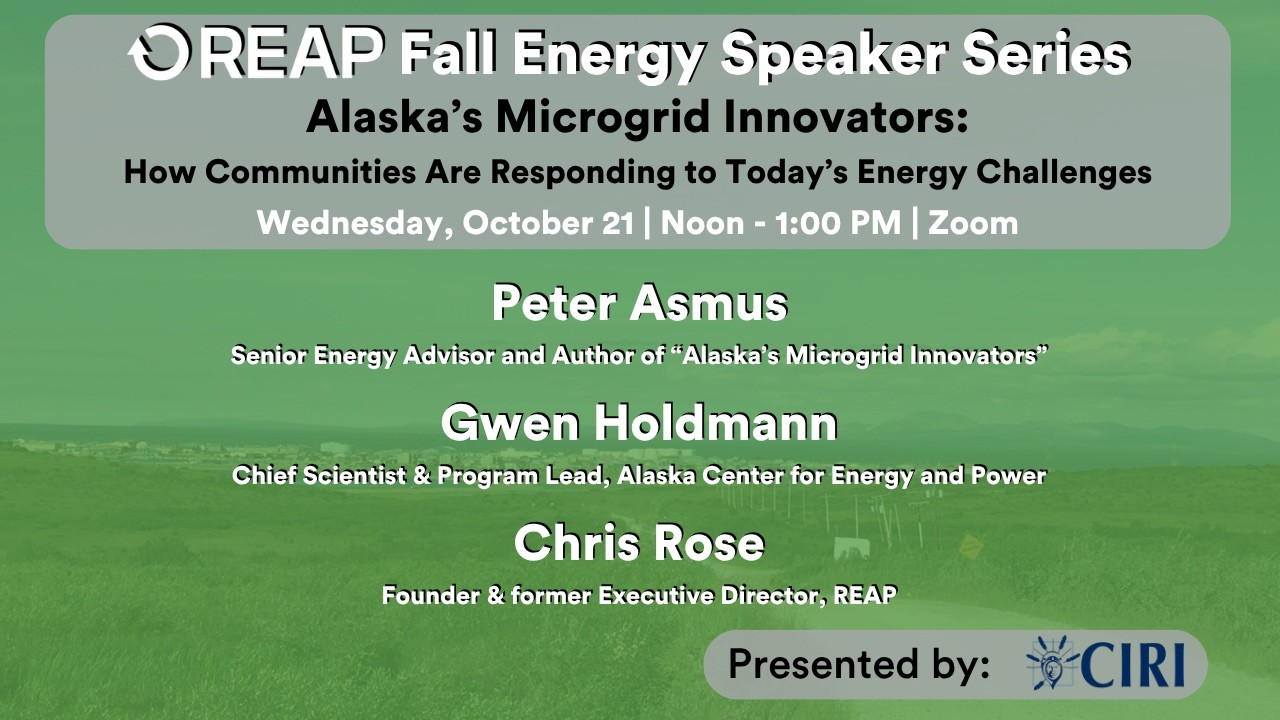
[2026 Fall Energy Speaker Series] Alaska’s Microgrid Innovators
Title history
- [2026 Fall Energy Speaker Series] Alaska’s Microgrid Innovators — observed on 20261025-1449 UTC (YouTube)
Keywords
Summary
142 words
Critical Evaluation
Value of the Information & Strength of the Argument
The value lies in first-hand accounts from key figures in Alaska’s energy sector, providing unique insights into the motivations and challenges of microgrid development. The argumentation is solid, as each speaker supports claims with personal experience and concrete examples, such as specific projects and individuals. They emphasize the role of necessity-driven innovation and community collaboration. The discussion is coherent and well-moderated, with each speaker building on others’ points.
Scientific Rigor, Source Quality, Title Accuracy
The sources are primarily oral histories and personal experiences, which are credible for this type of discussion. The book itself is a compilation of such stories, and the speakers are recognized experts. However, the webinar is not a rigorous scientific analysis; it is an expert opinion panel. The title accurately reflects the content, focusing on microgrid innovators. The description provides context for the book, and the discussion stays on topic. No external sources are cited during the talk, but the book serves as a reference.
168 words
Title / Content Match
The title accurately reflects the discussion, which centers on innovators in Alaska's microgrid sector.
Quality & Reliability
8/10
The discussion features recognized experts with firsthand experience, providing credible and consistent insights into Alaska's microgrid development.
Key Moments
Markers derived by PSI from the transcript: the creator did not define chapters.
- Introduction to the webinar and speakers.
- Peter Asmus defines microgrids and explains Alaska's prominence in this field.
- Gwen Holdmann discusses her off-grid lifestyle and its influence on her energy perspective.
- Chris Rose shares his background and founding of REAP.
- Gwen talks about her work at Chena Hot Springs and establishment of ACEP.
- Discussion of Diane Carpenter and the history of rural electrification in Alaska.
Cited Sources
- Alaska’s Microgrid Innovators: How Communities Are Responding to Today’s Energy Challenges — The book central to the discussion, authored by Peter Asmus.
- A Different Arctic Paradigm: Searching for Energy in the Far North — Mentioned as Gwen Holdmann's earlier book.
Contribution & Novelties
The video provides an original oral history perspective on Alaska’s microgrid development, highlighting untold stories and the human dimension of energy innovation. It complements technical literature by focusing on the people and decisions behind projects. It also underscores the importance of capturing this knowledge before it is lost as innovators retire.
Pour aller plus loin :
- Microgrid - Wikipedia — Background on microgrid definitions and applications.
- Renewable Energy Alaska Project — The organization co-hosting this series, with resources on Alaska’s renewable energy.
- Alaska Center for Energy and Power — The research center led by Gwen Holdmann, focusing on community-scale energy solutions.
101 words
Radar Profile
The radar profile shows strong qualitative information and reliability, moderate quantity of technical detail, and lower technical depth, reflecting a discussion-based webinar rather than a technical deep-dive.