The AFRIPAL Project in Musti: An Epigraphical Component by Karol Kłodziński
Title history
- The AFRIPAL Project in Musti: An Epigraphical Component by Karol Kłodziński — observed on 20261030-1054 UTC (YouTube)
Keywords
Summary
223 words
Critical Evaluation
Value of the Information & Strength of the Argument
The information presented is of high scholarly value, offering new epigraphic evidence from a relatively understudied North African city. The argumentation is systematic and cautious: the speaker distinguishes securely verified readings from hypotheses (e.g., the possible later insertion of a fragment, the hypothetical location of the Capitolium). He supports his conclusions by cross-referencing onomastic data, imperial titulature, and comparative material from neighboring sites. The reasoning is explicit and well-structured, with each claim grounded in direct observation or prior scholarship, thereby reinforcing the credibility of the presented findings.
Scientific Rigor, Source Quality, Title Accuracy
The speaker demonstrates solid scientific rigor by emphasizing the importance of autopsy over archive photos, a practice that allows verification of details that would otherwise remain uncertain. He cites relevant corpora, journals (e.g., Libyan Studies, ZPE, Epigraphica), and his own forthcoming monograph, as well as the work of Quinn and Wilson on Capitolia in Roman Africa. The title is perfectly aligned with the content: the lecture indeed focuses on the epigraphical component of the AFRIPAL project, with the speaker clearly identified. The sources cited are appropriate and trustworthy, though most are not publicly accessible in the description.
199 words
Title / Content Match
The title accurately announces the lecture's focus on the epigraphical component of the AFRIPAL project, with the speaker and topic clearly identified.
Quality & Reliability
8/10
The lecture presents original epigraphic research based on direct autopsy of stones, with results published or in press in peer-reviewed venues. The speaker explicitly discusses hypotheses and acknowledges uncertainties, demonstrating methodological rigor. No external verification is available, but the expertise and scholarly context lend high reliability.
Key Moments
Markers derived by PSI from the transcript: the creator did not define chapters.
- Introduction to the AFRIPAL project and the epigraphical component.
- Outline of the presentation: overview of epigraphical results and the Capitolium dedication discovery.
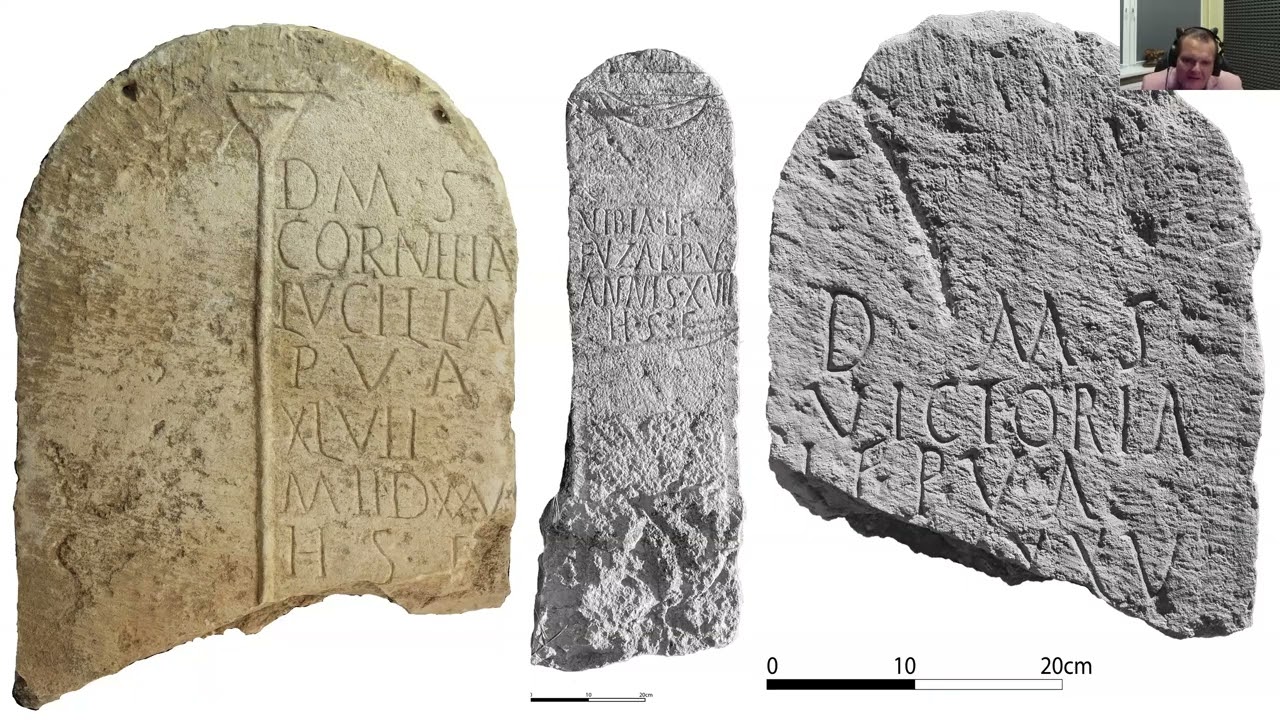
- The main workspace: local lapidarium in the Byzantine citadel; epitaphs from surveys.
- Presentation of a new Hadrianic milestone found northwest of the city.
- Reconstruction of the dedication to Pluto with three fragments, including rare architectural elements.
- Discovery of three new fragments of the Capitolium dedication during the 2022 campaign.
- Reconstruction and dating of the Capitolium dedication to 210-211 AD.
- Transcription of the complete dedication and discussion of the erasure of Geta's name.
Cited Sources
- AFRIPAL project website — Mentioned by the speaker as the project's official website for further information.
- Libyan Studies (2024) article on the Gordian III dedication — Revision of the dedication, cited as a prior publication by Santiago Sánchez de la.
- Monograph on funerary inscriptions of Musti (in press, Brill) — Forthcoming volume compiling epitaphs, mentioned during the conclusion.
Concurring Sources
- AFRIPAL project website — The project's official website is likely to list publications and updates consistent with the lecture's content.
- Libyan Studies (2024) article — Prior publication on a dedication from Musti, aligning with the epigraphic focus.
Contribution & Novelties
The lecture offers a significant original contribution to the epigraphy and history of Roman Africa by presenting newly discovered inscriptions from Musti, most notably the full reconstruction of the Capitolium dedication. This dedication, dated to 210-211 AD, is exceptionally large (over 6 m wide) and provides a rare example of a building inscription commemorating the Capitoline Triad and the Severan family. The speaker’s insistence on autopsy over photographic study corrects potential errors in earlier publications and demonstrates the importance of direct examination. The finding also elevates the count of known Capitolia in Roman Africa from 27 to at least 29, challenging previous estimates.
Pour aller plus loin :
- Capitolium (Wikipedia) — Provides background on the temple dedicated to the Capitoline Triad in Roman religion and architecture.
- Epigraphy (Wikipedia) — Offers an overview of the discipline of studying inscriptions, including methodological practices like autopsy.
- Roman Africa (Wikipedia) — Contextualizes the geographical and historical framework of the provinces where Capitolia were built.
160 words
Radar Profile
The radar profile shows uniformly high scores across all four dimensions, indicating a lecture rich in content, rigorous in method, technically advanced, and highly reliable. The weakest relative point is niveau_technique (8), which still reflects a specialized but accessible presentation for an informed audience.