Inside The Cars Built To Save Your Life
Keywords
Summary
236 words
Critical Evaluation
Value of the Information & Strength of the Argument
The video provides valuable insights into real-world automotive safety innovations, combining crash-test footage with expert explanations. It effectively conveys the importance of proactive safety systems, such as automatic emergency braking and driver monitoring, while also addressing their limitations, like speed restrictions and weather sensitivity. The argumentation is coherent, progressing from passive protection (crumple zones, airbags) to active prevention (sensors and autonomous actions). Demonstrations are engaging and practical, with the presenter testing each system, which reinforces the credibility of the claims. However, the treatment is largely non-technical; quantitative data is scarce and often simplified for a general audience.
Scientific Rigor, Source Quality, Title Accuracy
The documentary draws on interviews with engineers from Volvo, Autoliv, Continental, and Mercedes-Benz, as well as references to Euro NCAP and WHO statistics. These are credible industry sources, though no peer-reviewed literature is cited. The title accurately matches the content, focusing on cars engineered to save lives. The presentation is clear and free of obvious misinformation, but it occasionally prioritizes entertainment over depth, such as the presenter’s comedic reactions during tests. The lack of explicit references to independent studies or detailed technical documentation somewhat limits the rigor, but the overall reliability is acceptable for popular science content.
209 words
Title / Content Match
The title accurately reflects the content, which focuses on modern car safety technologies designed to prevent collisions and protect occupants and pedestrians.
Quality & Reliability
7/10
The documentary relies on expert interviews and real-world crash data, but presents information in a popularized format without in-depth technical derivation. Reliability is good but not peer-reviewed.
Key Moments
Markers derived by PSI from the transcript: the creator did not define chapters.
- Introduction: Host Justin Bratton sets up the episode, highlighting the global road death toll and Sweden's Vision Zero goal.
- Volvo's accident research center: Reviewing a real moose collision, explaining how data improves vehicle design.
- XC90 crash test: The ditch runoff test demonstrates the car's structural integrity and seat technology.
- City safety pedestrian detection: The car brakes automatically for an inflatable dummy, with a failed attempt at higher speed.
- Torcelli brake: Autoliv's vacuum-based system shortens braking distance by 40% in a high-speed test.
- Eyes Off-Road driver monitoring: Infrared camera detects prolonged gaze away from the road and emits a warning.
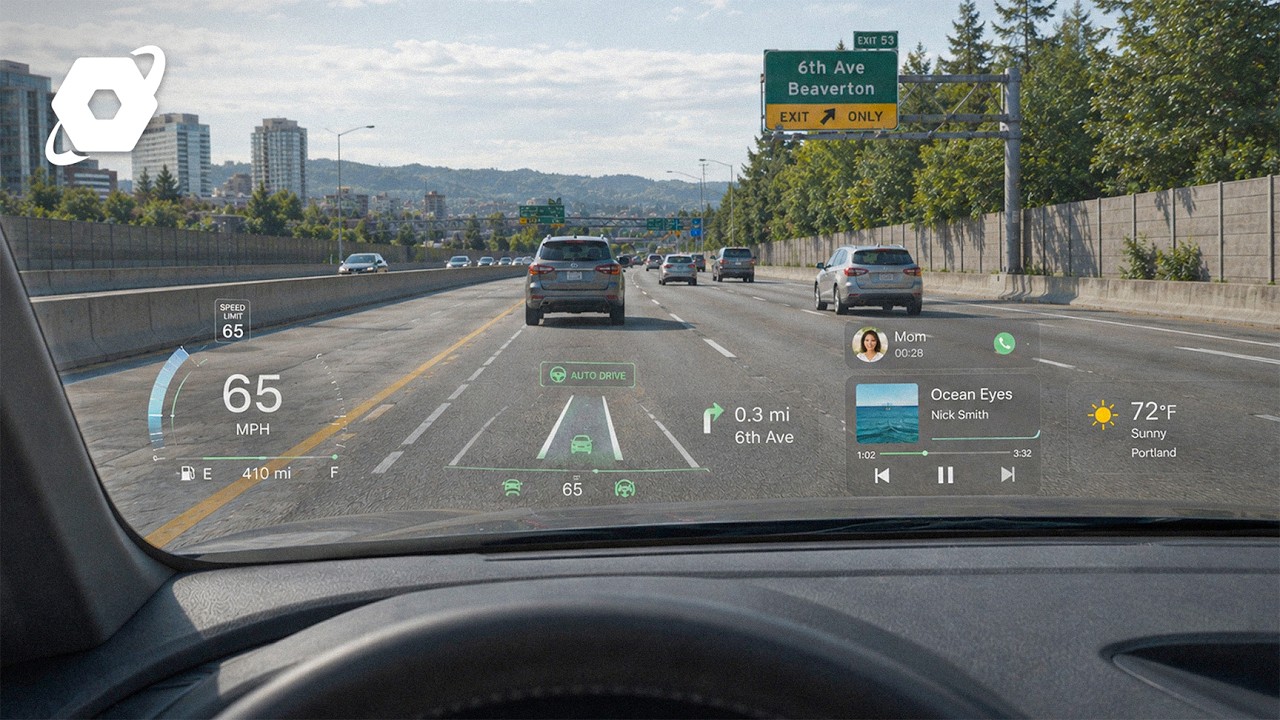
- Augmented reality head-up display from Continental: Navigation and distance data are projected onto the windshield.
- Autonomous driving test at low speed, including a lane-change maneuver, followed by Mercedes Distronic Plus on the Autobahn.
Cited Sources
- Now available on SPOTIFY! — Link to the full documentary on Spotify, included in the video description.
Contribution & Novelties
This documentary offers a hands-on, accessible overview of cutting-edge automotive safety technologies, presenting innovations like the Torcelli vacuum brake and driver monitoring system in an engaging format. It emphasizes the shift from crash protection to crash avoidance, a key trend in modern vehicle design. The inclusion of expert interviews and live demonstrations provides concrete insights that are rare in typical consumer car reviews.
Pour aller plus loin :
- Crumple zone — Understanding how deformable structures absorb impact energy, directly relevant to the XC90’s boron steel design.
- Autonomous emergency braking — The technology behind City Safety and Distronic Plus, supported by radar and camera sensors.
- Driver monitoring system — The Eyes Off-Road prototype exemplifies this category, using infrared to detect distraction or drowsiness.
- Vision Zero — The Swedish road safety strategy that inspires the goal of zero road fatalities by 2050.
140 words
Radar Profile
The radar profile shows a well-balanced performance: high quantity of information, moderate quality, moderate technical depth, and good reliability. This indicates a comprehensive yet accessible overview, with strengths in breadth rather than specialization.