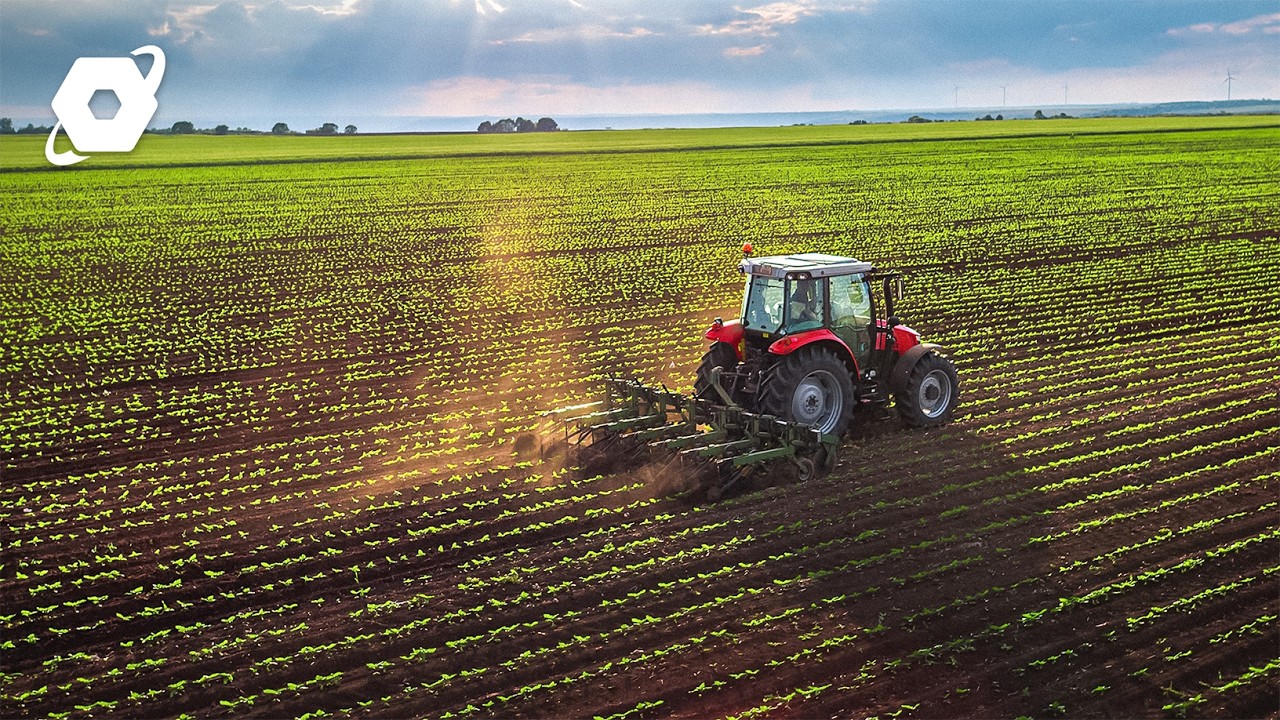
The Future of Food: How Will We Feed a Growing Planet? | FULL DOCUMENTARY
Title history
- The Future of Food: How Will We Feed a Growing Planet? | FULL DOCUMENTARY — observed on 20261101-0214 UTC (YouTube)
Keywords
Summary
154 words
Critical Evaluation
Value of the Information & Strength of the Argument
The documentary provides a broad overview of food security issues, using real-world examples from Asia. It effectively illustrates the immediate impacts of climate change on agriculture, such as erratic weather and salinity problems. The argumentation is generally solid, with expert opinions from scientists and conservationists, and it presents both problems and potential solutions. However, some segments are more anecdotal, such as the bee conservation story, which may not fully quantify the scale of the issue. The overall argument that we need greater crop diversity and reduced waste is compelling and supported by the evidence presented. The inclusion of innovative technologies like Raman spectroscopy adds scientific depth.
Scientific Rigor, Source Quality, Title Accuracy
The documentary cites various experts, but it does not provide specific references to studies or publications on screen. The sources are mostly expert testimony and visual evidence. The title accurately reflects the content, and the documentary is scientifically plausible, though it simplifies complex issues. The use of data (e.g., 5 million hectares of forest lost) is stated without citation, which limits its rigor. Overall, it is a well-produced popular science documentary rather than a peer-reviewed source.
197 words
Title / Content Match
The title accurately reflects the content, which explores various challenges and solutions for feeding a growing planet.
Quality & Reliability
7/10
The documentary features interviews with scientists, farmers, and conservationists, presenting a balanced view of food security issues. It includes specific data points (e.g., 5 million hectares of forest lost annually, 12% potential decline in fish supply) but also relies on personal anecdotes and some qualitative claims. Overall, it is informative and credible for a general audience, though not peer-reviewed.
Key Moments
Markers derived by PSI from the transcript: the creator did not define chapters.
- Introduction to Thailand's jasmine rice farming and drought challenges.
- Deforestation in the Leuser ecosystem and impact of palm oil plantations.
- Singapore's fish farming and food security concerns.
- Vertical farming, gene editing, and Raman spectroscopy for plant stress.
- Underutilized crops like Bambara groundnut and dietary diversity.
- Food waste issue and startup Tree Dots's redistribution efforts.
Cited Sources
- Spotify - The documentary audio — Link provided in the video description to access the documentary audio on Spotify.
Contribution & Novelties
The documentary’s original contribution lies in its focus on Southeast Asian case studies, combining traditional farming practices with cutting-edge biotechnological solutions. It highlights lesser-known crops like the Bambara groundnut and stresses the importance of dietary diversity, offering a fresh perspective beyond mainstream agricultural discussions. The emphasis on food waste as a critical lever for food security is also a valuable angle.
Pour aller plus loin :
- Bambara groundnut — A resilient legume highlighted in the documentary for its heat and drought tolerance.
- Vertical farming — The documentary showcases Singapore’s move toward indoor vertical farming to mitigate climate impacts.
- Raman spectroscopy — The technique used to detect plant stress in the film, relevant for precision agriculture.
- Food waste: Global food waste — The documentary discusses the one-third of food wasted worldwide and its environmental impact.
134 words
Radar Profile
The radar chart shows a fairly balanced profile with moderate scores across all dimensions. Information quantity and reliability are slightly higher than technical depth, suggesting the documentary is accessible to a broad audience while still providing substantial content. The low technical score reflects its popular-science nature, but the inclusion of expert interviews and specific technologies adds credibility.