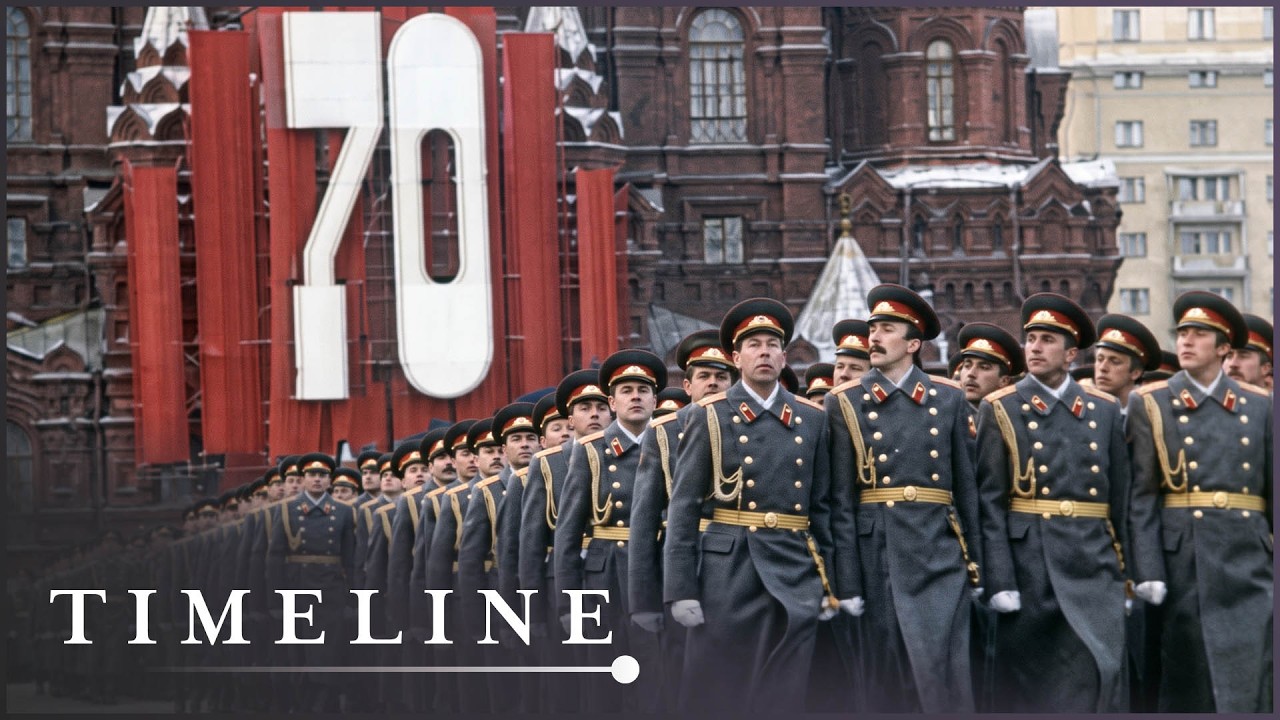
1980 - 1999: Inside The Chaotic Final Chapter Of The Cold War
Title history
- 1980 - 1999: Inside The Chaotic Final Chapter Of The Cold War — observed on 20261024-2121 UTC (YouTube)
Keywords
Summary
129 words
Critical Evaluation
Value of the Information & Strength of the Argument
The documentary provides valuable historical context by weaving together lesser-known episodes such as the Grenada invasion and the Iran-Contra affair with the broader Cold War narrative. It effectively uses primary sources like news reports and declassified phone calls to support its claims. The argumentation is coherent, emphasizing the interplay between US and Soviet strategies and the consequences for smaller nations. However, it occasionally simplifies complex motivations, particularly in portraying the US as the primary aggressor, though it also acknowledges Soviet expansionism. The strength of the argumentation lies in its chronological clarity and use of eyewitness accounts, which bolster the overall credibility.
Scientific Rigor, Source Quality, Title Accuracy
The documentary relies on a mix of archival footage, contemporary news broadcasts, and expert interviews, which are generally reliable. It cites declassified documents and presidential statements, though it does not always provide scholarly references. The title accurately encapsulates the content, and the narrative stays focused on the Cold War’s final chapter. The footage appears authentic, and the production quality is consistent with professional historical documentaries. The main weakness is a tendency to rely on anecdotal interviews rather than comprehensive primary-source documentation, but this does not undermine the overall factual accuracy.
206 words
Title / Content Match
The title accurately reflects the content, as the documentary focuses on the 1980s and early 1990s events that shaped the Cold War's end, including Grenada, Nicaragua, and Iran-Contra, culminating in the Soviet collapse.
Quality & Reliability
8/10
The documentary is produced by a reputable history channel (History Hit Network) and uses archival footage, contemporary news reports, and expert interviews. It presents multiple perspectives, but some interpretive bias is evident, particularly in the framing of US and Soviet actions. Overall, it is a reliable overview of the key events of the late Cold War.
Key Moments
Markers derived by PSI from the transcript: the creator did not define chapters.
- Introduction to the late Cold War tensions and the emergence of new proxy battlegrounds.
- US invasion of Grenada and the overthrow of the Marxist government.
- US support for the Contras in Nicaragua and the allegations of atrocities.
- Iran-Contra affair scandal and the congressional hearings.
- Reagan-Gorbachev summits and the thawing of Cold War relations.
- Fall of the Berlin Wall and the collapse of Soviet-backed regimes in Eastern Europe.
- Dissolution of the Soviet Union and the end of the Cold War.
Contribution & Novelties
This documentary contributes a comprehensive visual narrative of the Cold War’s final decade, integrating events often treated separately. It highlights the direct US involvement in Grenada and Nicaragua, and the domestic political scandal of Iran-Contra, offering a cohesive overview. The use of declassified tapes and interviews provides a human element to the geopolitical struggles.
Pour aller plus loin :
- Invasion of Grenada — Background on the US military intervention and its consequences.
- Iran–Contra affair — Detailed analysis of the secret arms deal and its impact on the Reagan administration.
- Reagan Doctrine — Explanation of the US policy of supporting anti-communist insurgencies.
101 words
Radar Profile
The radar profile shows balanced scores across all dimensions, with slightly higher reliability and information quantity, but lower technical level, reflecting the historical and narrative nature of the documentary.