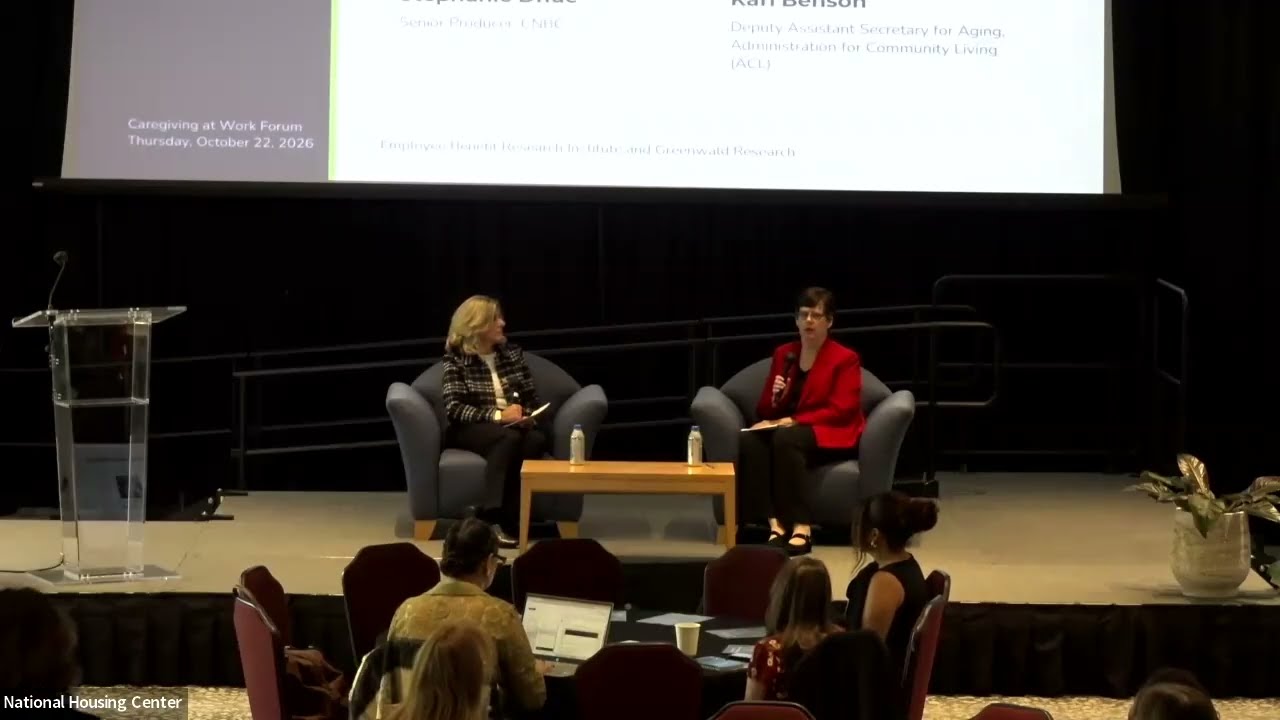
A National Conversation on Caregiving and Work
Title history
- A National Conversation on Caregiving and Work — observed on 20261105-1747 UTC (YouTube)
Keywords
Summary
157 words
Critical Evaluation
Value of the Information & Strength of the Argument
The video provides valuable insight into official U.S. government perspectives on caregiving, outlining concrete resources and strategies for employers. The argumentation is coherent, grounded in the speaker’s extensive policy experience and references to existing federal programs. However, it remains primarily at an awareness-raising level, lacking deep empirical analysis or critical examination of policy shortcomings. The call to action for employers is practical but general, missing specific data on effectiveness or implementation challenges.
Scientific Rigor, Source Quality, Title Accuracy
The sources cited are authoritative: AARP statistics, the National Family Caregiver Support Program, the Older Americans Act, and the Eldercare Locator. These are official programs or reputable organizations, but no direct links or detailed references are provided in the video description. The title accurately matches the content, as the video is indeed a national-scale conversation on the intersection of caregiving and work. The discussion stays on topic and effectively communicates the agency’s role and available resources.
163 words
Title / Content Match
The title accurately reflects the content: a conversation between a journalist and a government representative on caregiver and work issues.
Quality & Reliability
7/10
Discussion with an official representative of the Administration for Community Living, citing figures from AARP without external verification, but consistent with widely known public data. The content is institutional and reliable, though lacking critical depth.
Key Moments
Markers derived by PSI from the transcript: the creator did not define chapters.
- Introduction and key caregiving statistics: 63 million Americans, 27% of workforce, 50 billion hours, $1 trillion value.
- Benson discusses the mission of ACL and the biggest concerns in supporting family caregivers.
- Progress since 2000 and the 2022 National Strategy to Support Family Caregivers.
- Explanation of the Eldercare Locator and how employers can connect to state resources.
- Challenges of coordination across sectors and potential use of technology to improve information access.
- Benson's final takeaway: 'We're here' — ACL is available to partner, and success looks like caregivers able to manage stress.
Cited Sources
- AARP — Cited for statistics on unpaid care volume and economic value.
- Administration for Community Living (ACL) — The agency Benson represents, overseeing caregiver support programs.
- Eldercare Locator — A public service for finding local resources for older adults and caregivers.
- National Family Caregiver Support Program — Program authorized in 2000 to build caregiver support infrastructure.
- Older Americans Act — Legislation that funds many aging services, including caregiver support.
Concurring Sources
- AARP Caregiving Resources — AARP provides extensive statistics and guides on caregiving, consistent with the numbers cited.
- Eldercare Locator — Directly accessible service mentioned in the video as the first step for caregivers.
Contribution & Novelties
This video offers an official, high-level view on caregiving as a workforce issue, uniquely coming from a federal agency perspective. It provides actionable resources like the Eldercare Locator and encourages employer engagement through state-level toolkits. While not novel in terms of data, it synthesizes current policy directions and practical steps for stakeholders.
Pour aller plus loin :
- ACL website — Official source for caregiver support programs and policies.
- Caregiver – Wikipedia — Overview of caregiving definitions and types.
- Family and Medical Leave Act – Wikipedia — Relevant U.S. legislation affecting working caregivers.
92 words
Radar Profile
The scores show a moderate level of information quantity and quality, with a strong reliability score due to the official nature of the speaker. The technical level is low, making it accessible to a broad audience, fostering trust in the institutional perspective.