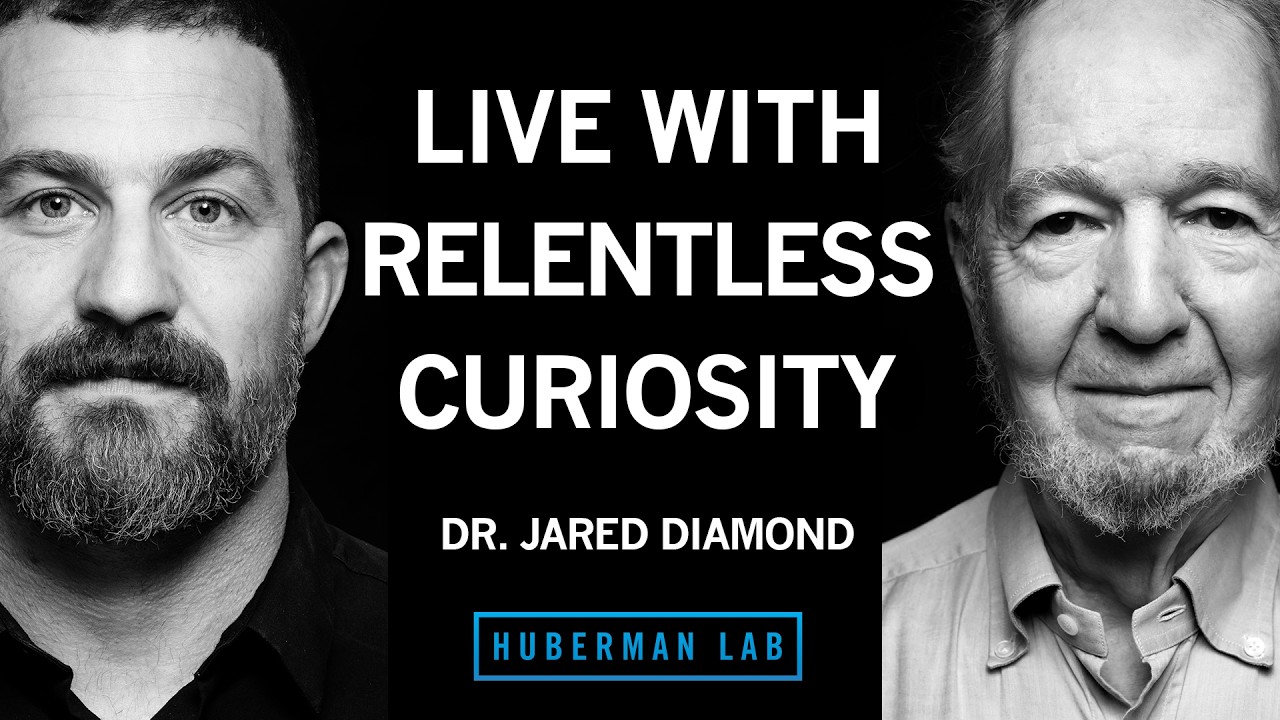
What Makes Great Leaders & How to Live an Extraordinary Life | Dr. Jared Diamond
Keywords
Summary
164 words
Critical Evaluation
Value of the Information & Strength of the Argument
The value of the information lies in its cross-disciplinary synthesis, drawing on history, biology, and personal experience to deconstruct myths about leadership. Diamond introduces the method of ’natural experiments’ to analyze leadership, comparing historical cases to extract patterns without overgeneralizing. His arguments are well-structured, often countering common assumptions with concrete examples (e.g., charisma not being essential). The discussion includes nuanced explorations of Hitler’s uniqueness and the role of chance, which adds depth. However, the content is largely anecdotal and relies on the speaker’s authority rather than systematic empirical evidence, making the argumentation persuasive but not scientifically rigorous in a traditional sense.
Scientific Rigor, Source Quality, Title Accuracy
The scientific rigor is moderate: Diamond references historical and biological research, but the podcast format does not provide formal citations. The show notes (linked in description) likely contain references, but not in the video itself. The quality of sources is high due to Diamond’s expertise, yet the content is presented as informed opinion. The title ‘What Makes Great Leaders & How to Live an Extraordinary Life’ matches the content well, as the episode indeed covers these themes. The discussion is coherent and stays on topic, with a clear link between leadership analysis and personal life advice.
212 words
Title / Content Match
The title accurately reflects the content: discussion of leadership qualities and advice for living an extraordinary life.
Quality & Reliability
9/10
Content is presented by a renowned scientist and Pulitzer Prize-winning author, with references to historical and scientific research, but it is primarily opinion and anecdote rather than peer-reviewed data.
Chapters
- Jared Diamond
- Leadership, Prophets; Hitler, WWII
- Hitler, Leadership, Deception
- Unlikely Leader: Harry Truman
- Sponsors: Rorra & Eight Sleep
- Leaders, Introspection, Charisma; Individuals, History Patterns
- Leaders & Addressing Mistakes, Forgiveness
- Religious Leaders, Jesus & Leadership, Organizers
- Leader Partnerships, Science, Religion
- Jim Jones, Effective Cult Leaders; Followers
- Sponsor: AG1
- Leaders & Clinging to Power
- Learning Languages
- Taxonomy, Lists & Names, Studying Birds
- Curiosity, New Guinea Birds, Success & Support Across Different Careers
- Travel, Intellectual Explorer
- Birds, Vision & Sound, Ecology; Bird Song, Monkeys
- Sponsor: Function
- Academic Leadership; Time & His Remaining Projects
- Humanity Risks, Population Bomb
- Physical Activity; Sports Leaders
- Coaching Philosophy, John Wooden; Business Leaders, Yvon Chouinard
- Great Leadership; Advice for Others
- Zero-Cost Support, YouTube, Spotify & Apple Follow, Reviews & Feedback, Sponsors, Social Media, Neural Network Newsletter
Cited Sources
- Show Notes for this episode — Official show notes with additional resources.
- Huberman Lab — Official website of the podcast.
- Disclaimer — Medical and general disclaimer.
External References
Contribution & Novelties
The episode offers a fresh perspective on leadership by applying Jared Diamond’s ’natural experiments’ approach from his previous works to the study of leaders. It challenges the charisma myth and highlights the importance of context and organization. Diamond’s personal experiences enrich the narrative, making abstract concepts tangible.
Pour aller plus loin :
- Natural experiment — Explains the methodological approach Diamond uses to compare leadership cases.
- Leadership — Broad overview of leadership theories and research.
- Jared Diamond — Background on the author and his contributions.
84 words
Radar Profile
The radar profile shows high scores in information quantity and reliability, with slightly lower technical level and information quality, reflecting a deeply insightful discussion grounded in expert opinion rather than formal scientific data. The balance suggests a valuable, accessible resource for understanding leadership from a historical and personal perspective.