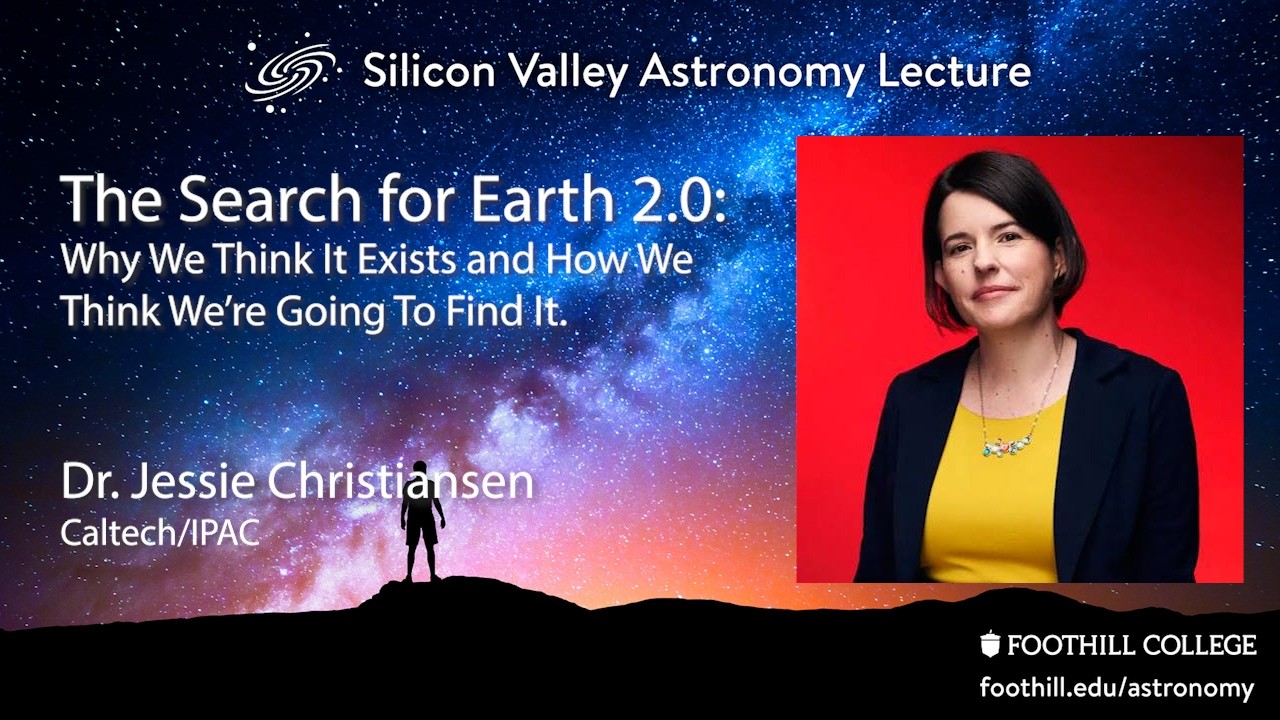
The Search For Earth 2.0: Why We Think It Exists and How We Think Were Going To Find It.
Keywords
Summary
162 words
Critical Evaluation
Value of the Information & Strength of the Argument
The lecture provides substantial value by synthesizing both historical and contemporary exoplanet research in an engaging manner. The argumentation is well-structured, progressing from philosophical speculations to concrete detection methods, and then to observational results and future plans. Christiansen effectively uses analogies (e.g., the emu in the Milky Way, the parking complaint at Griffith Observatory) to maintain accessibility while accurately presenting scientific data. She also candidly addresses uncertainties, such as whether Kepler-452b is real and the unknown retention of atmospheres around M-dwarf planets, which strengthens scientific integrity.
Scientific Rigor, Source Quality, Title Accuracy
The scientific rigor is high, as the speaker is a leading expert whose work involves managing the NASA Exoplanet Archive. She references specific missions (Kepler, K2, TESS, Roman, HWO) and acknowledges selection biases in exoplanet statistics. The talk is consistent with current scientific consensus, and she clearly distinguishes between confirmed data and hypotheses. The title aligns well with the content, as it directly addresses the rationale and methods for locating Earth-like planets. No external sources are listed in the description, but the lecture itself relies on established astronomical research and missions.
192 words
Title / Content Match
The title accurately reflects the content: the lecture covers the reasons to believe Earth-like planets exist and the strategies to find them.
Quality & Reliability
9/10
Lecture by a leading exoplanet scientist, chief scientist of NASA Exoplanet Science Institute, with accurate historical context and clear presentation of current knowledge.
Key Moments
Markers derived by PSI from the transcript: the creator did not define chapters.
- Introduction by Andrew Fraknoi and start of talk by Jessie Christiansen
- Historical perspectives: Greek philosophers, al-Razi, and Giordano Bruno on the plurality of worlds
- Otto Struve's 1952 paper proposing radial velocity and transit methods
- Discovery of 51 Pegasi b in 1995 and the surge of exoplanet discoveries
- Kepler mission's goal and its use of the transit method
- Results from Kepler: Kepler-452b and the TRAPPIST-1 system
- Future missions: Roman Space Telescope and Habitable Worlds Observatory
Contribution & Novelties
This lecture offers a comprehensive, up-to-date overview of the search for Earth-like exoplanets, integrating historical context with current missions and future prospects. Its value lies in making complex astrophysics accessible to a general audience while providing expert insights. The talk also highlights the collaborative international effort and the technological hurdles ahead.
Pour aller plus loin :
- NASA Exoplanet Exploration — The official NASA site with exoplanet news, data, and mission information.
- Exoplanet Archive — The NASA Exoplanet Archive, a comprehensive database of confirmed exoplanets, referenced in the lecture.
- Habitable Worlds Observatory — NASA’s planned flagship telescope for directly imaging Earth-like planets.
- Wikipedia: Methods of detecting exoplanets — An overview of transit and radial velocity techniques, among others.
117 words
Radar Profile
The radar profile indicates strong scores in quantity and quality of information, with a moderate technical level, suggesting a well-balanced presentation that is both informative and accessible. The high reliability score reflects the speaker's expertise and the factual accuracy of the content.